

Mayor turns on lights, sirens in urgent call to province for more ambulances, paramedics

Advertisement
Read this article for free:
or
Already have an account? Log in here »
To continue reading, please subscribe:

Digital Subscription
One year of digital access for only $205*
- Enjoy unlimited reading on winnipegfreepress.com
- Read the E-Edition, our digital replica newspaper
- Access News Break, our award-winning app
- Play interactive puzzles
*First annual payment billed as $205.00 + GST for one year. This annual subscription will automatically renew at $233.00 + GST every 52 weeks (10% off the regular annual price of $259.35). Offer available to new and qualified returning subscribers only. Cancel any time.
To continue reading, please subscribe:
Add Free Press access to your Brandon Sun subscription for only an additional
$1 for the first 4 weeks*
- Enjoy unlimited reading on winnipegfreepress.com
- Read the E-Edition, our digital replica newspaper
- Access News Break, our award-winning app
- Play interactive puzzles
*Your next Brandon Sun subscription payment will increase by $1.00 and you will be charged $17.95 plus GST for four weeks. After four weeks, your payment will increase to $24.95 plus GST every four weeks.
Read unlimited articles for free today:
or
Already have an account? Log in here »
More emergency vehicles and paramedics, along with steps to ease Winnipeg’s drug crisis, are urgently needed to address persistently long waits for ambulances, Mayor Scott Gillingham says.
“Nothing is going to change until we get more staff and more resources or reduce the calls for service. And, until the addiction crisis is dealt with head-on, those calls for service are going to continue…. Our paramedics are exhausted. Our firefighters are exhausted and we need more resources,” said Gillingham.
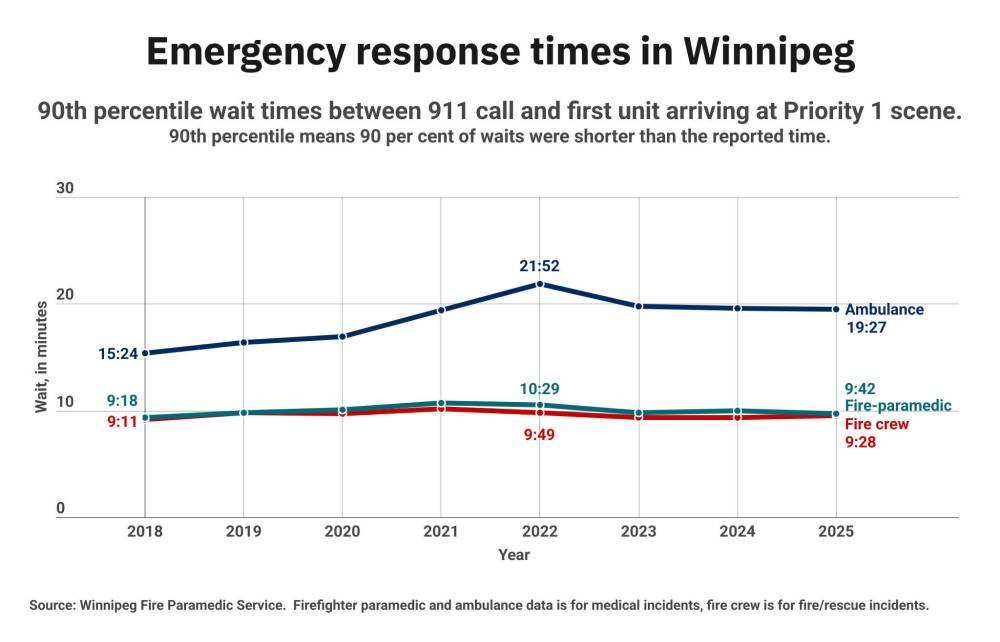
The comments follow data on how long it takes the first ambulance to arrive at the scene of the highest priority “lights-and-sirens” calls. In 2025, 90 per cent of those Winnipeg Fire Paramedic Service responses arrived within 19:27.
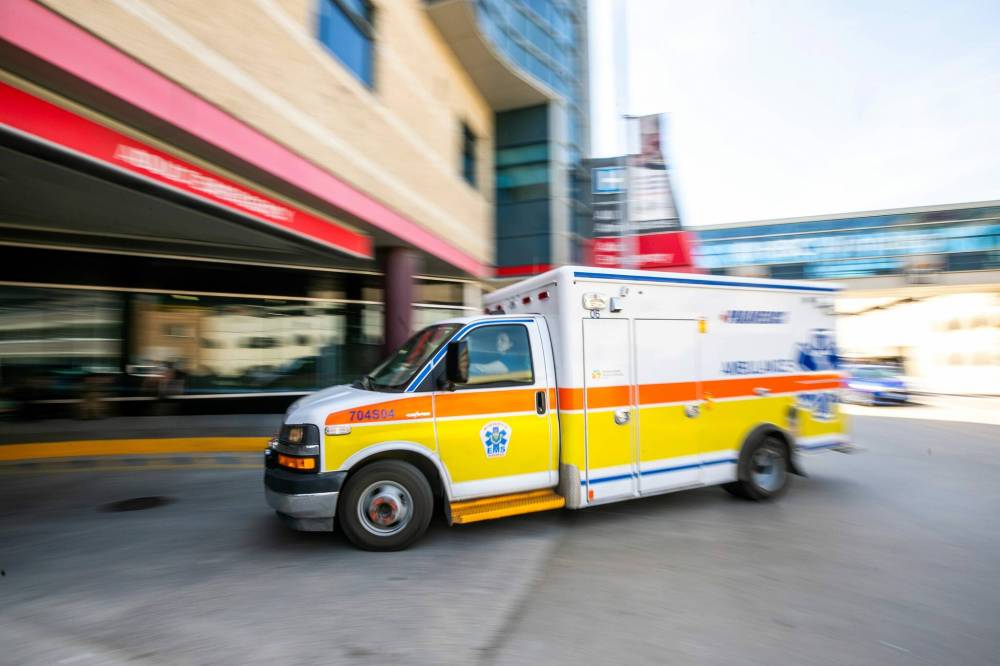
MIKAELA MACKENZIE / FREE PRESS
Persistently long ambulance wait times have continued for years in Winnipeg.
That counts the period of time from when a call is answered at the 911 communications centre to the time an ambulance arrives at the scene.
That response time has far exceeded a WFPS target of 8:59 for several years. It reached 19:37 in 2024, 19:47 in 2023 and 21:52 in 2022.
That’s up from 16:55 in 2020, 16:24 in 2019 and 15:24 in 2018.
Gillingham noted he and WFPS Chief Christian Schmidt have asked Shared Health, a provincial agency, to fund at least eight more ambulances and about 120 more full-time paramedic positions over the next four years to help speed up service.
“The City of Winnipeg has grown by 80,000 people in the last few years and we have not added the… needed amount of ambulances and paramedics to deal with that growth,” he said.
“Added to that is the drug and addiction crisis that’s playing out on our streets.”
WFPS said it now responds to about 27 overdose calls each day, which strains its available resources.
The mayor said more detox beds, rapid access to addictions medicine clinics and mental-health supports are needed.
He also repeated his call for an alternative to traditional emergency responses.
“We also need to establish a fourth emergency service so that police officers and firefighters and paramedics are not having to respond to calls that are (to) check well-being and… mental-health calls,” he said.
The city has hired a consultant to create a Winnipeg Community Crisis Response Service. Gillingham hopes to receive a final report by the end of June.
The time it takes most Winnipeg ambulances to respond to urgent calls has slightly improved since 2022, said Ryan Sneath, WFPS deputy chief of paramedic operations and training.
Sneath credits that improvement to changes in the priority system WFPS uses to determine the response to emergency calls. The traditional system divided calls into just two categories, where “priority one” calls were emergencies that required lights-and-sirens responses and “priority two” were non-life-threatening situations.
In 2025, the service switched to a five-level priority system, which sends crews out with lights and sirens to fewer calls.
However, Sneath noted the wait is still much longer than the target.
“It’s been a problem for a long time….With increasing call volumes, that obviously puts overwhelming stress on both fire operations and paramedic operations…. There’s only so many efficiencies we can create within our system before we have to add additional resources,” he said.
A union leader who represents Winnipeg paramedics said front-line staff are frustrated by the delays.
“I can say our members tell us often that it’s too long. When someone’s calling for an ambulance and it’s a high-acuity call… seconds matter,” said Kyle Ross, president of the Manitoba Government and General Employees’ Union.
“If you can’t get someone there on time, the outcomes change. It’s frustrating”
Ross said staff are rushing to keep up with high call volumes, while frequent calls to resuscitate people experiencing drug overdoses add to the stress.
“They’re burning out, there’s no down time. They don’t get the opportunity to recover from very difficult calls,” he said.
Winnipeg’s integrated fire-paramedic system allows firefighter paramedics to begin providing care to patients, usually several minutes before the first ambulance arrives.
WFPS data shows 90 per cent of responses by the first on-scene firefighter paramedic to a top-priority medical call happened within 9:42 in 2025. That number hovered between 9:18 and 10:41 each year since 2018.
“The city has been warned about this years ago…. These aren’t surprises, they’re ignored warnings…. The system is under-resourced and conditions have only worsened,” said Adam Smithson, treasurer of the United Fire Fighters of Winnipeg.

Smithson said the service should aim for that response to happen within six to eight minutes.
The union has called for more staff for years, he noted.
“Response times matter because seconds count in emergencies and we continue to lag behind,” he said.
joyanne.pursaga@freepress.mb.ca
X: @joyanne_pursaga
Joyanne is city hall reporter for the Winnipeg Free Press. A reporter since 2004, she began covering politics exclusively in 2012, writing on city hall and the Manitoba Legislature for the Winnipeg Sun before joining the Free Press in early 2020. Read more about Joyanne.
Every piece of reporting Joyanne produces is reviewed by an editing team before it is posted online or published in print — part of the Free Press‘s tradition, since 1872, of producing reliable independent journalism. Read more about Free Press’s history and mandate, and learn how our newsroom operates.
Our newsroom depends on a growing audience of readers to power our journalism. If you are not a paid reader, please consider becoming a subscriber.
Our newsroom depends on its audience of readers to power our journalism. Thank you for your support.
Joyanne is city hall reporter for the Winnipeg Free Press. A reporter since 2004, she began covering politics exclusively in 2012, writing on city hall and the Manitoba Legislature for the Winnipeg Sun before joining the Free Press in early 2020. Read more about Joyanne.
Every piece of reporting Joyanne produces is reviewed by an editing team before it is posted online or published in print — part of the Free Press‘s tradition, since 1872, of producing reliable independent journalism. Read more about Free Press’s history and mandate, and learn how our newsroom operates.
Our newsroom depends on a growing audience of readers to power our journalism. If you are not a paid reader, please consider becoming a subscriber.
Our newsroom depends on its audience of readers to power our journalism. Thank you for your support.
Related Articles
City needs more fire-paramedic stations as population grows: outgoing WFPS boss

Advertisement Advertise With Us
Advertisement Advertise With Us