

Finding his way home
After years of living in encampments, Lawrence is slowly adjusting to life with a roof, instead of a tarp, over his head

Advertisement
Read this article for free:
or
Already have an account? Log in here »
To continue reading, please subscribe:

Digital Subscription
One year of digital access for only $205*
- Enjoy unlimited reading on winnipegfreepress.com
- Read the E-Edition, our digital replica newspaper
- Access News Break, our award-winning app
- Play interactive puzzles
*First annual payment billed as $205.00 + GST for one year. This annual subscription will automatically renew at $233.00 + GST every 52 weeks (10% off the regular annual price of $259.35). Offer available to new and qualified returning subscribers only. Cancel any time.
To continue reading, please subscribe:
Add Free Press access to your Brandon Sun subscription for only an additional
$1 for the first 4 weeks*
- Enjoy unlimited reading on winnipegfreepress.com
- Read the E-Edition, our digital replica newspaper
- Access News Break, our award-winning app
- Play interactive puzzles
*Your next Brandon Sun subscription payment will increase by $1.00 and you will be charged $17.95 plus GST for four weeks. After four weeks, your payment will increase to $24.95 plus GST every four weeks.
Read unlimited articles for free today:
or
Already have an account? Log in here »
Just weeks before the COVID-19 pandemic upended daily life in early 2020, Lawrence had a steady job, reliable income and a roof over his head. Within months, it was all gone.
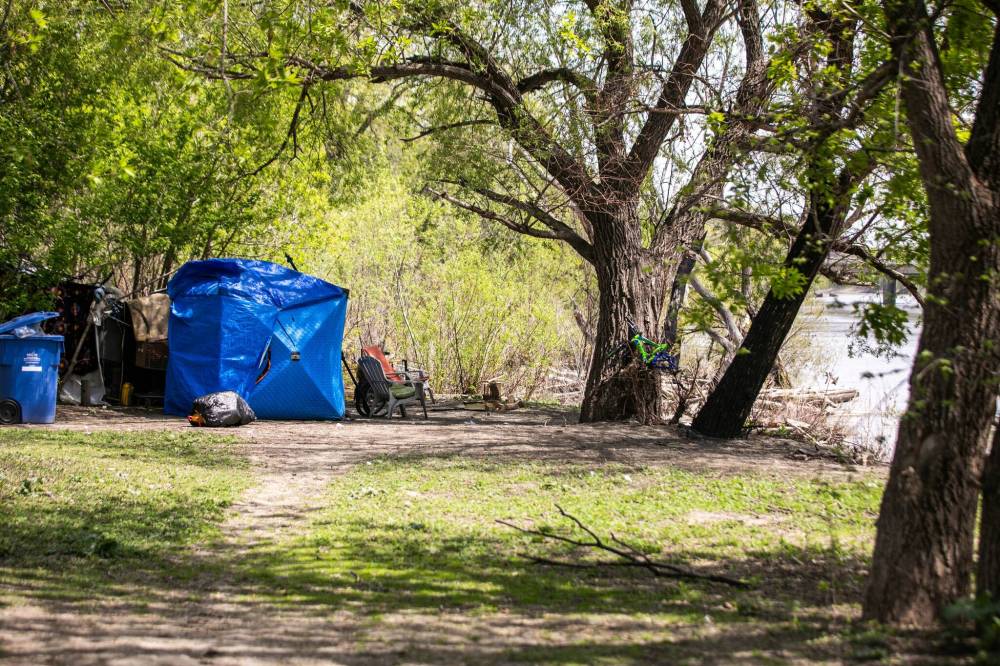
After burning through his savings to keep paying rent, the 58-year-old from Sagkeeng First Nation spent the next 4 1/2 years homeless, living in an encampment along Waterfront Drive.
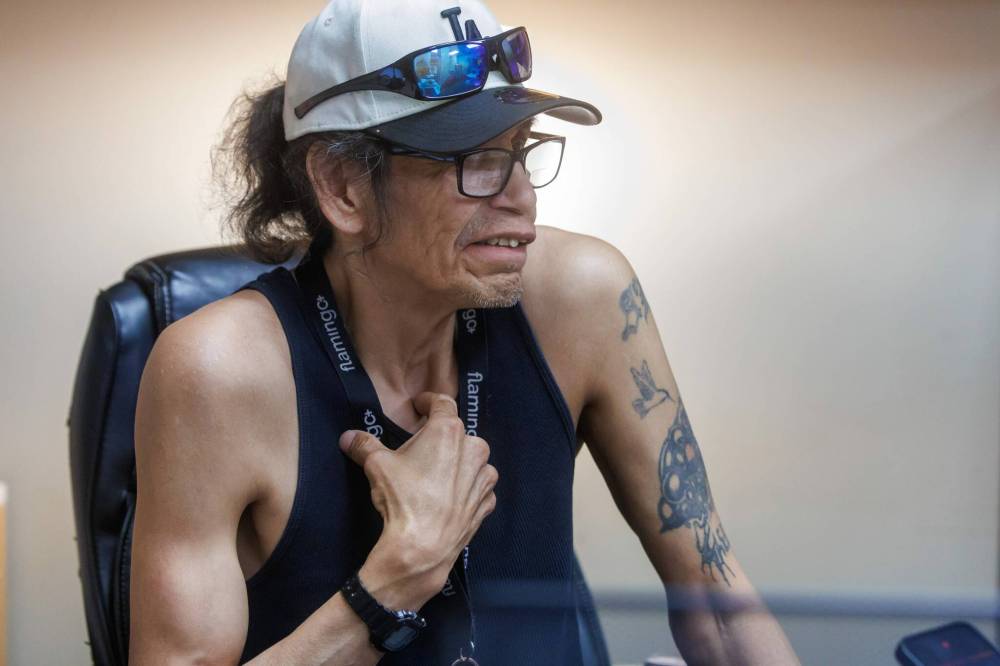
“At first, I couldn’t believe it,” he said while sitting in an office chair inside a low-barrier apartment complex in the city’s West End. “I was sitting at a drop-in centre trying to figure out ‘how did I end up here?’ It was too quick for me to absorb at the time.”
MIKE DEAL / FREE PRESS
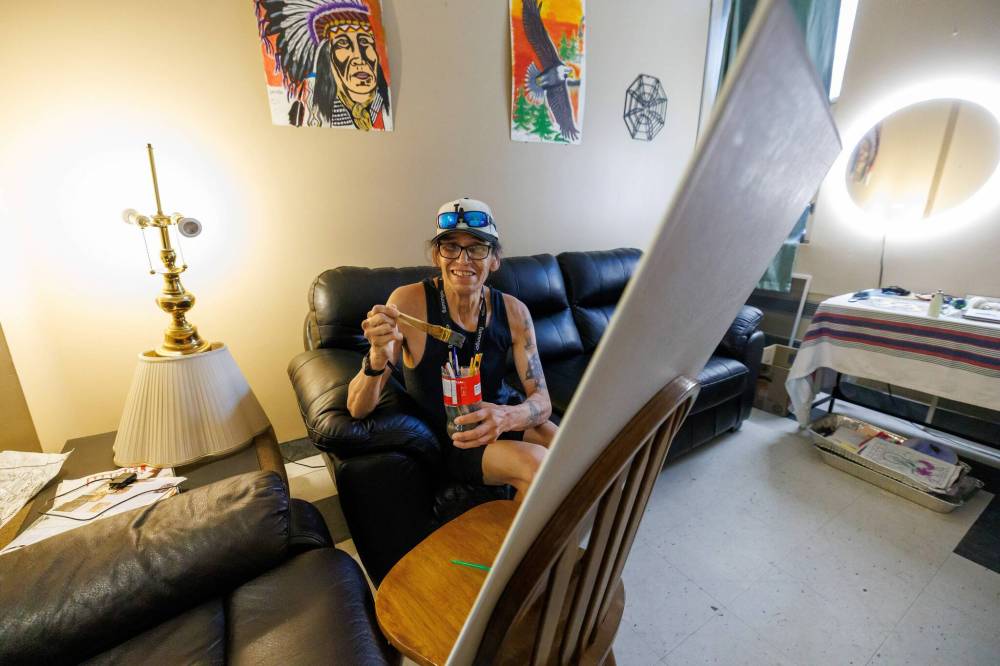
Lawrence, in his suite, where he does a lot of painting, lost everything during COVID and ended up homeless. He’s since been housed by the province through Your Way Home.
Lawrence, who didn’t want his last name used, has now been housed for three months through the province’s Your Way Home strategy, which aims to move roughly 700 Manitobans from encampments into stable housing.
He is one of 235 people housed through the initiative since its launch in January 2025. The province says 85 per cent of them have remained in their homes.
But adjusting to life indoors was not immediate. For the first six weeks after moving in, Lawrence would quietly leave and return to his encampment.
“It was the walls,” he said, explaining why he kept going back. “I was used to having a big tarp around me. I had a big encampment. It took me a year to build.”
That encampment was disrupted last August when police raided the Fort Douglas Park area following reports of suspected property crime. Lawrence was one of three men arrested after officers seized dozens of bike frames, tires and rims.
“Nothing was stolen,” he said, adding he was released after spending several hours in custody. “I was just helping out the people that were fixing bikes.”
A self-described workaholic, Lawrence said years of relentless labour contributed to the breakdown of his marriage in the early 2000s and eventually brought him to Winnipeg from Sagkeeng.
Over the years, he worked as a drywall taper, concrete finisher and roofer, involved in construction at city hospitals and the National Microbiology Laboratory.
The father of four — one biological child and three stepchildren — remembers taking out a $10,000 loan to pay for his eldest stepdaughter’s wedding. Growing up as the youngest of 10 siblings, he said new clothes were a rarity.
“Everything else was handed down,” he said, explaining that he worked hard so his own children could have more than he did. “I worked hard to buy them all the brand-name clothes and everything like that.”
Homelessness, however, changed how he viewed money and community.
“I was happier without money than with it,” he said. “I didn’t have to worry about paying for this or for that.”
MIKE DEAL / FREE PRESS
Despite living outdoors, Lawrence maintained connections with outreach workers and, in 2021, became one of the first people to access services at the recently opened N’Dinawemak — Our Relatives’ Place.
Lawrence said homelessness became “a blessing in disguise” because it introduced him to a sense of community he hadn’t expected.
“I didn’t know that homeless people were like that, that they helped each other, that they protected each other,” he said. “That made me feel welcome, because I like to protect people myself.”
Despite living outdoors, Lawrence maintained connections with outreach workers.
In 2021, he became one of the first people to access services at the recently opened N’Dinawemak — Our Relatives’ Place at 190 Disraeli Fwy., a now-former 200-bed shelter and drop-in centre that’s closed for renovations as it transitions into a navigation centre for Winnipeg’s homeless population. Over time, he began helping staff de-escalate disputes and support other residents.
Eventually, outreach workers approached him about housing. N’Dinawemak runs the 24-7 supports at the building where he now lives.
“It never starts with an introduction to service,” said Victor Mondaca, N’Dinawemak’s director of transitional and supportive housing. “Just an introduction to who we are and what we’re here to do, how we’re trying to build that community and how we’re trying to support the individual where they are in that process.”
Lawrence said he agreed to check out the housing and, if he didn’t like it, he’d go back to the encampment.
Mondaca said Lawrence’s adjustment period is an important lesson in understanding there’s a level of give and take that needs to be navigated.
“Once we gave him that ownership over certain aspects of what was going on here, we got him to stay,” Mondaca said. “It’s important, because in anything we do, we need to be partners in the care. We need to have the individual there to partner with us.”
Mondaca, who has lived experience with homelessness and substance use, said many people lose their sense of autonomy while moving through systems and services.
The province’s encampment strategy intends to give back autonomy, he says. There’s a cultural approach — 80 per cent of the building’s residents are Indigenous — and no one is left behind.
MIKE DEAL / FREE PRESS
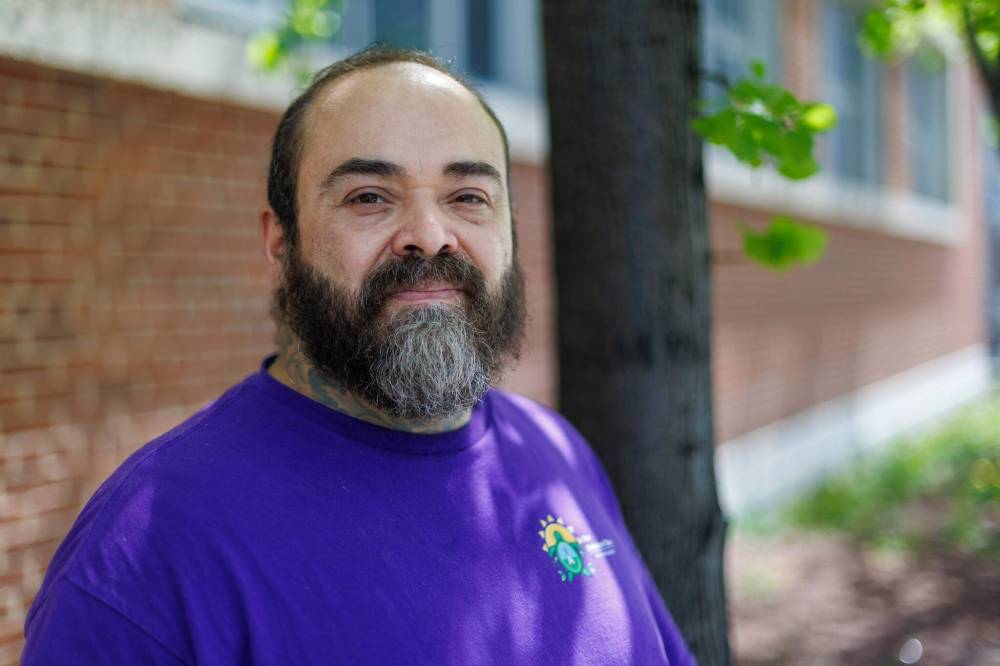
Victor Mondaca says there’s a level of give and take that needs to be navigated.
“If someone wants to pause their care at any point, they’re allowed to do that. They’re allowed to walk away,” he said, adding they can reconvene again in the future.
As Mondaca spoke to the Free Press, members of his team were working with someone who arrived hoping to get off the street. Mondaca said they had no prior contact with the individual.
He said he feels word of mouth plays an integral role in a system where there is a genuine sense of caring.
“We call it the Moccasin Telegraph,” he said, laughing. “As we grow our community, the word spreads within that community.”
Lawrence said he truly settled into his new home once he began painting the walls. An artist since the age of nine, his murals now adorn parts of the building, including a sprawling second-floor piece depicting the effects of colonialism on Indigenous homelands beneath a towering thunderbird.
“It represents the great spirit, and he’s mad because we left our culture behind,” he said.
Unlike some who struggle with guilt after leaving encampments behind, Lawrence said his former neighbours celebrated his move indoors.
“They were happy for me,” he said.
He still remembers encampment life fondly — sharing meals, listening to music and talking around campfires late into the night.
“It was very laid back and relaxed,” he said.
Even Winnipeg winters did not drive him indoors. Lawrence lived outside year-round, relying on a portable heater that sometimes made his tent too warm.
The building where he now lives does not require residents to be sober before moving in. Despite serving people who may still be actively using substances, it appeared to be a well-maintained, clean and welcoming place.
MIKAELA MACKENZIE / FREE PRESS
The province’s encampment strategy intends to give autonomy back to individuals.
“The building is respected,” Mondaca said. “The community is respected.”
Lawrence said he no longer drinks alcohol, though he has struggled with substance use for decades. He credits crystal meth with helping him stop using crack cocaine, while wraparound support programs — including Alcoholics Anonymous meetings offered where he lives now — are helping him remain clean from methamphetamine.
“We’re all complex as humans, some with more wins, some with more losses,” Mondaca said. “But we all deserve the same type of love, respect and dignity throughout the entire process.”
Lawrence is thinking about earning a living.
“I’m going to see if I can open my interior business, see if I can get some work out there,” he said.
After that, he hopes to retire back home in Sagkeeng, where a piece of family land has been for generations.
For a man who spent nearly five years without a permanent address, it’s a future that once seemed impossible to imagine.
scott.billeck@freepress.mb.ca
Scott Billeck is a general assignment reporter for the Free Press. A Creative Communications graduate from Red River College, Scott has more than a decade’s worth of experience covering hockey, football and global pandemics. He joined the Free Press in 2024. Read more about Scott.
Every piece of reporting Scott produces is reviewed by an editing team before it is posted online or published in print — part of the Free Press‘s tradition, since 1872, of producing reliable independent journalism. Read more about Free Press’s history and mandate, and learn how our newsroom operates.
Our newsroom depends on a growing audience of readers to power our journalism. If you are not a paid reader, please consider becoming a subscriber.
Our newsroom depends on its audience of readers to power our journalism. Thank you for your support.
Scott Billeck is a general assignment reporter for the Free Press. A Creative Communications graduate from Red River College, Scott has more than a decade’s worth of experience covering hockey, football and global pandemics. He joined the Free Press in 2024. Read more about Scott.
Every piece of reporting Scott produces is reviewed by an editing team before it is posted online or published in print — part of the Free Press‘s tradition, since 1872, of producing reliable independent journalism. Read more about Free Press’s history and mandate, and learn how our newsroom operates.
Our newsroom depends on a growing audience of readers to power our journalism. If you are not a paid reader, please consider becoming a subscriber.
Our newsroom depends on its audience of readers to power our journalism. Thank you for your support.
Related Articles
Councillors identify weakness in homeless camp enforcement


Advertisement Advertise With Us
Advertisement Advertise With Us