Councillors identify weakness in homeless camp enforcement Removal of tents near train tracks requires railways’ co-operation
Read this article for free:
or
Already have an account? Log in here »
To continue reading, please subscribe:

Digital Subscription
One year of digital access for only $205*
- Enjoy unlimited reading on winnipegfreepress.com
- Read the E-Edition, our digital replica newspaper
- Access News Break, our award-winning app
- Play interactive puzzles
*First annual payment billed as $205.00 + GST for one year. This annual subscription will automatically renew at $233.00 + GST every 52 weeks (10% off the regular annual price of $259.35). Offer available to new and qualified returning subscribers only. Cancel any time.
To continue reading, please subscribe:
Add Free Press access to your Brandon Sun subscription for only an additional
$1 for the first 4 weeks*
- Enjoy unlimited reading on winnipegfreepress.com
- Read the E-Edition, our digital replica newspaper
- Access News Break, our award-winning app
- Play interactive puzzles
*Your next Brandon Sun subscription payment will increase by $1.00 and you will be charged $17.95 plus GST for four weeks. After four weeks, your payment will increase to $24.95 plus GST every four weeks.
Read unlimited articles for free today:
or
Already have an account? Log in here »
Two Winnipeg councillors say there must be close co-ordination with railways to deal with homeless camps on rail property because the sites fall outside city jurisdiction.
“Despite our encampment policy clearly identifying these locations as unsafe and requiring action, there was a lack of response from the city, including limited participation in efforts to connect individuals with appropriate supports and services,” said Cindy Gilroy (Daniel McIntyre).
The city centre committee passed a joint motion by Gilroy and Sherri Rollins (Fort Rouge – East Fort Garry) last week that calls for a review of the city’s response to camps on railway-owned land.
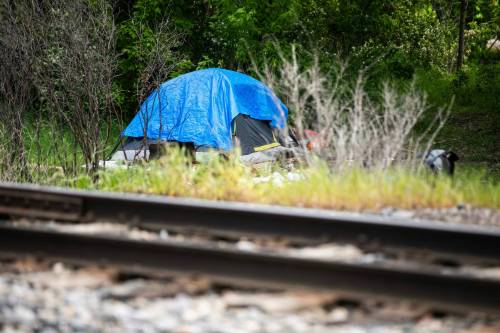
MIKAELA MACKENZIE / FREE PRESS A tent near a rail line along Omands Creek on Wednesday. Two city councillors want to work with railway operators on encampments so the city can enforce its bylaw on rail property which is outside city jurisdiction.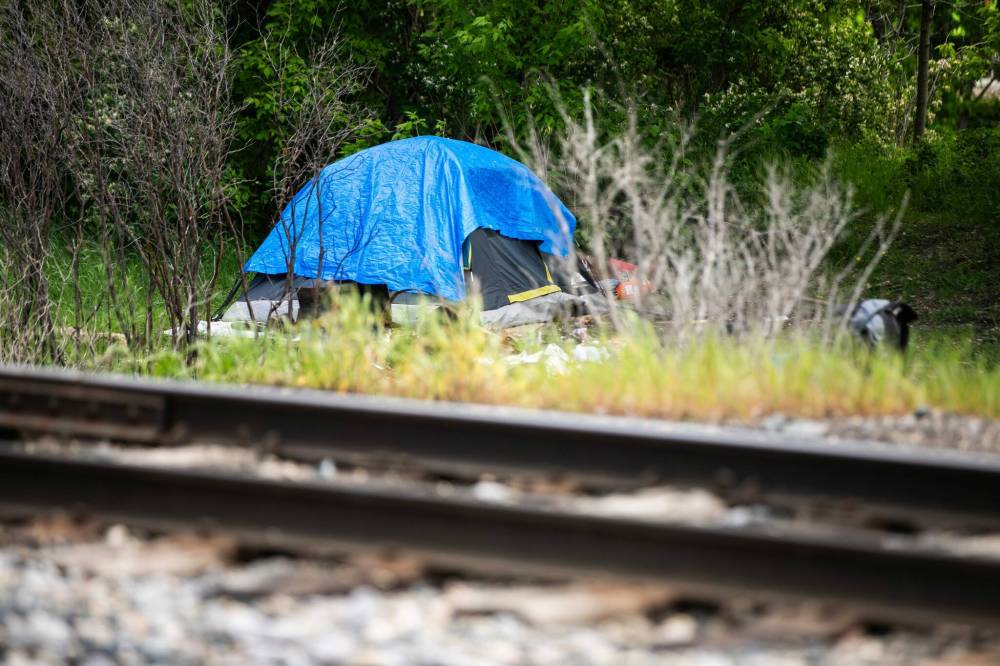
While the encampment bylaw prohibits camps from being located within 50 metres of a rail line, the city has limited authority to act when those encampments are on railway property, which is considered private land.
The motion notes residents have raised concerns about camps on railway land and warns that encampments on or near active rail lines pose “significant safety risks” due to train operations, dangerous goods transportation, trespassing hazards and limited emergency access.
Gilroy said there are encampments near rail lines in her ward and in Point Douglas.
MIKE DEAL / FREE PRESS FILES Coun. Cindy Gilroy (pictured) and Coun. Sherri Rollins are calling for a review of Winnipeg's response to homeless camps on railway-owned land.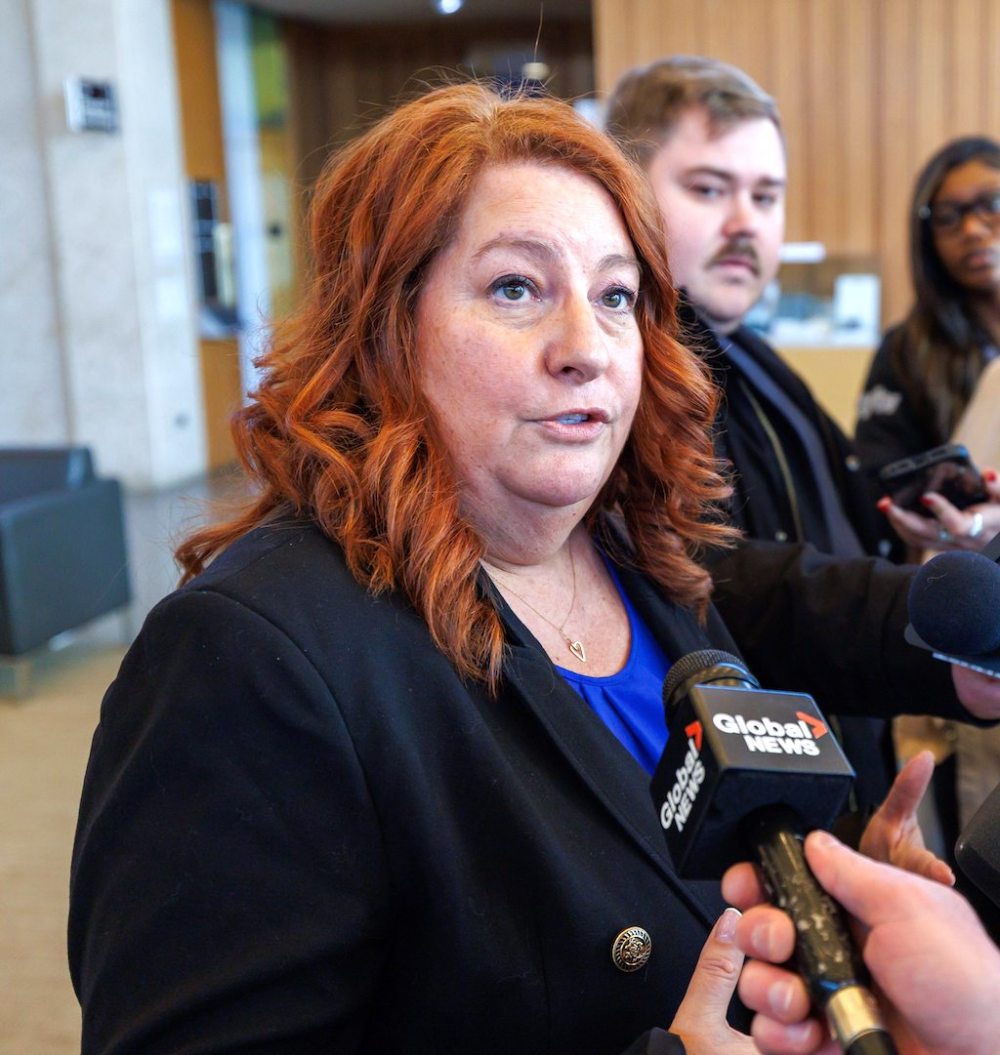
“I brought this motion forward as a result of an issue I encountered in my ward involving an encampment located within 50 metres of a railway line,” Gilroy said.
On Wednesday, she said outreach workers recently identified an encampment near the rail corridor between Erin and Wall streets, close to Calvary Place Personal Care Home — a location where a camp is prohibited under the bylaw.
But the site is on property owned by Canadian Pacific Kansas City, formerly Canadian Pacific Railway.
She said city officials wouldn’t contact the railway to address the encampment. Instead, she reached out to St. Boniface Street Links for assistance.
Marion Willis, who runs Street Links, told the Free Press on Wednesday her encampment team was out and back within an hour, having dismantled the camp. Willis said no one was there when they arrived.
“This experience highlighted concerns about how our current policy is being implemented and prompted me to call for a review,” Gilroy said.
“They’re expecting the community to know what rail line it is, who to contact. I’m saying, ‘No.’ It shouldn’t be up to the community to figure it out. We have relationships with these rail lines because they work within city limits.”
MIKAELA MACKENZIE / FREE PRESS A tent near a rail line at the tip of Point Douglas on Wednesday. Winnipeg’s encampment bylaw prohibits camps from being located within 50 metres of a rail line, but the city has limited authority to act when those encampments are on railway property, which is considered private land.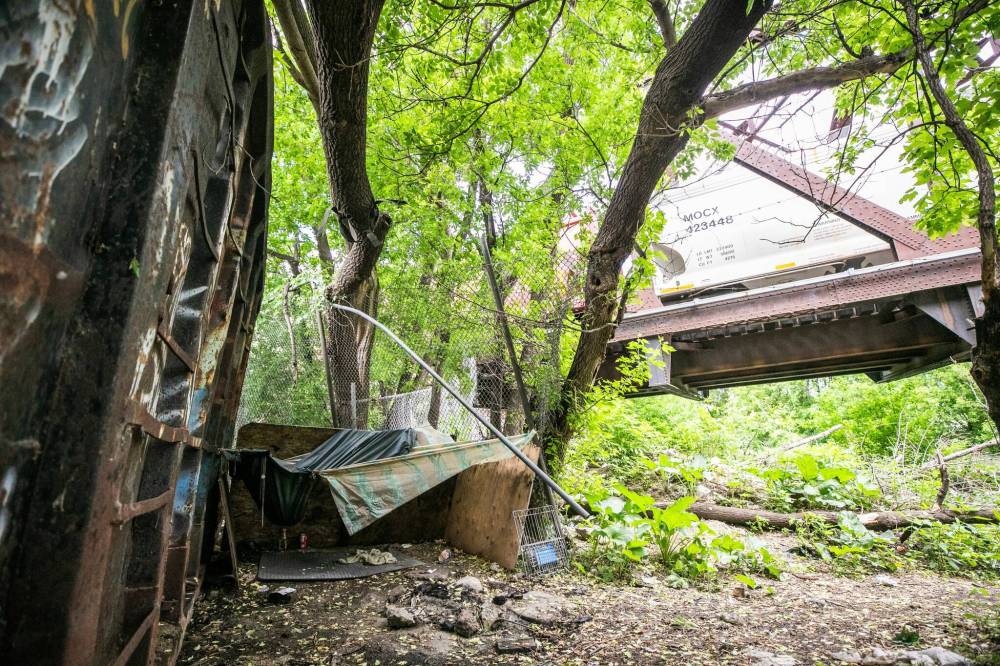
Gilroy said city policies must be well-written and applied consistently, particularly when public safety and the well-being of vulnerable individuals are at stake.
She said a review would help to identify gaps, clarify responsibilities, and ensure the policy achieves its goals.
The motion, which will be reviewed by the community services Tuesday, asks that the public service review and report back on amendments to enforcement practices to ensure that when encampments are on land owned by railways, the city will notify the company and co-ordinate with the railway about the appropriate response and removal.
John Woods / THE CANADIAN PRESS FILES Executive director and founder of St. Boniface Street Links, Marion Willis: “The city just needs to understand the process.”
The meeting will also include the latest update on the city’s camp response protocol.
Willis said she doesn’t believe the motion is necessary.
“The city just needs to understand the process,” she said.
CPKC, in an emailed statement on Wednesday, said that trespassing on railway property is illegal and dangerous.
“Experience clearly shows that encampments near active rail lines consistently result in increased trespassing, vandalism, high-risk emergencies, and operational hazards,” a spokesperson said.
“CPKC police work closely with the local municipalities, including the City of Winnipeg, and other agencies to address illegal and dangerous trespassing behaviour that occurs on railway property.
“We do this to protect public safety. Safety is a core value at CPKC, and we remain committed to assisting the City of Winnipeg in its efforts to improve the community.”
scott.billeck@freepress.mb.ca

Scott Billeck is a general assignment reporter for the Free Press. A Creative Communications graduate from Red River College, Scott has more than a decade’s worth of experience covering hockey, football and global pandemics. He joined the Free Press in 2024. Read more about Scott.
Every piece of reporting Scott produces is reviewed by an editing team before it is posted online or published in print — part of the Free Press‘s tradition, since 1872, of producing reliable independent journalism. Read more about Free Press’s history and mandate, and learn how our newsroom operates.
Our newsroom depends on a growing audience of readers to power our journalism. If you are not a paid reader, please consider becoming a subscriber.
Our newsroom depends on its audience of readers to power our journalism. Thank you for your support.
Related Articles
Province hires special advisers to tackle homelessness crisis