Groups say city’s camp ban hurts homeless; mayor says ban stays Analysis shows little space for tents in Winnipeg
Read this article for free:
or
Already have an account? Log in here »
To continue reading, please subscribe:

Digital Subscription
One year of digital access for only $205*
- Enjoy unlimited reading on winnipegfreepress.com
- Read the E-Edition, our digital replica newspaper
- Access News Break, our award-winning app
- Play interactive puzzles
*First annual payment billed as $205.00 + GST for one year. This annual subscription will automatically renew at $233.00 + GST every 52 weeks (10% off the regular annual price of $259.35). Offer available to new and qualified returning subscribers only. Cancel any time.
To continue reading, please subscribe:
Add Free Press access to your Brandon Sun subscription for only an additional
$1 for the first 4 weeks*
- Enjoy unlimited reading on winnipegfreepress.com
- Read the E-Edition, our digital replica newspaper
- Access News Break, our award-winning app
- Play interactive puzzles
*Your next Brandon Sun subscription payment will increase by $1.00 and you will be charged $17.95 plus GST for four weeks. After four weeks, your payment will increase to $24.95 plus GST every four weeks.
Read unlimited articles for free today:
or
Already have an account? Log in here »
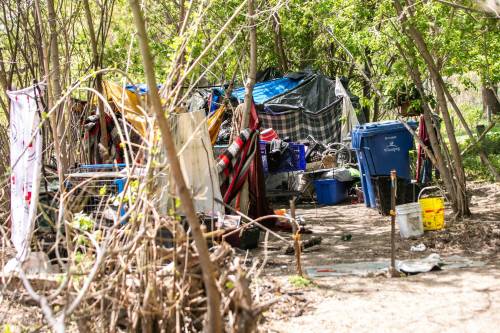
Outreach organizations say a new mapping tool exposes the fallout of the City of Winnipeg’s decision to remove encampments from key locations, including parks.
“When governments enforce bans or clear encampments, they’re not just removing tents, they’re breaking relationships that people rely on for safety and survival,” Lorie English, executive director of the West Central Women’s Resource Centre, told a news conference Tuesday. “Trust, once it’s been disrupted, is incredibly difficult to rebuild.”
MIKAELA MACKENZIE / FREE PRESS Lorie English, with the West Central Women’s Resource Centre, says the encampment ban has led to broken trust with unsheltered people.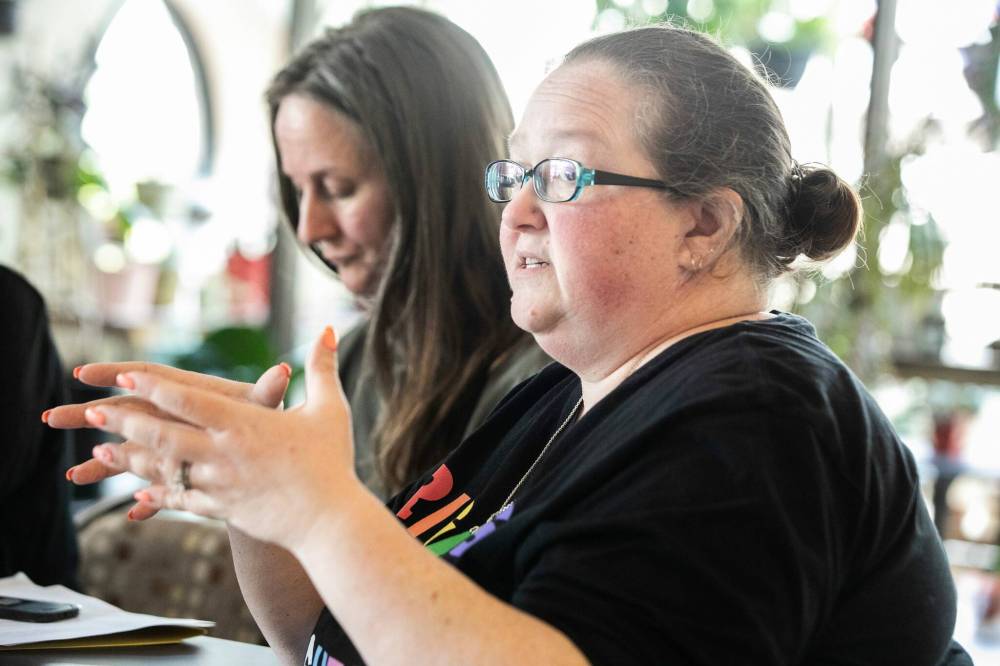
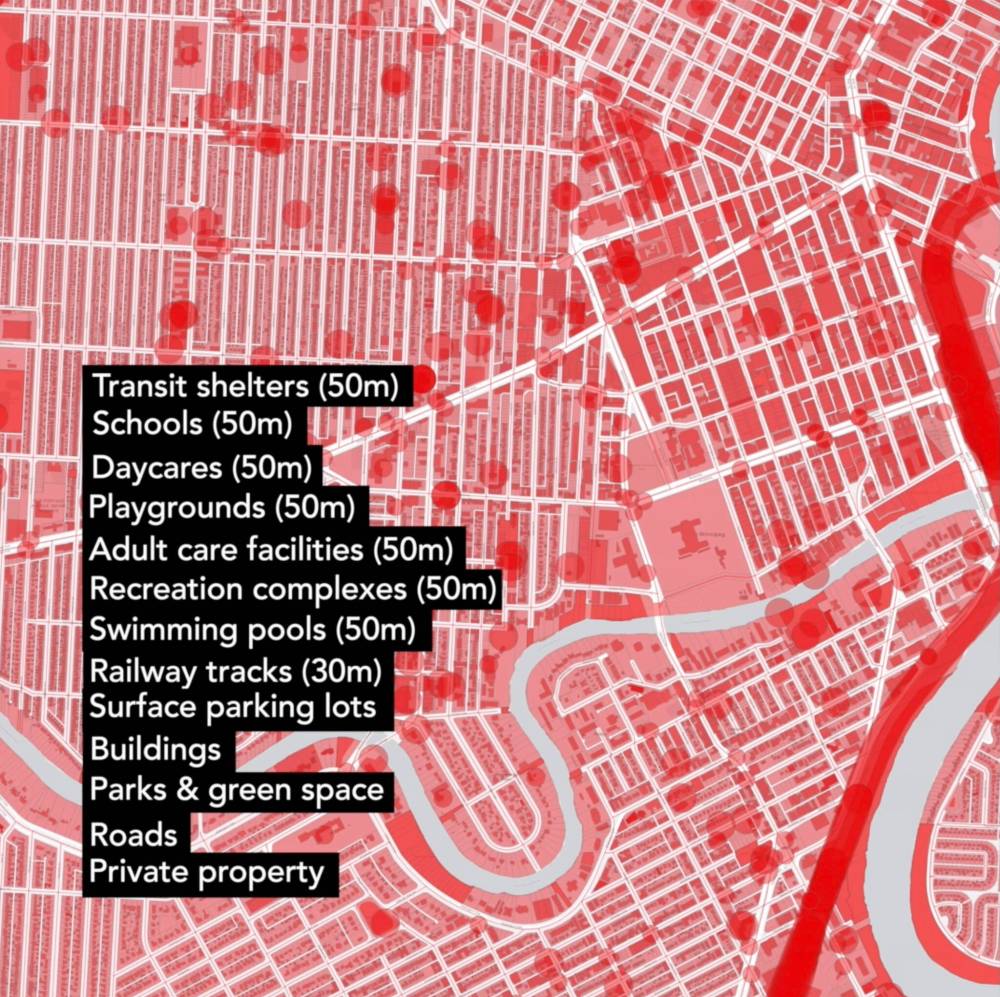
The policy, introduced in November 2025, bans encampments near playgrounds, pools, recreation centres, transit shelters, bridges and rail lines, among other areas.
The visual tool shows there’s little space for encampments once the wide-ranging restrictions, private property boundaries and roads are factored in. Several groups contributed to the formation of the mapping tool: the women’s centre, the Social Planning Council of Winnipeg, Resource Assistance for Youth, Sunshine House, Main Street Project, Public Interest Law Centre and End Homelessness Winnipeg.
MIKAELA MACKENZIE / FREE PRESS The visual tool shows there’s little space for encampments once the wide-ranging restrictions are factored in.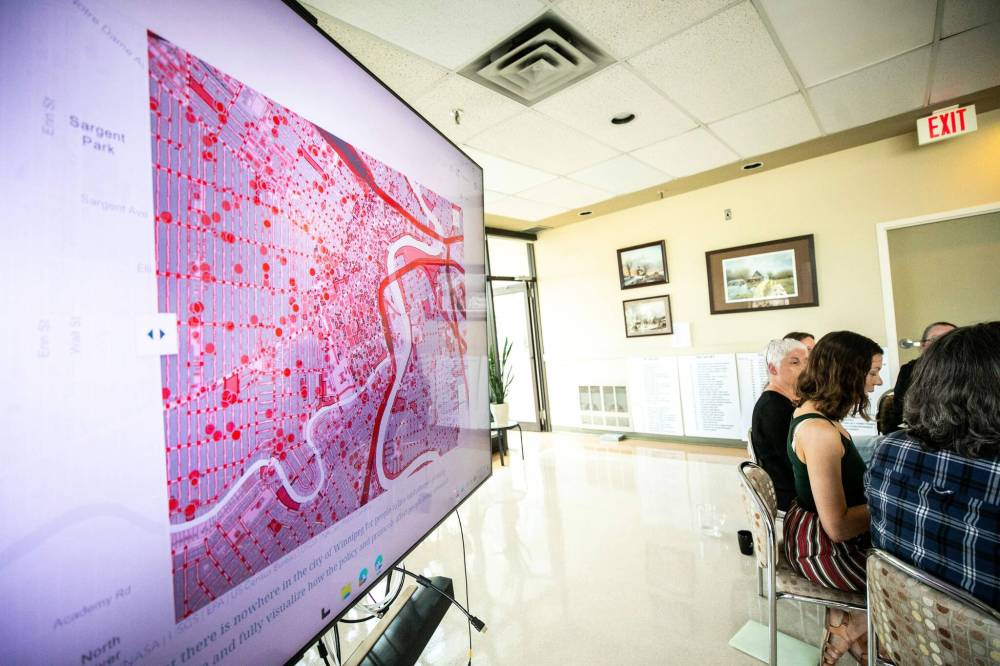
“I didn’t expect to see red over the entire map of the city,” RaY executive director Kate Sjoberg said, pointing to the prohibited encampment areas. “The (encampment ban) was alarming in and of itself. But seeing it visually was even more alarming.”
“I didn’t expect to see red over the entire map of the city.”
The groups say the city’s policy means people are forced away from trusted community supports and the camp communities where many of them feel safe. It’s also instilled fear, a threat of the city “coming” for them, which his viewed as a threat to safety.
“This can mean missed medical care, disrupted mental health support, and lost pathways to housing,” English said.
Mayor Scott Gillingham said the ban would stay, adding that there are members of the public that are calling on him to take an even more forceful approach.
Gillingham noted that enforcement efforts, while continuing despite a housing shortage, have not been ramped up.
“I think we’re offering a measure of grace even within our protocol,” he said.
He told reporters the city brought in the policy to give the parks and playgrounds back to Winnipeg families.
“It is a decision that was the right decision to make,” Gillingham said, adding he feels the policy is a balanced approach, and one that respects the lack of housing available at the moment.
“We need to make sure that families have access to parks and playgrounds without concern, and that there are areas where we just cannot permit encampments to set up.”
MIKAELA MACKENZIE / FREE PRESS “The (encampment ban) was alarming in and of itself. But seeing it visually was even more alarming,” says Kate Sjoberg, executive director at Resource Assistance for Youth.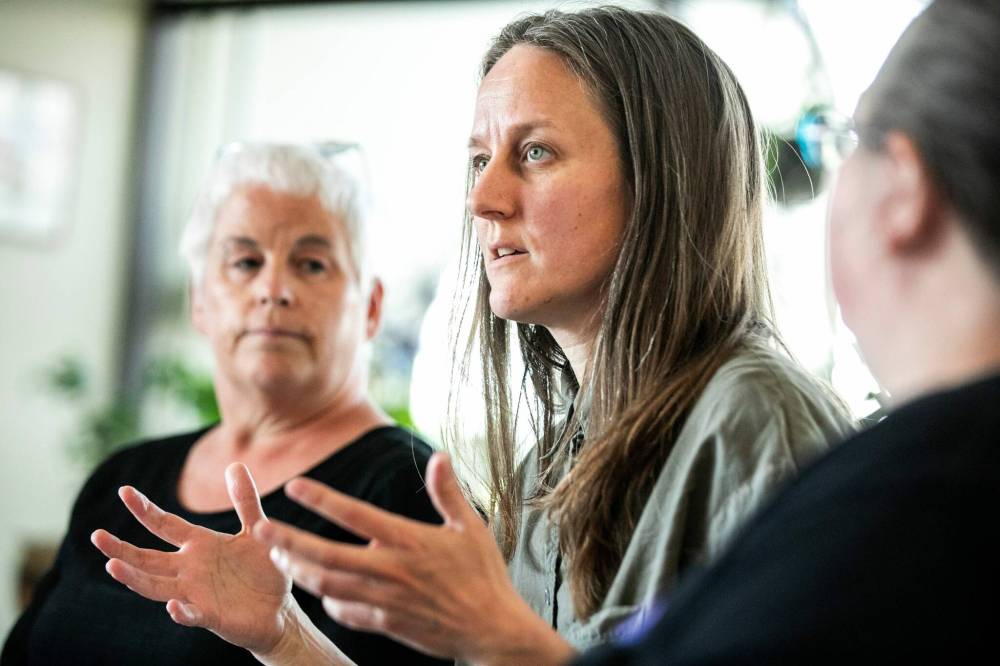
Sjoberg detailed the plight of several people forced to move shortly after the policy took effect. Outreach workers helped six people relocate to the Salvation Army shelter. Five others declined support, including two who cited concerns based on past experiences.
Of the six who moved, two left after one night and returned to an encampment despite having completed Manitoba Housing applications. Outreach groups temporarily lost contact with the couple and later reconnected with them at a new encampment, where they had lost all of their previous belongings.
Workers helped the pair return to the Salvation Army a month later, though their meeting with Manitoba Housing did not take place until nearly three months after they were displaced from the original encampment.
“We need to make sure that families have access to parks and playgrounds without concern.”
Levi Foy, executive director of Sunshine House, said the organization has lost track of several individuals they’ve supported since the ban came into effect.
He said the ban disproportionately affects LGBTTQ+ populations, who battle discrimination and have fewer shelter options.
“We used to be able to connect with community members weekly, multiple times a week, to ensure that basic needs are met while waiting for housing options to become available,” Foy said.
The groups said the policy has created a near impossible situation for those living on the streets. They said without the ability to move, it creates deeper isolation, disrupts essential care and increases risk for the homeless.
“If we are serious about addressing homelessness, we must focus on solutions that preserve relationships, maintain access to supports, and respect people’s autonomy,” English said. “Not enact policies that make survival even harder for our city’s most vulnerable residents.”
Gillingham said firefighters and paramedics are facing a similar strain as they respond to a growing number of overdose calls.
His message to front-line service providers is they need everyone pulling in the same direction.
“We need to be of one mind in this approach, because we’ve got too many people that are struggling with addiction, we have too much open drug use, we have too much crime going on, and so this is not the time to be going in different directions,” the mayor said. “This is a time to be uniting, to combat the challenges on our streets.”
MIKAELA MACKENZIE / FREE PRESS Some outreach organizations are pushing back against the City of Winnipeg’s policy that bans homeless encampments near playgrounds, pools, recreation centres, transit shelters, bridges and rail lines, among other areas.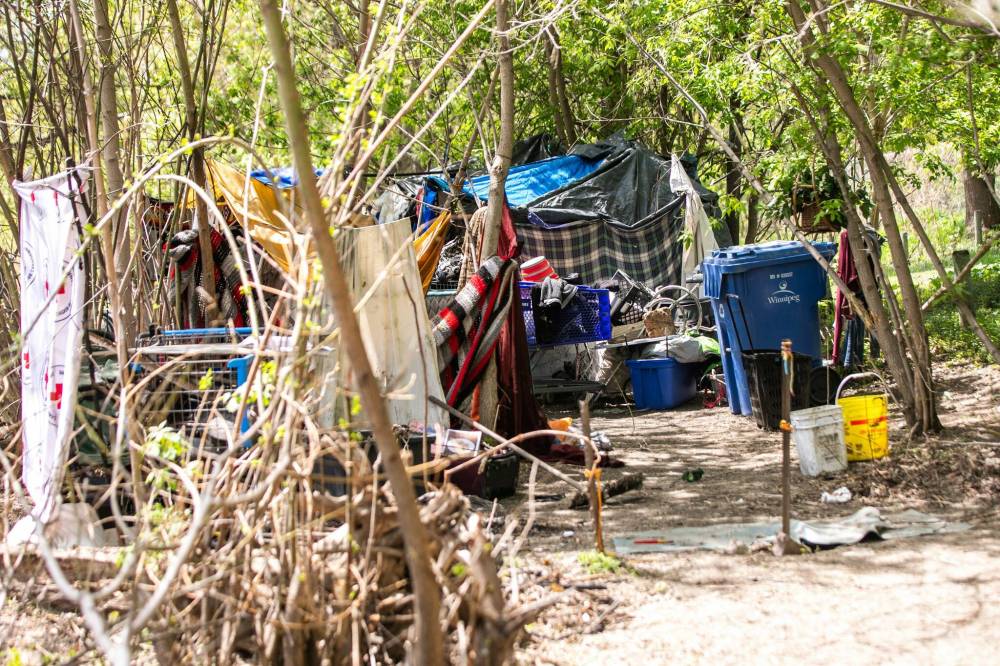

Meantime, advocacy groups are questioning whether the city’s encampment ban aligns with the province’s Your Way Home strategy to end chronic homelessness by 2031.
Housing, Addictions and Homelessness Minister Bernadette Smith did not directly answer that concern Tuesday, saying governments are focused on moving people from encampments into housing.
She defended the city, pointing to its partnership with the province when the strategy was announced in January 2025.
— with files from Joyanne Pursaga
scott.billeck@freepress.mb.ca

Scott Billeck is a general assignment reporter for the Free Press. A Creative Communications graduate from Red River College, Scott has more than a decade’s worth of experience covering hockey, football and global pandemics. He joined the Free Press in 2024. Read more about Scott.
Every piece of reporting Scott produces is reviewed by an editing team before it is posted online or published in print — part of the Free Press‘s tradition, since 1872, of producing reliable independent journalism. Read more about Free Press’s history and mandate, and learn how our newsroom operates.
Our newsroom depends on a growing audience of readers to power our journalism. If you are not a paid reader, please consider becoming a subscriber.
Our newsroom depends on its audience of readers to power our journalism. Thank you for your support.
Related Articles
City missing opportunity to help the homeless, save significant amount of money






History
Updated on Tuesday, May 26, 2026 5:53 PM CDT: Adds details, photos.