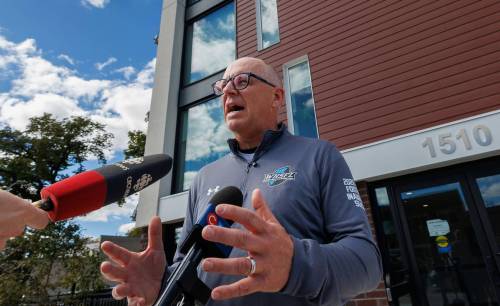
More than a century ago, this building near the banks of the Assiniboine River opened as an orphanage. Later, it became a residential school for First Nations children sent hundreds of kilometres away from their homes and families.
Today, children are still central to the building's mission. It's here where a dedicated team wages a global battle to protects kids from abuse and exploitation at the hands of sexual predators.
Guardians on the prairies Winnipeg-based organization resolute in its global mission — protecting children from online pedophiles
Read this article for free:
or
Already have an account? Log in here »
To continue reading, please subscribe:

Digital Subscription
One year of digital access for only $205*
- Enjoy unlimited reading on winnipegfreepress.com
- Read the E-Edition, our digital replica newspaper
- Access News Break, our award-winning app
- Play interactive puzzles
*First annual payment billed as $205.00 + GST for one year. This annual subscription will automatically renew at $233.00 + GST every 52 weeks (10% off the regular annual price of $259.35). Offer available to new and qualified returning subscribers only. Cancel any time.
To continue reading, please subscribe:
Add Free Press access to your Brandon Sun subscription for only an additional
$1 for the first 4 weeks*
- Enjoy unlimited reading on winnipegfreepress.com
- Read the E-Edition, our digital replica newspaper
- Access News Break, our award-winning app
- Play interactive puzzles
*Your next Brandon Sun subscription payment will increase by $1.00 and you will be charged $17.95 plus GST for four weeks. After four weeks, your payment will increase to $24.95 plus GST every four weeks.
Read unlimited articles for free today:
or
Already have an account? Log in here »
Set back from Academy Road, in Winnipeg’s affluent River Heights neighbourhood, is a two-storey building that was once known as the Julia Clark School.
Clad in sand-coloured brick and rough-cut stone, with tall, double-hung windows, the school was built in 1918 to educate abandoned and orphaned children, who were lodged in buildings that have since been demolished on the banks of the Assiniboine River.
In the late 1950s, the building was repurposed as the Assiniboia Residential School, initially run by the Oblates of Mary Immaculate.
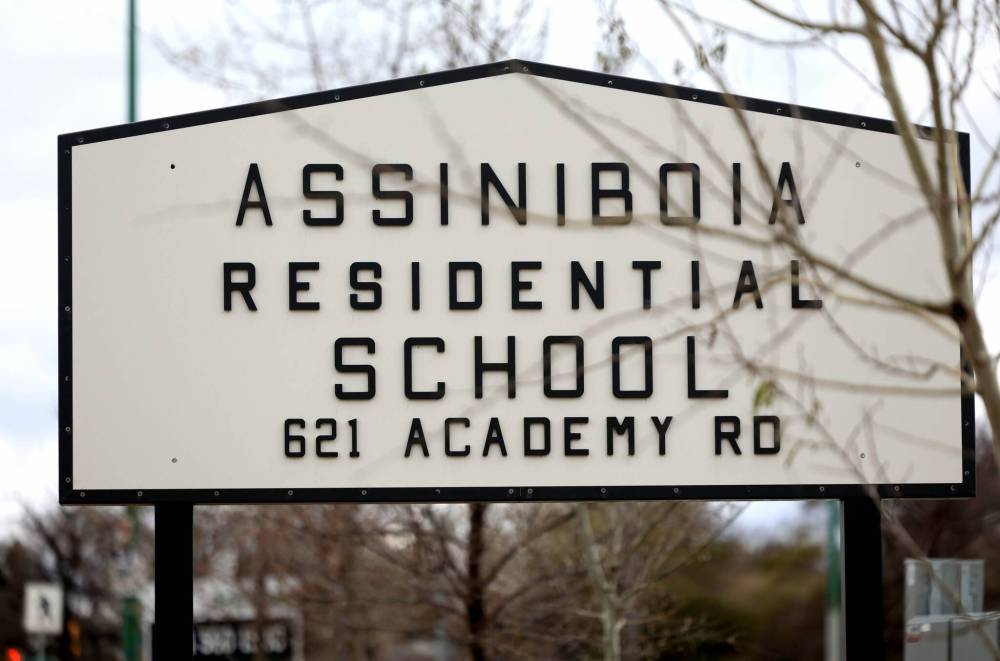
The First Nations children who attended — often hundreds of kilometres from their homes — remembered being taught they would burn forever if they didn’t obey the unbending Catholic dogma and being threatened by an Indian agent when they refused to return to school. They longed for affection that wasn’t given.
In the book Did You See Us? Reunion, Remembrance, and Reclamation at an Urban Indian Residential School, Theodore Fontaine, who attended the institution from 1958-60, recalled neighbourhood white children mimicking the bastardized “Indian war whoops” they’d heard on TV.
Decades later, Fontaine would sometimes sit in his car outside the former residential school, which shuttered in 1973, looking out at the grounds where he and his classmates had once played hockey and baseball. One day, somebody invited him inside.

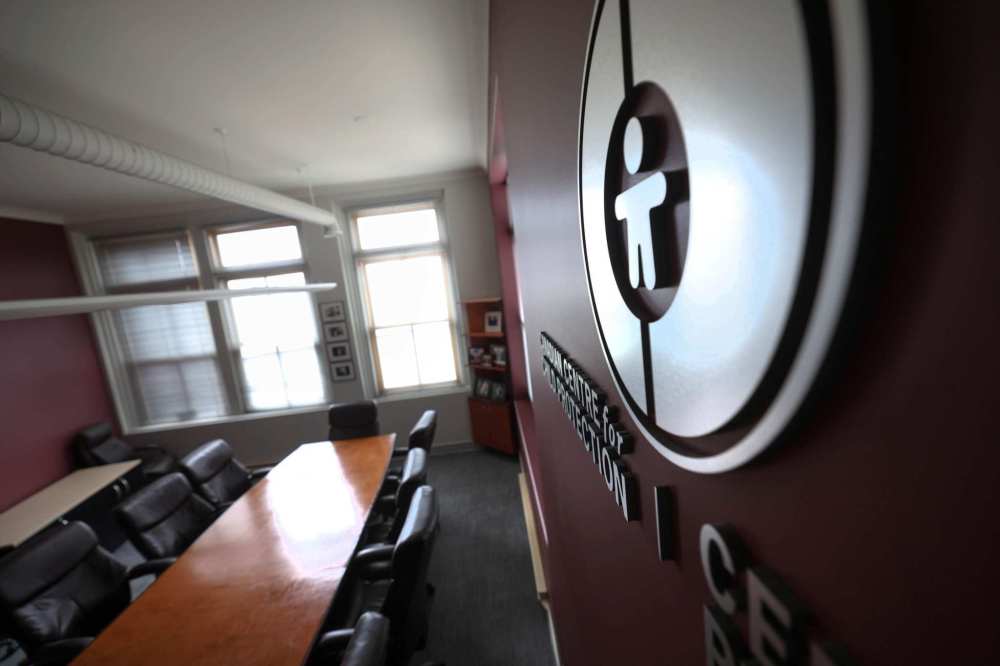
Now home to the Canadian Centre for Child Protection, children are still central to the story of this 108-year-old schoolhouse, but the mission has flipped.
Where once loneliness and isolation were inflicted on First Nations children, the goal now is to protect children, emotionally and physically. And, specifically, to stop the spread of child sexual abuse material on the Internet.
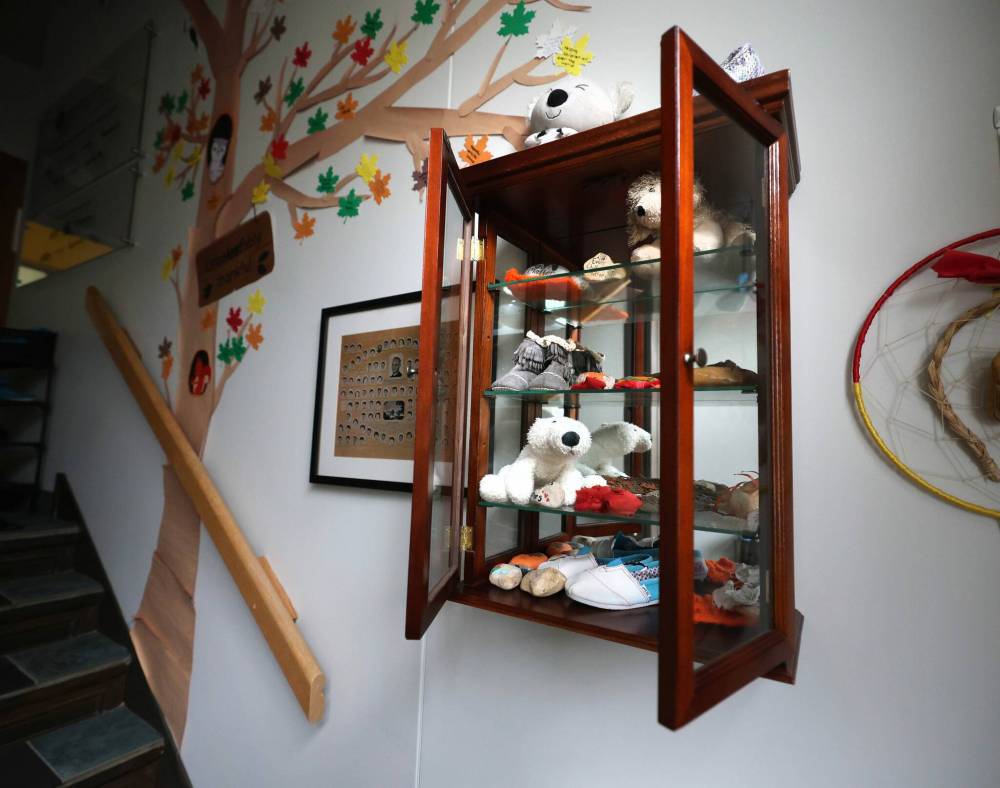
Entering the building today, visitors are shown a glass cabinet containing items — little shoes, stones painted with “every child matters,” stuffed animals — left at the property in 2021, when the Le Estcwicwéy, or the missing, became known with the discovery of 215 possible unmarked graves at the former Kamloops Indian Residential School in B.C.
At the entrance, there’s also a dreamcatcher that was given to the centre by Fontaine, as well as a class picture from the Assiniboia Residential School, which, as Brooke Pritchard, the centre’s manager of administration and recruitment, explained, “Ted Fontaine pulled out of the garbage.”
In the building’s dark basement lies the heart of this unusual organization. A team of local tech professionals have built a system unrivalled, not just in Canada, but across the world.
Twenty-four hours a day, seven days a week, it searches the web for child sexual abuse material, and when it finds it, sends automated notices to the companies hosting the material, demanding it be removed.
Above, on the first floor, a team responds to thousands of reports of online child luring and sextortion.
On the second floor, up a set of wide stairs reminiscent of those you’d find in an aging junior high school, a former police officer tracks offenders sharing child sexual abuse across the web. Legislators, litigators and investigative reporters travel thousands of kilometres to come here — the longitudinal centre of Canada — to hear the organization’s findings.
A few steps across a small parking lot, in a separate, low-slung cinderblock building, a team of lawyers tracks cases involving child sexual abuse imagery, filing statements on behalf of the victims.
Within the building’s walls, sustained global wins galvanize a pragmatic hopefulness.
There are 76 analysts, working in multiple countries, who’ve been trained to help the centre get child sexual abuse material removed from the web; there’s their pressure campaign, which led the billionaire-owned French Internet provider, Free, to remove a vast repository of child sexual abuse material from its servers; and just a few weeks ago, the United Kingdom’s digital regulator tipped its hat to the centre for providing evidence that led to an investigation into the Russian-owned app Telegram for its role in spreading abuse imagery.
Quite simply, the centre is a global authority on the elimination of child sexual abuse material. Child protection experts and legislators, interviewed by the Free Press, have called the centre: “one of the most innovative and effective hotlines in the world … punch(ing) well above their weight;” “a real jewel in Canada;” with staff who are “extremely dedicated and amazingly wise and intelligent and caring and tenacious.”

Despite being a charity, with limited government funding and no enforcement power whatsoever, there’s no other organization, hotline, regulator or even government in the world that’s made as much progress removing child sexual abuse imagery from the web.
But the centre is also greatly valued for something less tangible: it is one of the first organizations to really listen to survivors of childhood sexual abuse.
“No one gets a pass if children are being injured.”
From this historic former schoolhouse in Winnipeg, the Canadian Centre for Child Protection is locked in a David-and-Goliath battle with a growing number of global cyber criminals who are obsessed with creating, stockpiling and distributing images of children being sexually abused.
Increasingly, the organization is also sparring with the tech companies that are facilitating the spread of this illegal material and have failed to put safeguards in place to prevent children from being sexually victimized.
While naming billion-dollar companies is a risk, that’s the job, said the organization’s longtime executive director, Lianna McDonald: “No one gets a pass if children are being injured.”
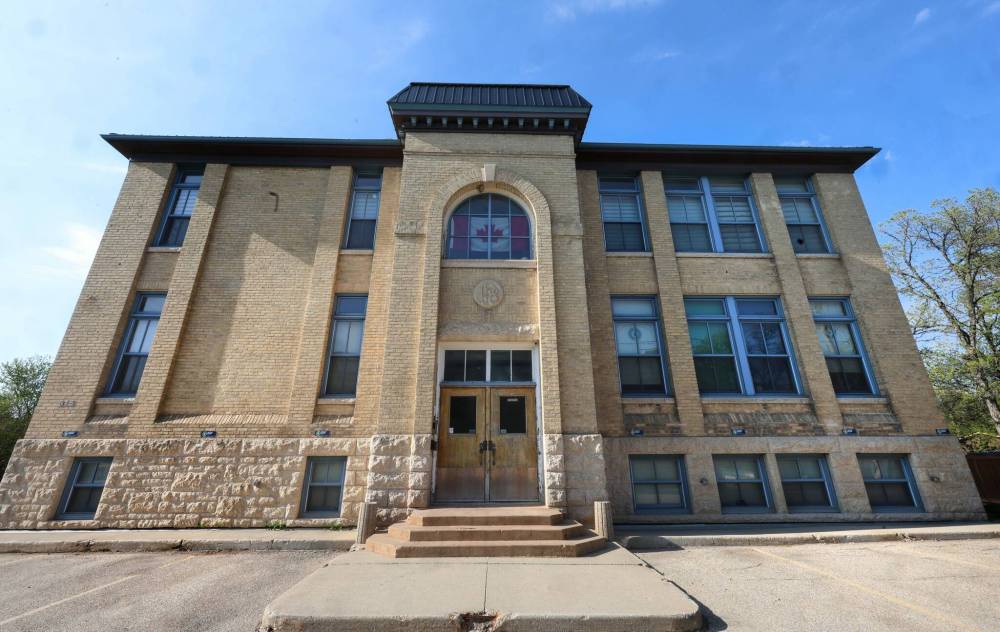
Constructed during the uncertainty of the First World War, the schoolhouse at 615 Academy Road had few decorative frills, save a small flourish or two, like the stone carving revealing its date of completion.
Pulling up to this historic building on a dreary April morning, a song on the radio caught my attention: “We can hear your voice if we just listen. When the sun goes down, there’s still the light of the moon, and I will remember you. If you lived 1,000 years, you’d still be gone too soon.”
The song, which I later learn is by Cree folk singer Celeigh Cardinal, makes me think of Candace.
Candace Derksen was 13 years old on Nov. 30, 1984, when she was abducted while on her way home from school. It took six long weeks before her body was found, tied up and frozen in the shed of an industrial yard. (Twenty-seven years later, Mark Edward Grant was convicted of Candace’s murder. He was later acquitted.)
In an unpublished account of her child’s life and the massive search her disappearance inspired, Candace’s mom, Wilma Derksen, remembered the words a pastor shared at her public funeral: “Whatever evil befell Candace, it will not have the last word in her life. God’s peace is the last word.”
And indeed, evil did not have the last word.

Less than a year after Candace’s death, Wilma and a few other advocates had set up a provincial branch of an organization called Child Find.
Before long, they were putting images of missing children on Budget rental trucks, raising funds through muffin sales and fingerprinting children at Bombers games.
By 1987, more than 20 cases had been registered with the group, and, as the Free Press reported at the time, all were considered solved, with one parent saying the organization had gone to “almost outrageous extremes” to help when their daughter disappeared, even hiring a private investigator.
In 2005, Child Find Manitoba went national, and a year later, officially became the Canadian Centre for Child Protection.
“When I think that came out of Candace, it doesn’t justify it, but it gives it meaning. I love to think of Candace having spearheaded something like that. And that’s her love. She loved children,” Wilma said in an interview with the Free Press. “She was so protective.”
A 2025 study, led by a University of Manitoba researcher, found that roughly 1 in 6 women and 1 in 17 men in Canada experience hands-on sexual abuse before age 16.
“The scariest enemy is the one you cannot see but know is there.”
When it comes to children who are sexually abused, the perpetrators are often men in their own family, who had access to the child through the very vector that is meant to define a family: trust.
And the abuse is most often perpetrated in the very place that is meant to represent their safety: their home.
For roughly half the survivors, the abuse began before they would have learned to spell their own names.
This dynamic was reinforced a decade ago, when the centre distributed a survey for survivors of childhood sexual abuse, whose victimization had been shared online.
Some of the abusers were in jail or dead, but online offenders made sure the survivors’ torment continued. Survivors reported being terrorized by the men who consumed their abuse imagery — they stalked them, posted their legal names in abuse forums, blackmailed them over email, hunted for recent images of them.
“The scariest enemy is the one you cannot see but know is there,” one survivor wrote.
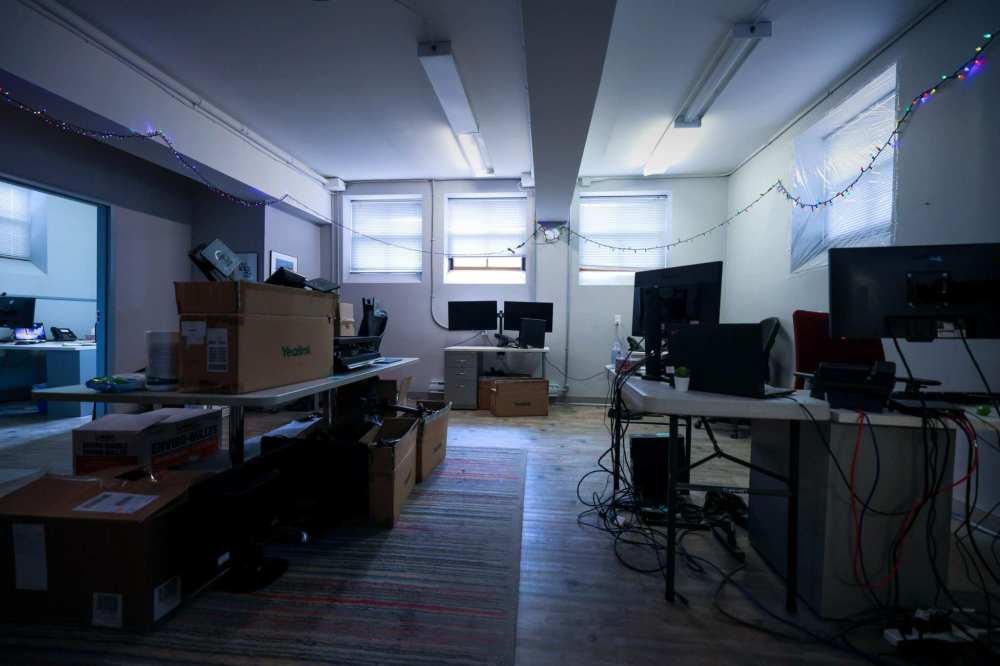
Back at the Canadian Centre for Child Protection, down a short set of stairs into the basement — in what was once a children’s playroom — is where the centre’s technology team keeps a complex system known as Project Arachnid running.
Several team members have worked with the organization for the better part of two decades. The dark room is strung with a set of colourful Christmas lights, which offset the appearance of a lair.
At one point in 2016, the centre was considering how to help a survivor whose sexual abuse imagery was being shared rampantly.
At the time, the centre was set up to receive reports of child exploitation through Cybertip.ca, but the team was starting to ask what would happen if, instead of waiting to receive reports, they also went hunting for illegal material, said Lloyd Richardson, the centre’s director of technology.
With this question, Project Arachnid began, named for spiders who quietly spin webs to trap their prey.
Richardson, now 46, joined the centre two decades ago, after working with a local computer manufacturer and an Internet service provider. He has a square-jawed military look and is wearing a crisp blue button-up shirt.
When he became the centre’s first full-time tech employee, he remembered questioning whether there was even enough work for him to do — a naiveté he looks back on ruefully. The team he leads has since grown to 13 web development and IT specialists.
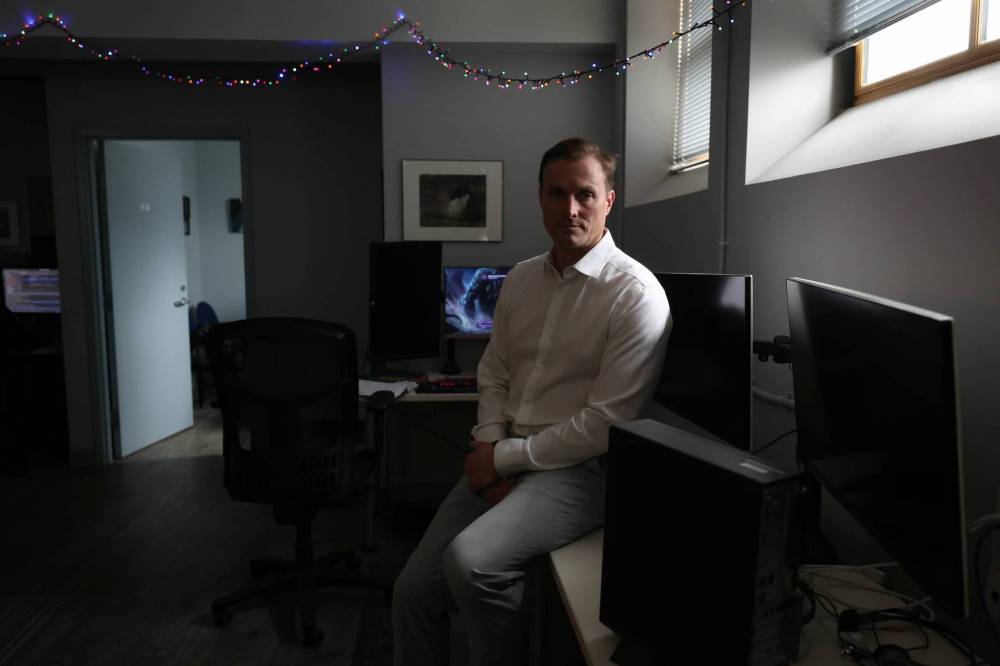
Over the last 20 years, Richardson has become something of an Internet anthropologist with a front-row seat to the explosion in volume — and depravity — of child sexual abuse material.
He has also been paying attention to ongoing debates that frame online privacy and child protection as being diametrically opposed — a view he does not share — and an online ecosystem where a techno-libertarian lawlessness pervades.
“It seems that when the Internet became popularized, we decided to ignore everything that we’d learned previously and say … ‘We don’t need laws. We don’t need rules. This is great! This is a new techno-utopia,’” he said.
“I think it’s a very attractive thing, especially for young males, (they) get attracted to that notion. And it is, quite frankly, toxic.”
Project Arachnid starts with technology called hash matching — where a “hash” is the digital fingerprint, or signature, assigned to a specific image.
Then, Arachnid’s automated crawlers and scrapers go out hunting: scanning tens of thousands of images per second on social media apps, “dark-web” forums, file-hosting services and the like, searching for matches between the images it encounters and the centre’s “hash” list of confirmed abuse material.
Sometimes, the matches are exact. Other times, two images might look identical to the human eye, but contain tiny differences, requiring the use of PhotoDNA — an algorithm that transforms an image’s pixels into a long sequence of numbers.
When the technology finds a match, the system tags it and, based on an ever-growing internal database, sends a “takedown notice” to the hosting company.
But for all its automation, the heart of Project Arachnid is indelibly human.
Before a suspicious piece of material can be hunted for online, the image must be confirmed as illegal or abusive by two, sometimes three, trained analysts.
In 2019, Project Arachnid found a set of imageboards, or internet forums, called Trichan, which were hosting a large volume of child sexual abuse material.
When Trichan’s creators ignored the centre’s takedown notices, a cat-and-mouse game began, with the centre repeatedly approaching the site’s web hosts, leading Trichan’s administrators to switch from one permissive Internet provider to another.
The administrators also responded by injecting invisible pixels into abuse imagery to throw off Arachnid’s reliance on exact matches — a tactic the centre managed to thwart.
After several months, Trichan announced it would shut down, with someone writing, “antis are hunting us to death with unprecedented zeal” (referring to anti-pedophiles).
After nearly 10 years, Project Arachnid has sent more than 141 million takedown notices to over 1,000 companies regarding child sexual abuse material or content identified as “harmful-abusive.” (This figure includes cases where multiple notices were sent because a company did not remove the material within 24 hours).
The harmful-abusive category refers to material that’s not necessarily illegal but is harmful, such as a seemingly innocuous childhood photo of a well-known sexual abuse victim, which when posted, acts as a signpost that someone has illegal material to share.
Despite the enormousness of the number of takedown notices, it is a fraction of a much larger reality. The centre can only crawl what’s in the public view, it doesn’t account for material sent in private, end-to-end encrypted chats like WhatsApp.
Nor does it reflect the fact that Arachnid is sitting on a significant backlog: 95 million images or videos involving suspected illegal or harmful-abusive material that have yet to be classified by analysts.
“When we first started, we were worried about bothering companies,” Richardson said, referring to the takedown notices. “We’re not really worried at all about that anymore…. Quite frankly, if you’re not removing something within 24 hours, you have a problem within how you’re dealing with abuse complaints,” he said.
“When we first started, we were worried about bothering companies…. We’re not really worried at all about that anymore.”
Arachnid revealed that the most permissive companies weren’t necessarily the well-known social media giants.
For instance, the centre has found that offenders rely heavily on file-hosting services that allow large, anonymous uploads and don’t proactively scan for known abuse imagery.
In Canada, it’s illegal to create, possess, distribute or knowingly view child sexual abuse material, which includes AI-generated imagery, anime and written content.
Federal laws now refer to “child sexual abuse and exploitation material,” instead of “child pornography,” removing the insinuation that the material is titillating, consensual or in any way normal. Still, perpetrators often go unpunished.
According to StatCan, in 2024, 94 per cent of all police-reported incidents involving this illegal material were not “cleared,” meaning an offender wasn’t identified or police lacked the evidence necessary to lay charges.
“There may not be an incentive to become knowing, because once you become knowing, you then have an obligation to take some sort of action.”
For the tech companies hosting the material, the consequences are virtually non-existent.
In Canada, only one company — YesUp Ecommerce Solutions — has been held criminally liable for making child sexual abuse material available, according to the centre’s tracking.
The web-hosting company — which facilitated more than 19 million downloads of illegal material, despite being informed about this content over 200 times — was fined $100,000.
Companies operating in Canada are required to report child sexual abuse material on their sites to law enforcement, but this only applies after they become aware of it — whether because the centre flagged it or they detected it themselves.
Companies aren’t obligated to remove illegal material within a certain timeframe or to ensure it’s been fully scrubbed from multiple webpages.
And perhaps most consequently, companies are not required to use readily available “proactive detection” tools, which securely block users from uploading previously identified abuse imagery, which can be done with the centre’s free tool, called Shield.
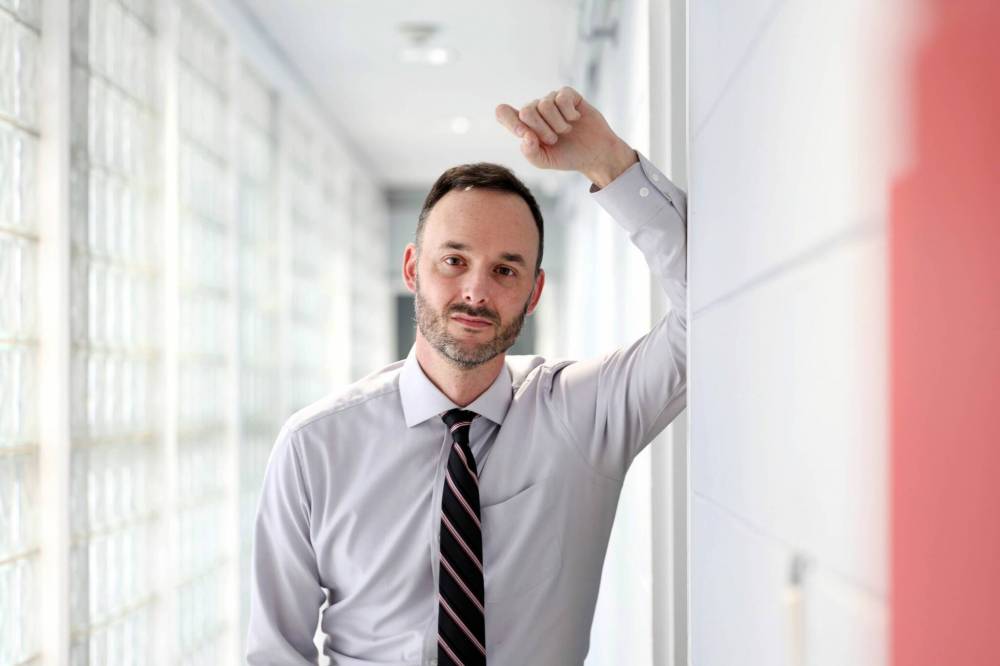
“You can see how there may not be an incentive to become knowing, because once you become knowing, you then have an obligation to take some sort of action,” said Jacques Marcoux, the centre’s director of research and analytics.
This is where Arachnid comes in: for every company that refuses to harness the power of proactive detection, abdicating their (admittedly only moral, not legal) responsibility to prevent the spread of abuse material, the made-in-Winnipeg system has the task of cleaning up behind them.
“We’d been listening to companies telling us they were doing all the right things, only to find out that no, they were blowing smoke,” said executive director Lianna McDonald.
Asked if Project Arachnid’s data shifted her views, McDonald replied quickly: “Oh, beyond, beyond changed. It shifted everything.”
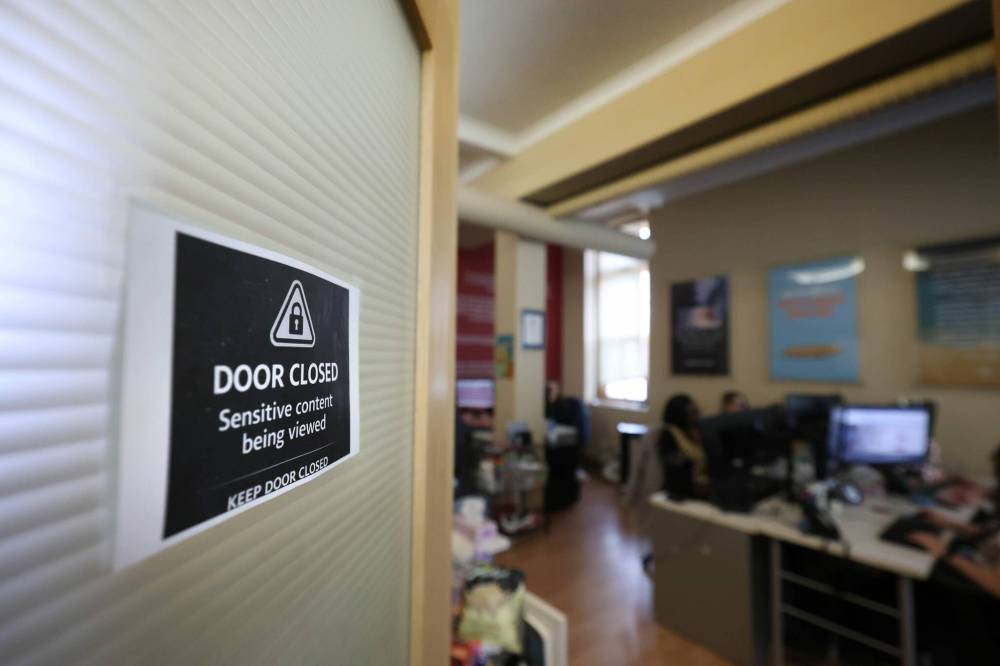
A sign on Cybertip.ca’s first-floor door warns that sensitive content is being viewed. Inside, a dozen or so women sit behind large double computer monitors, their desks tucked closely together. The large windows of the former classroom stay covered, for privacy reasons.
The hotline receives reports from across the country related to the online sexual exploitation of children. Since 2009, a provincial law has made it incumbent on Manitobans who believe they’ve seen child sexual abuse material to report it to Cybertip.ca.
Before the ubiquity of smartphones, it was often adults calling to report material they’d stumbled across online. These days, reports mostly come in through the website, and many are from child victims themselves.
Analysts often forward reports to the centre’s support staff, but in cases where a child may be in harm’s way, they immediately send the reports to law enforcement and child protective services.
In 2025, this team received more than 28,000 reports.
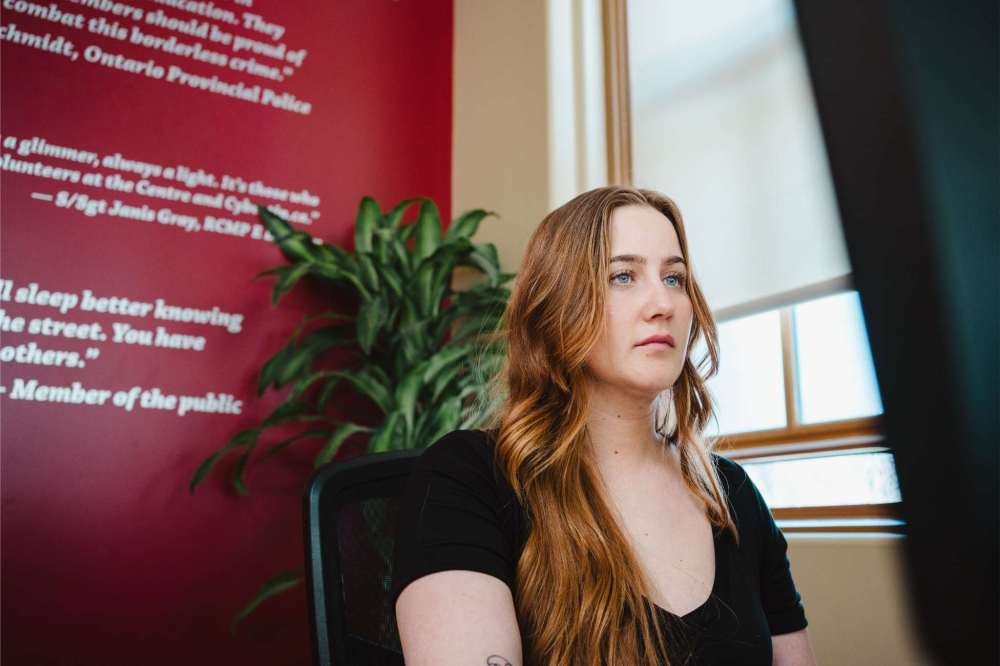
Cybertip.ca analysts are among a relatively small group of staff at the centre with the training to classify suspected child sexual abuse imagery in Project Arachnid. The centre generally sets a limit on viewing these images to around 90 minutes per day.
An analyst spends just a few seconds with each image, pressing a number with their keypad to indicate the severity of the abuse depicted and the approximate age of the child shown, based on sexual maturation training they’ve received.
In a single 90-minute session, an experienced analyst might classify 1,000 images.
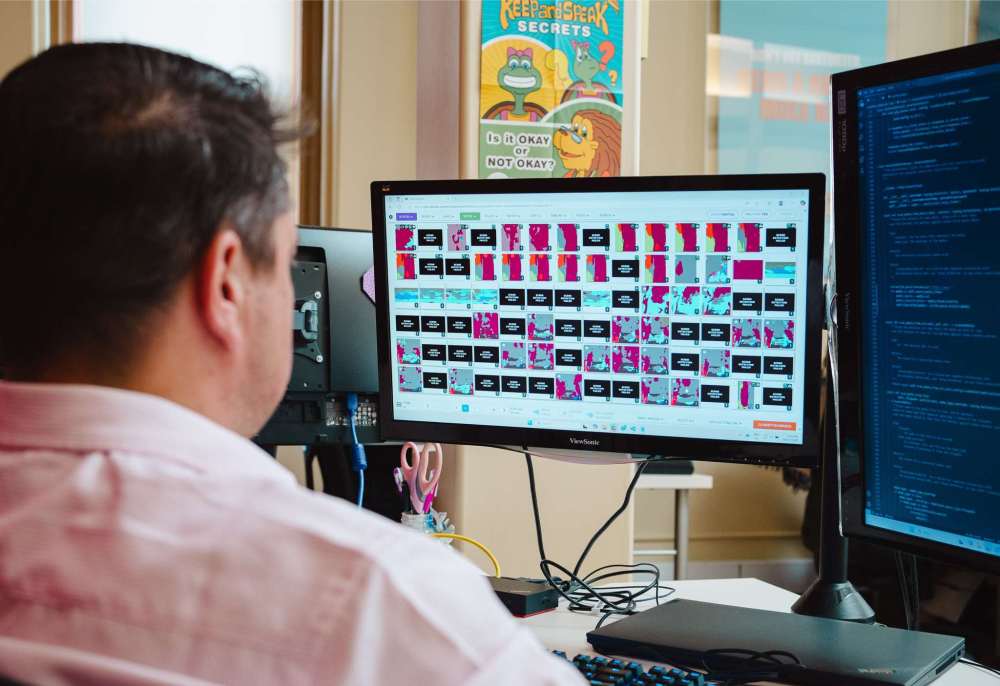
The centre has devised ways to help protect analysts’ mental health. There is the safe classifier view, where abuse images are translated into indecipherable shapes — no details are visible — shaded in maroon, blue, orange, red and grey.
Analysts can also filter images by victims’ ages, said the centre’s Tamara Carvalho, who added that after her nieces and nephews were born, she had a particularly difficult time viewing the abuse of infants.
Analysts also have the option to view images in grayscale, which helps them stay emotionally detached. “It looks slightly less realistic,” said Alexandra Catanese, who, like Carvalho, is an operations manager for the hotline.
“They’re less likely to form subconscious associations and have things they see in real life trigger memories of (the abuse content),” Catanese added. Analysts also have access to a therapist experienced in child abuse imagery, team-building outings and regular check-ins.
This type of work, the two women agreed, underscores how common childhood sexual abuse really is. “(It) really fundamentally alters my worldview,” said Catanese. “It’s made me a lot more vigilant and a lot less trusting of people in general.”

It’s not only Cybertip.ca analysts classifying this material. Around the world, 76 trained analysts from 18 different child protection organizations or hotlines have become partners of Project Arachnid.
Thomas Andersson is one of these analysts. Based in Stockholm, he is responsible for international collaborations at ECPAT Sweden, which, like the Canadian centre, runs a child protection hotline.
After hearing about Project Arachnid at a conference in Berlin, he reached out, and in 2018, ECPAT Sweden became Project Arachnid’s first European partner.
And it’s making a big impact: last year, ECPAT Sweden’s team of four analysts assessed 3.2 million images.
Once an image is assessed, Project Arachnid goes looking for it, which, Andersson said, may lead to it being removed “maybe hundreds of times, thousands of times, because of the few seconds you put in.”
And the impact of these efforts on survivors is formidable. “They can actually get help in a much more efficient way. And also, knowing that there are people out there working so hard for their best interests, in a world, unfortunately, where this may not always be true,” Andersson said.
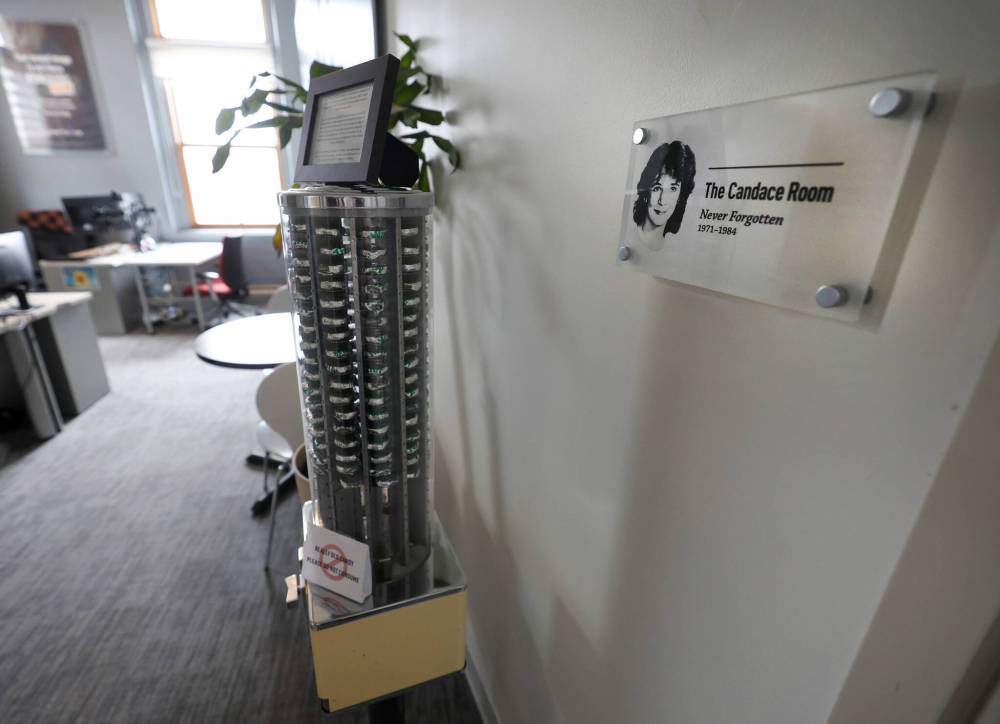
On the wide staircase up to the centre’s second floor, it’s easy to picture school children filing up and down, being told to keep to one side, running and jostling each other.
Today, a dozen or so portraits of missing and murdered children line the stairwell. Each is inscribed with the phrase “Still Searching” or “Never Forgotten.”
At the top, is the Candace room, named, of course, for Candace Derksen. A 25-cent candy dispenser, once used to raise funds for Child Find Manitoba, stands by the door. A note warns visitors not to eat the decades-old mints inside.
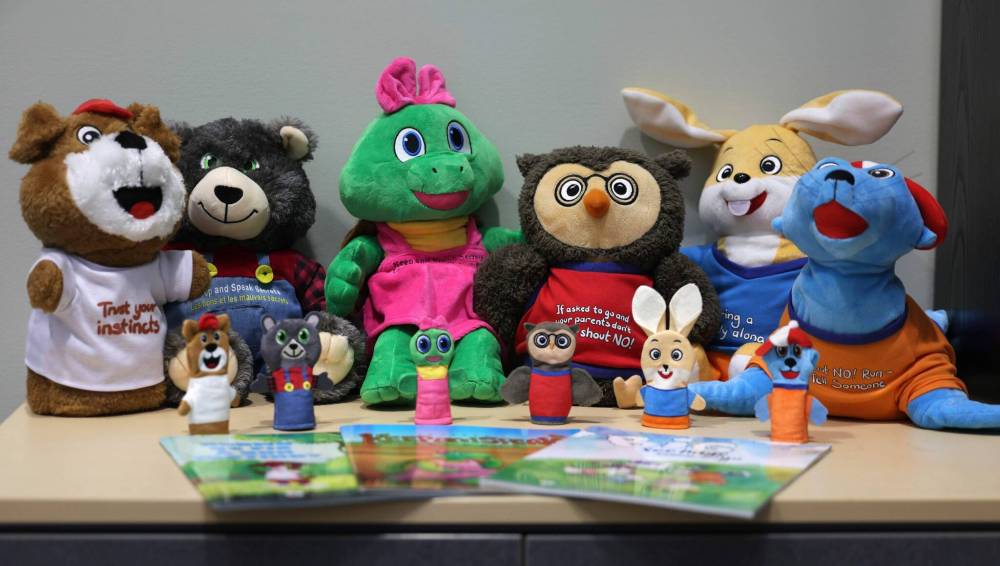
Inside the room, there’s a box of stuffed puppets: a fluffy grey bear named Makoons wears overalls that say “keep and speak secrets” — the idea being that some secrets, like a friend’s surprise birthday party, are OK to keep, but others must be told to a trusted adult.
On the walls, are more photos: Daniel Lints, Harry Burke, Rehtaeh Parsons, Amanda Todd and other children from across Canada, whose sexual victimization and subsequent deaths represent the losses the centre is so desperately trying to prevent.
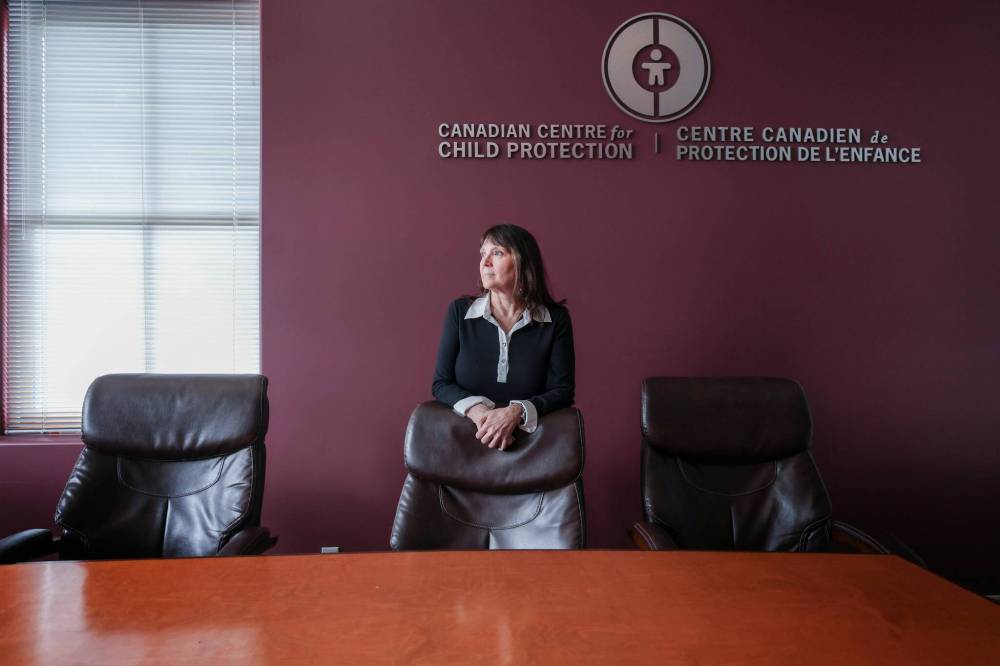
On a late April afternoon, Lianna McDonald, the centre’s executive director, walks in. She has just returned from Chile, where she was meeting with that country’s child safety advocates.
It’s in this room that the centre receives visitors from all over the world. They’ve hosted delegations from as far away as the Philippines, U.S. lawyers engaged in social media litigation, and Canadian politicians.
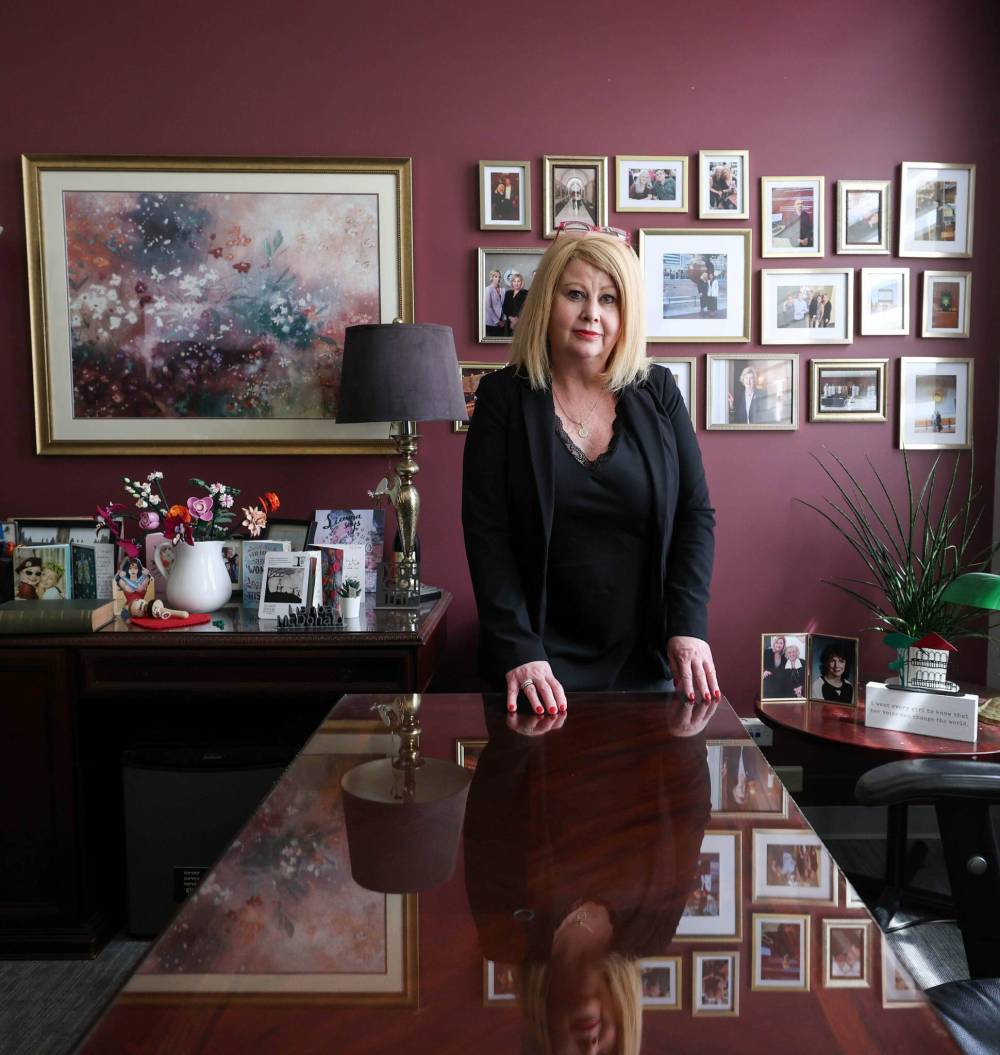
A lifelong Winnipegger, McDonald became the executive director of what was then Child Find Manitoba when she was just 28 — nearly three decades ago.
She subsequently led the centre through the launch of Cybertip.ca, Project Arachnid and multiple pushes for federal online safety legislation, as its staff nearly doubled in size during the COVID-19 pandemic, reaching more than 80 today.
She’s spent nights, after analysts went home, classifying material in Project Arachnid, and has outlasted by decades the typical turnover among those required to view abuse imagery.
“We’re taking on the titans, we know that. And we have been, I think, a very powerful disruptor,” she said.
What gets McDonald most animated is discussion of a social media delay — or ban, depending on who’s describing it.
She wants to see federal legislation restricting children under 16 from holding accounts on certain social media platforms.
Late last year, Australia became the first jurisdiction to take this step, but others are considering it, including Premier Wab Kinew, who has recently voiced his support for a ban.
“I think that there’s a real wrong narrative going on here,” McDonald said. “You have to remember, I don’t trust the tech lobby industry, and I feel like there has been a lot of infiltration on the narrative.”
Under Justin Trudeau, the Liberals made two attempts — in 2021 and 2024 — to introduce online safety legislation, which would have muscled tech companies into removing sexual abuse imagery within 24 hours.
Both died on the order paper.
A third attempt is underway: Prime Minister Mark Carney’s government is set to introduce new online safety legislation this year.
McDonald emphasizes that this legislation does not need to be perfect the moment it’s introduced, but it cannot wait.
“This is not about punishing children, this is about asking ourselves the right question. And the right question is: is social media good for young people and children? We have all the evidence that says no,” she said.
McDonald has been closely watching litigation in California, which, in March, resulted in a jury decision that Meta and YouTube had harmed a young plaintiff’s mental health by intentionally engineering their products to be highly addictive to children.
Just a day earlier, a New Mexico court found Meta did not do enough to prevent the sexual exploitation of children on its platforms.
“It’s time to pull the emergency brake.”
“When we take kids away from these all-consuming, addictive devices, there’s a whole part of their brain that gets to open up,” McDonald said. “It’s time to pull the emergency brake.”
Canada does not have safety standards for online services, including social media, nor a regulator to enforce compliance. By comparison, Canadian laws dictating the safety standards for children’s toys are exacting, comprising a long list of requirements about toxicity, flammability and other hazards.
Or as Jacques Marcoux, the centre’s research director, put it: “The U.S. doesn’t allow the import of Kinder Surprise eggs because of the choking hazard, but we allow companies to put all kinds of harmful algorithmic stuff in the hands of our kids.”
Regulators are not courts; they do not mete out criminal or civil judgments. They investigate compliance with laws, issuing warnings and fines.
Globally, at least nine countries now have online safety regulators, including Ireland, Fiji and the U.K.. But for seven long years, Australia was the only one.
“You’re here on the peloton going up the mountain, and nobody’s driving you behind you.”
“You’re here on the peloton going up the mountain, and nobody’s driving you behind you,” said Julie Inman Grant, the eSafety Commissioner of Australia, in a video interview from Sydney.
In December 2025, Australia began blocking kids under 16 from certain social media platforms. eSafety was in charge of communicating to teens and parents about these changes, as well as holding companies responsible if they fail to oust underage users.
By an early estimate, 4.7 million accounts were removed, though, as Inman Grant detailed in a recent compliance report, some companies are skirting the requirements, helping youth get re-enrolled.
Until Canada has its own regulator, Inman Grant said, the Canadian centre will continue to be “the front lines of defence, alongside Canadian law enforcement,” adding, “what I do envision is a world where we have as many online safety regulators as we do data protection authorities or privacy commissioners.”
The United Kingdom, meanwhile, passed the Online Safety Act in 2023, which gave additional scope and enforcement powers to Ofcom, the country’s telecoms regulator. Since then, Ofcom has investigated more than 100 companies, issuing fines totalling nearly $7.4 million.
Among other steps, U.K. law now requires tech companies to block children from viewing pornography and to use proactive detection tools to stop child sexual abuse material from being uploaded. It also recommended anti-grooming measures, including removing children from “network expansion prompts” that suggest their accounts to strangers.
Need help?
If you are a child being sexually exploited online or if an intimate photo of you has been shared without your consent, contact the Canadian Centre for Child Protection at NeedHelpNow.ca or Cybertip.ca.
Reports can also be made by calling 1-866-658-9022.
Michael Tunks, an online safety expert with Ofcom, said the regulator is focusing investigations where they will have the most impact, including closely probing file-hosting services.
The Canadian centre has been crucial in identifying which of these services are acting as large repositories for abuse material, Tunks said.
Some file-hosting services have gone offline rather than comply with the U.K.’s laws, others have taken action, rolling out hash-matching tools. (Virtually every staff member at the Canadian centre, when asked for the one change they’d make to protect children, called for mandated proactive detection.)
Ignoring these requirements can lead to fines of up to $33.4 million or 10 per cent of a business’s worldwide revenue, whichever is greater.
“We can also put in place business disruption measures, which is where we can apply to a court (for) their service to be basically blocked in the U.K.,” Tunks added.
Without a regulatory system in Canada, and with tech companies essentially exempt from the risk of criminal prosecution, the justice system generally deals in the realm of individual offenders.
During court proceedings, defendants’ lawyers often detail their clients’ personal difficulties in the hopes of securing a more lenient sentence, leaving victims comparatively voiceless. But over the last decade, the centre has found a way for those voices to be heard.
In cases where offenders have collected child sexual abuse and exploitation material, the centre files victim impact statements from the survivors depicted.
These statements are pre-prepared documents that can be submitted in multiple cases, without repeated involvement from the survivor, who is identified by a pseudonym.
Monique St. Germain, the centre’s general counsel, spearheaded this innovative process by cultivating relationships with survivors and their families, as well as the lawyers who represent them.
The centre now stewards the statements of more than 40 victims or their parents and has filed them in court more than 1,300 times.
“You’ve got all these victims who are basically frozen in time in this collection that the offender has had, and there wasn’t, at that time, any real way or any process for those victims’ thoughts, views, impacts, to be heard,” said St. Germain, who has worked with the centre for 16 years.
This was evident in the case of Dax Mrozik, who pleaded guilty last year to possessing child sexual abuse and exploitation imagery, with his lawyer arguing for leniency because of Mrozik’s mental health issues. Mrozik’s lawyer said his client is appealing his 2.5-year sentence.
Mrozik, then 19, was arrested by Winnipeg police with a large amount of abuse material in a secure cellphone folder. Some of the abuse imagery was AI-generated or involved anime.
But he’d also collected images and videos showing the abuse of real children, which Judge Catherine Carlson detailed in unflinching language. The material depicted infants, toddlers and prepubescent children.
In one video, a dog licks the vagina of a young girl. In another, a roughly three-year-old girl is forced by the hair to perform oral sex on a man. A man anally rapes a boy, also around three years old, who is heard crying in pain, grabbing at his stomach.
“What we’ve been doing is humanizing the victims and ensuring their voices get amplified.”
In Mrozik’s case, the centre filed five pre-written victim impact statements from survivors depicted in the abuse Mrozik collected.
There was “Andy,” sexually abused as a young child, who has had to contend with more than 500 cases where offenders have been investigated, charged or sentenced for collecting images of his abuse.
There’s “April,” a teenager, whose mother has received more than 22,000 notifications from authorities that her abuse has been viewed by offenders, until the panic attacks got so bad the family had to stop the alerts.
There’s the mother of “Pia,” who says the sexual abuse her child suffered has made her daughter feel cripplingly insecure and physically sick.
There’s “Sloan,” who has been threatened, sexually harassed and encouraged to commit suicide by pedophiles.
And there’s “Violet,” whose parents have yet to tell her that images of her abuse were distributed all over the Internet, and who dread the day they will eventually need to do so.
The effect has been clear: “What we’ve been doing is humanizing the victims and ensuring their voices get amplified,” St. Germain said.
Across the hall from the Candace boardroom is the secure office of the centre’s strategic intelligence team, made up of three analysts. They spend much of their time monitoring where offenders share abuse material.
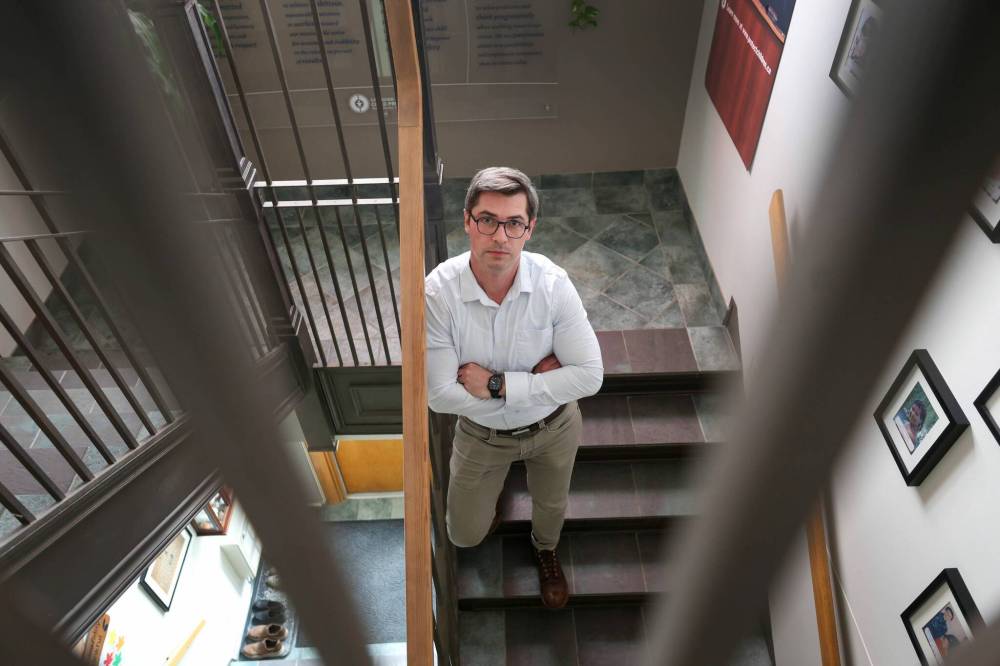
The head of this team, “Sasha,” who is officially the centre’s manager of stakeholder relations for Project Arachnid, used to lead child exploitation investigations as a police officer in Ukraine before working internationally in several related roles. He has neatly combed salt-and-pepper hair and speaks with an economy of words common to those in law enforcement.
Straightforward and to-the-point, he has the presence of someone who is not easily shocked. (The Free Press is referring to him by a nickname to protect his identity.)
Sasha sifts through the easily accessible parts of the web, as well as the dark web, which the centre takes pains to note is essentially synonymous with a U.S. non-profit called the Tor Project.
Tor’s “Onion services,” which function like anonymized webpages, use a system akin to a pinball machine, which ping-pongs data through multiple layers of obfuscation with servers around the world operated by a cohort of volunteers, until a user’s identity, as well as their browsing habits, are well hidden.
Crucially for offenders, the service also obscures the identity of those operating these webpages.
The centre has long observed communities on Tor forums discussing how to avoid getting caught by authorities (“you must develop a dual identity and squirrel away on topic stuff on very well hidden, encrypted drives,” said one); normalize child abuse (“it’s natural when it’s done with respect, love, reciprocity and consent”); or to get one’s Instagram algorithm to suggest more accounts of children (“little dancers and gymnasts, all completely legal and harmless, with accounts almost run and approved by their Mom”).
Sasha prioritizes the handling of newly produced and unrecognized material, which indicates cases where a child may still be being actively abused. He looks for clues such as new iPhone cases, scraps of metadata or the use of new apps.
These cases are urgently referred to law enforcement. But first, Sasha and his team need to figure out where a child may be.
They look at electrical sockets to get clues as to whether they may be in North America or Europe. “Or if there is a keyboard on the screen, that’s, for example, sold only on Amazon U.S.,” Sasha added.
Sometimes, offenders share their location themselves, saying things like: “‘Hello, I’m from Argentina, I would like to share pictures of my niece.’”
Sometimes, offenders get obsessed with victims, monitoring their social media as they become adults.
“They would say, ‘Oh, yeah, this victim, she moved over there and she’s working in this place right now. So, here’s her LinkedIn profile,’ and somebody (will say), ‘Oh yeah, I’m living in the city nearby, so I might visit her,’” said Sasha, who sends these posts to law enforcement.
The difference between offender communities on Tor and those on the regular web, Sasha explained, is that while the latter are focused on monetizing abuse imagery, on Tor “they are sharing it for free, but they are building sort of, I would say, it’s like a strong community feeling … sort of like an organized crime group.”
Sasha said about 20 per cent of the material he encounters on Tor forums is AI-generated.
In just one year, between 2024-25, British analysts at the Internet Watch Foundation observed a roughly 26,000 per cent rise in the number of abuse videos generated by artificial intelligence.
A March report by Suojellaan Lapsia, a child protection organization based in Helsinki, Finland revealed that most people seeking abuse imagery are young men.
In an anonymous survey of more than 20,000 adults searching for this kind of material on Tor, 45 per cent were between 18 and 24, and many were students. (An additional 11,000 respondents had to be excluded because they were under 18.)
Most reported they first saw abuse imagery accidentally, sometimes at age 10 or younger.
“This is the first generation of people who would have had a smartphone as a child,” Dan Sexton, of the Internet Watch Foundation, said at a press conference.
“They hyper focus on the theoretical good things that Tor has done and I think they’ve drank a lot of Kool-Aid.”
Based in a small town in New Hampshire, the Tor Project is funded by private donations and public funds, including the U.S. State Department.
It says its services allow human-rights activists and journalists around the world to communicate information when confronted with repressive states.
The non-profit did not answer specific questions posed by the Free Press but said in a statement they recognize the “legitimate concerns” raised by child protection organizations and are “deeply troubled by the fact that a small fraction of internet users exploit Tor to facilitate harm.”
Yet the non-profit also presented its services as part of the solution to child sexual abuse, noting that anonymous pathways, like Tor’s, are crucial for offenders to seek help.
But the centre sees it differently. Since 2017, Project Arachnid has identified more than 44,000 “Onion” services, which have shared millions of pieces of child sexual abuse material.
“The Tor Project actively suppresses information related to the harms that they create through their service,” tech lead Lloyd Richardson said.
“They hyper focus on the theoretical good things that Tor has done and I think they’ve drank a lot of Kool-Aid.”
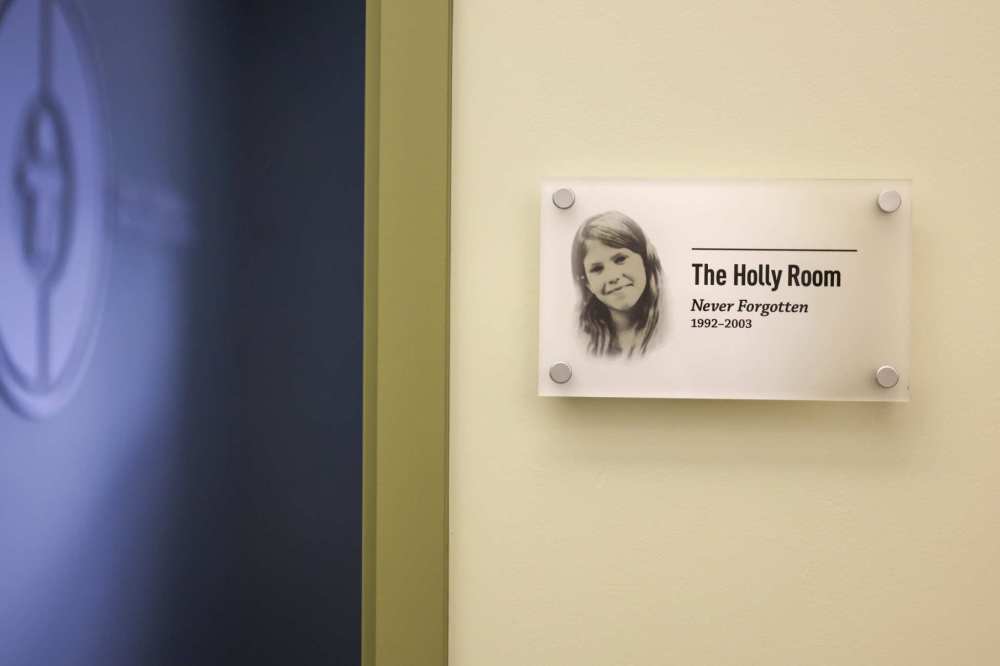
In the 1960s, a bland cinderblock structure was added to the residential school’s site and became the institution’s indoor gymnasium and chapel.
Today it is home to the centre’s legal, research, design and education teams, as well as its small but mighty mailroom, which sends roughly one million resources each year to schools, community centres, daycares and other places.
On the wall is a colourful poster, made by survivors, with one line that jumps out: “We have the courage to change things.”
This building also includes the Holly boardroom, dedicated to 10-year-old Holly Jones, who, in 2003, was sexually assaulted and killed by Michael Briere in Toronto. He had been watching child sexual abuse videos just minutes before abducting Jones.
Her murder marked the first time in Canada that a direct connection had been made between an offender watching illegal material and committing sexual violence.
Lindsay Lobb, running a few minutes late, enters the boardroom apologizing, saying how busy the day has been. (Later, she concedes it’s never not busy.)
It would be easy to understand if the centre’s staff were hardened by the depravity of the abuse they’ve witnessed, especially given the long years many have spent in their roles.
But in meeting 11 staff members during multiple visits, I saw a group of people who are caring, warm and kind.
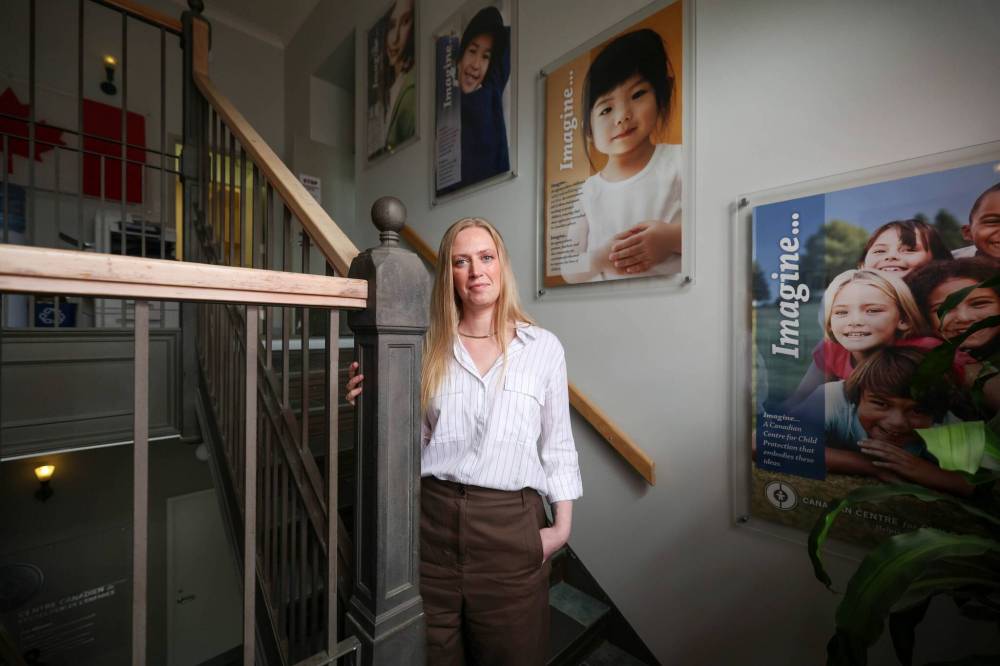
Lobb gives off the energy of a big sister you would confide in.
Lobb was just 24 when she joined the centre, and now, in her early 40s, is the director of support services, both for children who’ve been sexually victimized and their families, but also for families of missing children.
A social worker, Lobb started out working on missing child cases for then-Child Find Manitoba. Even today, almost 20 years later, she can easily recount details about children who remain missing.
Just last year, Lobb’s team responded to 3,975 children and families needing support for online sexual victimization — their highest number yet.
Lobb had calculated that figure just hours earlier and it left her reeling. “I was actually a bit blindsided by that number,” she said.
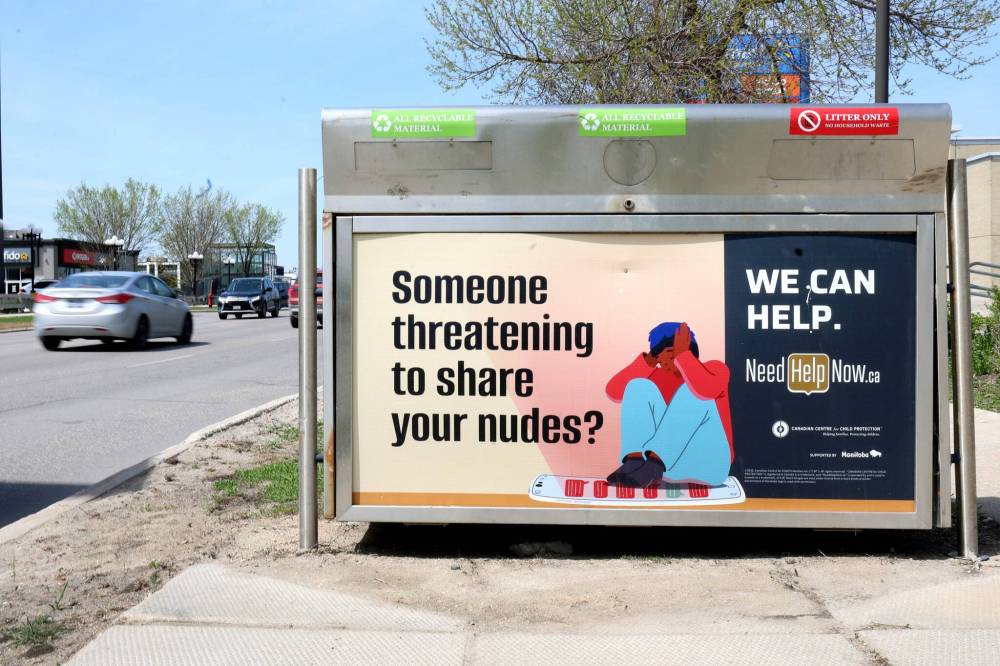
When children are referred to Lobb’s team, they rarely know who or where the child is. Kids can speak to them over the phone, but most choose email.
Centre staff provide guidance, steer the children towards a safe adult, and perhaps most importantly, help them disrupt an offender’s contact.
When a child is being sextorted, they focus on the facts: “If you can take the step to block them and don’t comply with their demands, they’re going to go away,” Lobb said, pointing out the offenders only care about money.
Team members sign emails with their first names. And in the age of AI, this personalization matters.
“We’ve actually had kids come back to us and go, ‘Are you a real person? Or are you AI?’ And I’m like, if you only knew how painstakingly we looked at every word we sent, you would know we’re real,” she said.
Since the COVID-19 pandemic began, sextortion against teens has exploded, with the centre logging a 300 per cent increase in reports between 2020-2025.

Here’s how sextortion typically plays out: a perpetrator reaches out to a teen on social media, usually a boy, pretending to be a girl around the same age. The offender might send fake photographs to establish their false identity, then request sexual content.
If the teen sends an explicit image back, the perpetrator immediately starts demanding money, threatening to share the photo with the victim’s friends and family.
Often, victims do pay, at which point perpetrators typically extort them for even more money.
According to a 2024 report by the U.S. thinktank Network Contagion Research Institute, virtually all sextortion targeting minors is linked to a West African cyber-criminal group called The Yahoo Boys, who primarily target children on Snapchat, Instagram and a French-owned app called Wizz, which uses a swiping format, akin to Tinder, to match children (or adults pretending to be children).
At least 45 teenagers in North America have died by suicide as a result of sextortion, according to tracking by Paul Raffile, a global cybercrime expert and the lead author on the institute’s report.
“How is it that organized crime abuse networks are allowed to access, target and terrorize children, without any action being taken by police or government?”
This includes the death of 17-year-old Daniel Lints in 2022 in Pilot Mound, Man. He died by suicide three hours after being targeted on Snapchat by a predator who was later traced to Nigeria. No one has ever been held responsible for his death.
“Every time I read an article about a child being victimized online, it always goes back to the parents — watch your child online and have the hard conversations. We did all those things,” wrote Jill Lints, Daniel’s mom, in a victim impact statement she shared with the Free Press.
“We ask: how is it that organized crime abuse networks are allowed to access, target and terrorize children, without any action being taken by police or government?”
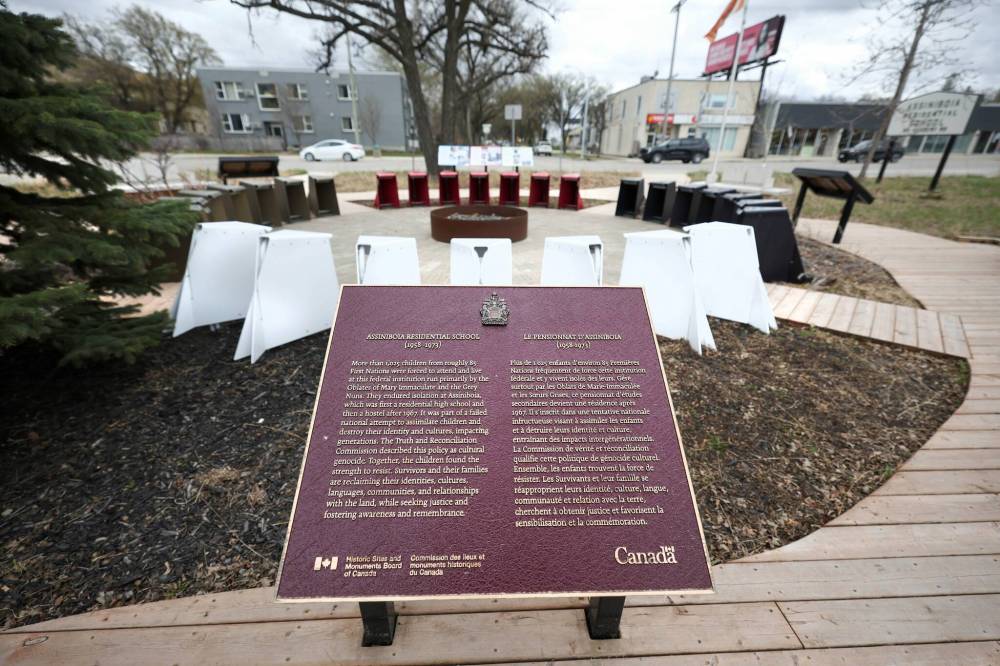
Behind the Canadian Centre for Child Protection, where the work can fall heavy and dark on its staff, there’s a peaceful park alongside the Assiniboine River. It was there that children of the orphanage, and later, students at the Assiniboia Residential School, once played.
In 2022, a year after his death, the park was renamed for Theodore Niizhotay Fontaine. (Niizhotay means “double heart” in Anishinaabemowin and was his great-grandfather’s name.)
Fontaine maintained a close relationship with the centre for nearly 10 years after staff spotted him looking out at the grounds one cold December morning.
The names of Fontaine and his residential school classmates are now inscribed in a monument on the grounds erected by the Assiniboia Residential School Legacy Group.
More than 1,000 names are carved into Indiana limestone blocks, arranged into concentric circles surrounding a ceremonial fire. A patch of prairie sage bends upwards after a long winter.
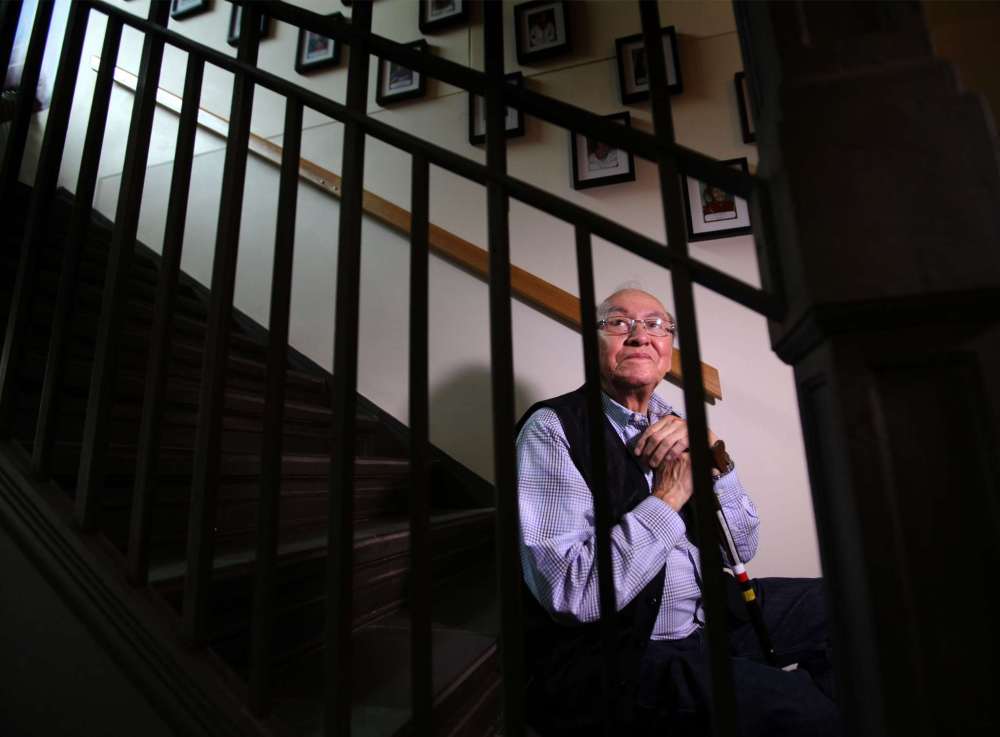
Brooke Pritchard, who is herself Indigenous and acts as the centre’s contact for the legacy group, said she often sees people sitting there, “putting gifts down. It’s a really beautiful space for people to go and honour those survivors.”
The voices of children have been heard for a long time on this property, this few acres of land by the river, with its century-old schoolhouse.
So has their suffering, isolation and imposed shame. It’s a history that the centre does not take lightly or ignore.
Because for every piece of complicated technology the centre uses, it’s really doing just one, very simple thing: listening to the voices of children, no matter how quiet they may be, and reminding them that help is here, change is possible and that their life matters.
marsha.mcleod@freepress.mb.ca


Marsha McLeod
Investigative reporter
Signal
Marsha McLeod is an investigative reporter at the Free Press. She joined the Free Press in 2023. Read more about Marsha.
Every piece of reporting Marsha produces is reviewed by an editing team before it is posted online or published in print — part of the Free Press‘s tradition, since 1872, of producing reliable independent journalism. Read more about Free Press’s history and mandate, and learn how our newsroom operates.
Our newsroom depends on a growing audience of readers to power our journalism. If you are not a paid reader, please consider becoming a subscriber.
Our newsroom depends on its audience of readers to power our journalism. Thank you for your support.
Related Articles
Police sound alarm about ‘sextortion’ scams targeting youth, young adults