

‘Fundamentally broken’ support system failing Manitobans with disabilities, scathing report concludes

Advertisement
Read this article for free:
or
Already have an account? Log in here »
To continue reading, please subscribe:
Digital Subscription
One year of digital access for only $1.44 a week*
- Enjoy unlimited reading on winnipegfreepress.com
- Read the E-Edition, our digital replica newspaper
- Access News Break, our award-winning app
- Play interactive puzzles
*Billed as $5.77 plus GST every four weeks. After 52 weeks, price increases to the regular rate of $19.95 plus GST every four weeks. Offer available to new and qualified returning subscribers only. Cancel any time.
To continue reading, please subscribe:
Add Free Press access to your Brandon Sun subscription for only an additional
$1 for the first 4 weeks*
- Enjoy unlimited reading on winnipegfreepress.com
- Read the E-Edition, our digital replica newspaper
- Access News Break, our award-winning app
- Play interactive puzzles
*Your next Brandon Sun subscription payment will increase by $1.00 and you will be charged $17.95 plus GST for four weeks. After four weeks, your payment will increase to $24.95 plus GST every four weeks.
Read unlimited articles for free today:
or
Already have an account? Log in here »
Manitoba’s disability support system is “fundamentally broken” and routinely fails people as they transition into adulthood, according to a damning new report that calls for a sweeping overhaul of provincial services.
The 113-page report — Equality, Dignity, and Belonging: Building a Better System for People with Disabilities in Manitoba — was released Tuesday before a full-house crowd at Canad Inns Club Regent.
The final report of the Integrated Adult Services pilot project argues Manitoba must establish a provincewide support system that fully complies with human rights law and is grounded in the Human Rights Code, the Canadian Charter of Rights and Freedoms and the UN Convention on the Rights of Persons with Disabilities.
MIKE DEAL / FREE PRESS
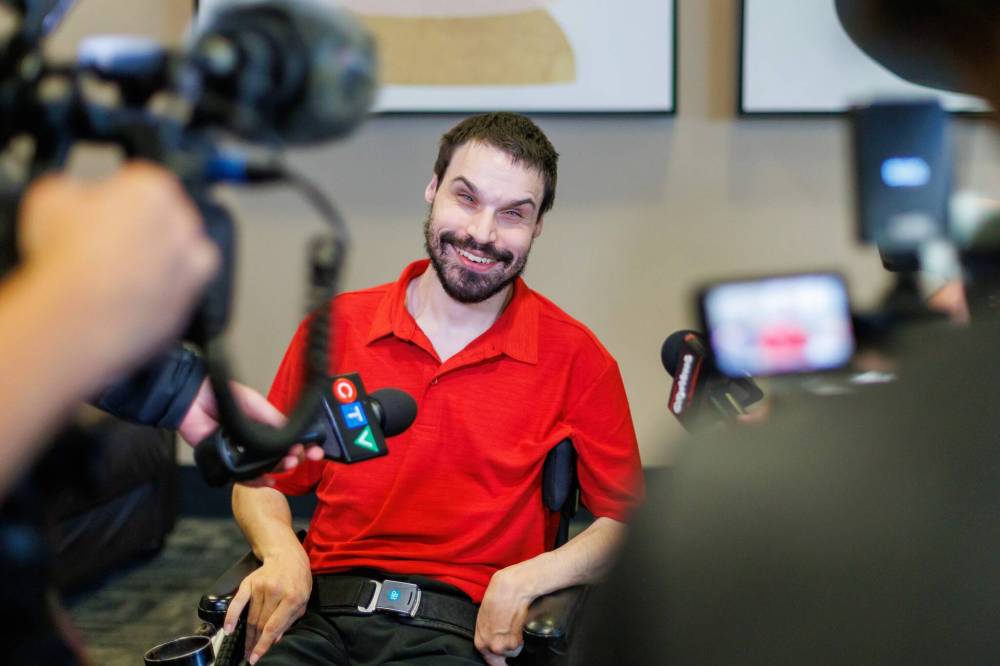
“Today is a historic moment for people with disabilities. We have a real chance to make change,” says Tyson Sylvester, one of the people who filed a human rights complaint that resulted in a settlement with the government of Manitoba and the Winnipeg Regional Health Authority, which led to the release of Tuesday’s report.
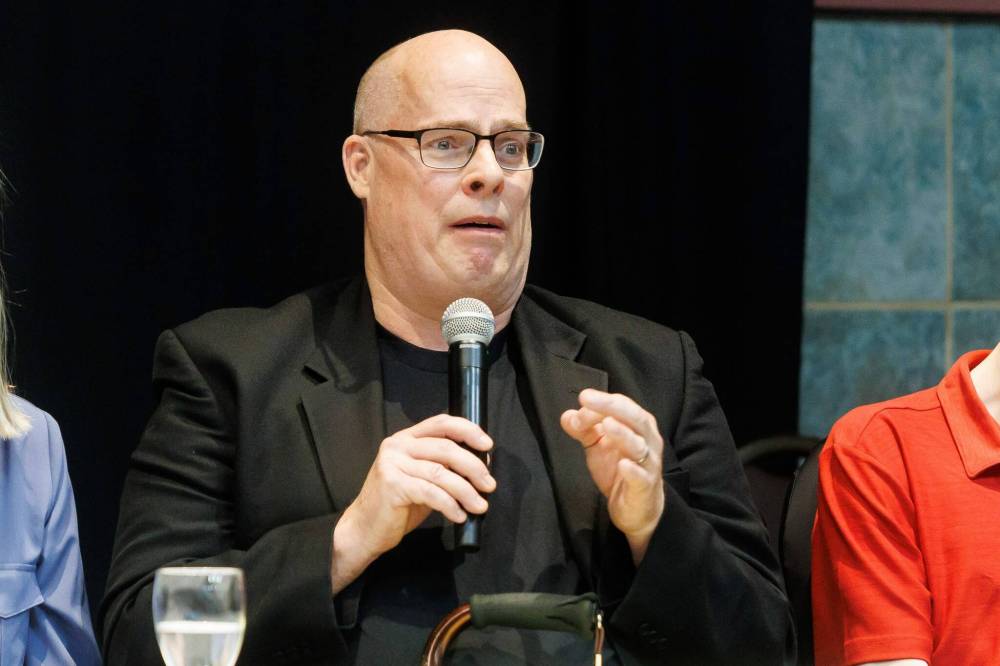
“We’re not asking for charity, we’re asking for basic human rights,” said David Kron, chair of the pilot project’s steering committee and executive director of the Cerebral Palsy Association of Manitoba.
The report’s first recommendation is the creation of a new disability support system. It heads a list of 13 proposals aimed at overhauling the province’s disability services framework.
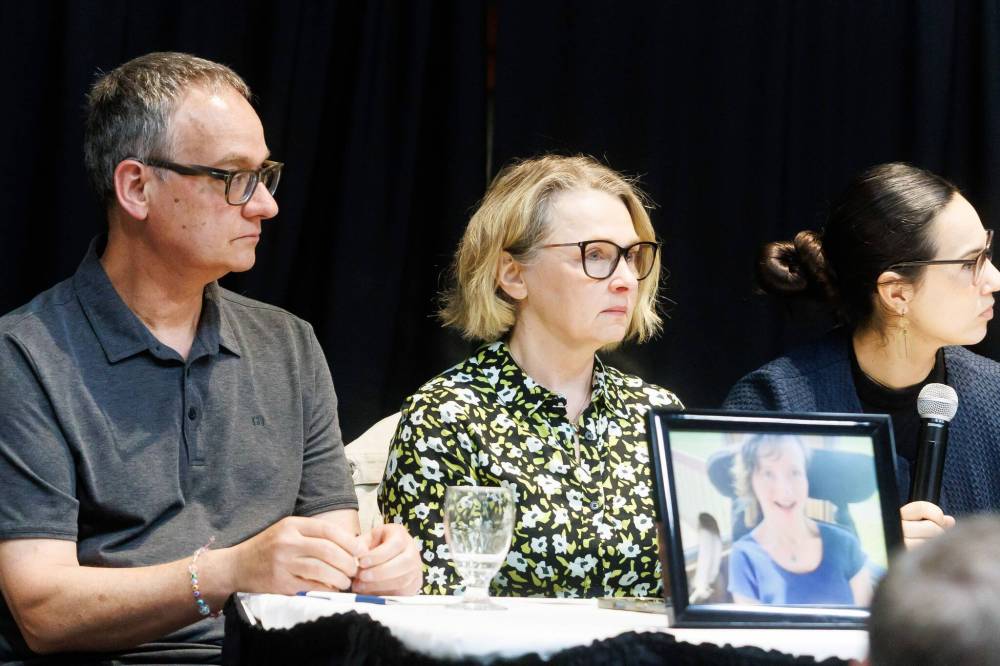
The recommendations stem from two human rights complaints filed in 2016 that found services provided to Amelia Hampton and Tyson Sylvester were discriminatory and failed to meet their needs.
“We’re not going anywhere,” Sylvester told dozens gathered at Tuesday’s event. “Today is a historic moment for people with disabilities. We have a real chance to make change.”
Sylvester, who is blind and lives with cerebral palsy, drew public attention to his case in 2018 by locking himself inside a cage in Winnipeg’s Old Market Square, saying inadequate supports had left him feeling “locked out of life.”
At one point, Sylvester, then in his 20s, spent years living in a personal care home.
The experiences of Hampton, who died in 2024 at age 32, and Sylvester, 30, underscore the challenges many people with disabilities face when they “age out” of children’s services. Even though their needs don’t change, vital supports are often reduced or eliminated.
The Winnipeg Regional Health Authority initially dismissed the complaints, calling them “frivolous” and “vexatious,” said Charlene Hampton, Amelia’s mother.
However, the Manitoba Human Rights Commission found sufficient evidence that the province and the WRHA had discriminated against the complainants and other adults with disabilities.
That finding led to mediation in 2020, followed by a public hearing process and a settlement that included the creation of the pilot project.
The pilot, which ran from April 2023 to September 2025, supported 33 adults in the Winnipeg health region and included consultations with more than 200 Manitobans.
One of the pilot’s key changes was reducing co-ordinator caseloads to roughly 16 clients each, down from the provincial average of between 100 and 135.
MIKE DEAL / FREE PRESS
Charlene and Keith Hampton’s daughter Amelia Hampton was one of those who filed the initial human rights complaint. Hampton died in 2024 at age 32.
Reported outcomes included safer and more stable living arrangements, greater autonomy in daily routines, stronger personal relationships and increased home-care support.
Kron said the pilot delivered meaningful results, including significant increases in home-care hours. In one case, a participant received enough support to move out of their parents’ basement. In another, a 76-year-old man was able to remain in the community and take his first vacation instead of moving into a personal care home.
“We need to be let back into community and let back into society,” Kron said.
The report has brought hope to families, including Hampton’s.
“I’m so proud of (Amelia), I miss her,” said Charlene Hampton, who said she met with Families Minister Nahanni Fontaine in 2015, when Fontaine was still in opposition.
“She seemed very disgusted by the way Amelia and Tyson were treated, and other Manitobans with disabilities,” Hampton said. “Now it’s her chance to do something about it, because (the NDP is) in power.”
Fontaine did not attend Tuesday’s event. Organizers said they offered to hold a joint news conference with the province.
“We feel disrespected, unheard,” Hampton said.
The Free Press asked the minister for comment and received an emailed statement.
“My mandate is clear: ensure Manitobans with disabilities have a voice in the design of disability support programs,” Fontaine wrote.
“We met with the IAS steering committee throughout the pilot program and celebrated the completion of the report earlier this month. As my department continues to review these recommendations in detail, we will continue working together to ensure Manitobans with disabilities have the supports they need to live a good life.”
Speaking at an unrelated event, Premier Wab Kinew said he had not yet read the report and deferred comment to Fontaine.
MIKE DEAL / FREE PRESS
“We’re not asking for charity, we’re asking for basic human rights,” says David Kron, chairman of the pilot project’s steering committee and executive director of the Cerebral Palsy Association of Manitoba.
Among the report’s recommendations are adopting needs-based eligibility criteria in place of diagnosis- and IQ-based assessments, reforming income and funding supports, creating centralized navigation services and cross-departmental co-ordination, developing a provincial housing strategy for people with disabilities and improving access to affordable and accessible transportation.
Hampton said her daughter was still waiting for a wheelchair before her death, after a process that stretched on for years and, ultimately, never came to fruition.
“When Amelia was younger… if she needed a new wheelchair, we went to one place… everything was looked after in one spot,” Hampton said. “When she became an adult, it was very confusing on to where she should go for a chair.”
Hampton, who stood alongside her husband Keith, said they ultimately had to deal with five different organizations.

Meantime, Leanne Fenez, a member of the project’s steering committee, said the report will not simply sit on a shelf collecting dust.
“We have a real opportunity to now take this report… and make real systems change in Manitoba,” she said. “These recommendations aren’t theoretical. Every single one of them came from someone’s real life, someone who couldn’t get their wheelchair fixed, someone who lost their supports when they turned 18, 21 or 65, someone living somewhere they didn’t choose.
“This is their work. And now it’s time for government to get to work.”
The province has until Dec. 16 to present a plan for addressing the report’s findings. If it does not, the case will proceed to a hearing.
scott.billeck@freepress.mb.ca
Scott Billeck is a general assignment reporter for the Free Press. A Creative Communications graduate from Red River College, Scott has more than a decade’s worth of experience covering hockey, football and global pandemics. He joined the Free Press in 2024. Read more about Scott.
Every piece of reporting Scott produces is reviewed by an editing team before it is posted online or published in print — part of the Free Press‘s tradition, since 1872, of producing reliable independent journalism. Read more about Free Press’s history and mandate, and learn how our newsroom operates.
Our newsroom depends on a growing audience of readers to power our journalism. If you are not a paid reader, please consider becoming a subscriber.
Our newsroom depends on its audience of readers to power our journalism. Thank you for your support.
Scott Billeck is a general assignment reporter for the Free Press. A Creative Communications graduate from Red River College, Scott has more than a decade’s worth of experience covering hockey, football and global pandemics. He joined the Free Press in 2024. Read more about Scott.
Every piece of reporting Scott produces is reviewed by an editing team before it is posted online or published in print — part of the Free Press‘s tradition, since 1872, of producing reliable independent journalism. Read more about Free Press’s history and mandate, and learn how our newsroom operates.
Our newsroom depends on a growing audience of readers to power our journalism. If you are not a paid reader, please consider becoming a subscriber.
Our newsroom depends on its audience of readers to power our journalism. Thank you for your support.
Related Articles
It’s time to stop people from falling through the gaps




Advertisement Advertise With Us
Advertisement Advertise With Us
History
Updated on Tuesday, June 16, 2026 5:17 PM CDT: Adds statement from Minister Nahanni Fontaine
Updated on Wednesday, June 17, 2026 11:18 AM CDT: Crowd description changed.