Overhauled Transit system rollout ‘a nightmare,’ public works chair says Report details first-year problems leading to drop in ridership, expected revenue
Read this article for free:
or
Already have an account? Log in here »
To continue reading, please subscribe:

Digital Subscription
One year of digital access for only $205*
- Enjoy unlimited reading on winnipegfreepress.com
- Read the E-Edition, our digital replica newspaper
- Access News Break, our award-winning app
- Play interactive puzzles
*First annual payment billed as $205.00 + GST for one year. This annual subscription will automatically renew at $233.00 + GST every 52 weeks (10% off the regular annual price of $259.35). Offer available to new and qualified returning subscribers only. Cancel any time.
To continue reading, please subscribe:
Add Free Press access to your Brandon Sun subscription for only an additional
$1 for the first 4 weeks*
- Enjoy unlimited reading on winnipegfreepress.com
- Read the E-Edition, our digital replica newspaper
- Access News Break, our award-winning app
- Play interactive puzzles
*Your next Brandon Sun subscription payment will increase by $1.00 and you will be charged $17.95 plus GST for four weeks. After four weeks, your payment will increase to $24.95 plus GST every four weeks.
Read unlimited articles for free today:
or
Already have an account? Log in here »
The introduction of Winnipeg Transit’s long-awaited network overhaul last June — designed to provide faster, more reliable service and increase ridership — got off to a rocky start.
“Honestly, it was a nightmare…. A lot of people couldn’t connect, they couldn’t get the (bus) times (right), we couldn’t get data,” Coun. Janice Lukes, chairwoman of public works, said Tuesday after the city released a “state of the system” report on the new network’s first year.
“That was a big hump to start and I think it was very unfortunate because I think it set a very bad tone.”
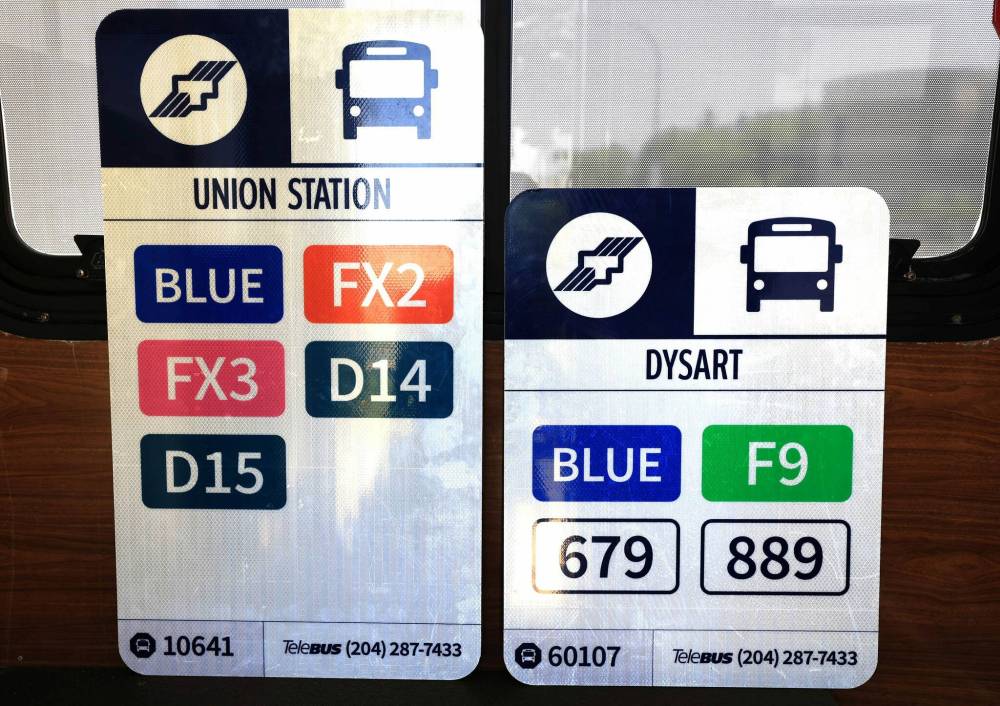
Instead of convincing more Winnipeggers to leave their vehicles at home and take the bus, the changes were one of several factors that led to a sharp decline in ridership and revenue, and has the people behind the redesign proposing improvements.
Almost immediately after the new system’s rollout on June 29, 2025 — which changed almost every bus route — the companion GPS system failed, leading Transit to post incorrect arrival times. At the peak of the problem, almost a quarter of bus location reports were incorrect.
The problem was fixed by November, Transit reported.
Riders complained that buses stopped running too early for them to return home from work or school, involved too many transfers and made their commute times much longer.
“Honestly, it was a nightmare…. A lot of people couldn’t connect, they couldn’t get the (bus) times (right), we couldn’t get data.”
Improvements tied to that feedback followed, including adding additional night-time service and increasing frequency, the report says.
“I think the state of the transit system has dramatically improved since we launched it and I do think it’s still got a ways to go,” said Lukes.
The report looks at how the system fared over the winter and spring, though the GPS issue prevented some information from being properly tracked last summer and fall.
“Overall, I’d say it’s working pretty well… but there’s a lot of small details we still need to work on,” said Bjorn Radstrom, Winnipeg Transit’s manager of service development.
For example, the rapid transit Blue Line was on time only 66.6 per cent on weekdays last winter, falling below a 75 per cent target.
To be considered on time, a bus must arrive from one minute before to five minutes after its scheduled time.
Radstrom said that target will be tough to meet until downtown rapid transit infrastructure is built.
Meanwhile, the key crosstown D12 route — which connects The Forks to the airport, was on time 72.3 per cent on weekdays, but plummeted to 28.8 per cent on Saturdays during the winter.
Radstrom said it appears that route became much more punctual after scheduling changes took effect in April, although data is still being gathered.
The report found much better on-time winter results for the F7 St. Anne’s-Provencher on Saturdays (78.9 per cent), D10 Panet-Adsum on Saturdays (76 per cent) and 31 Waterfront-North Main on Sundays (75.8 per cent).
Transit did not provide an overall on-time average for its routes, as improving the system requires a more detailed look at specific trips, said Radstrom.
The latest report proposes another round of updates to the network, pending city council and 2027 budget approvals.
The proposals would: change connector route 22 Portage to pass through the Grace Hospital site; add three extra half-trips per evening to community route 671 Dalhousie; add two extra half-trips to community route 672 Killarney; shift some early morning trips on the 672 Killarney to the peak afternoon period; add an extra bus at afternoon peak hours for community route 677 Wilkes; and shift some trips on limited-span Route 889 Sherbrook-Pembina Express from the morning peak period to midday.
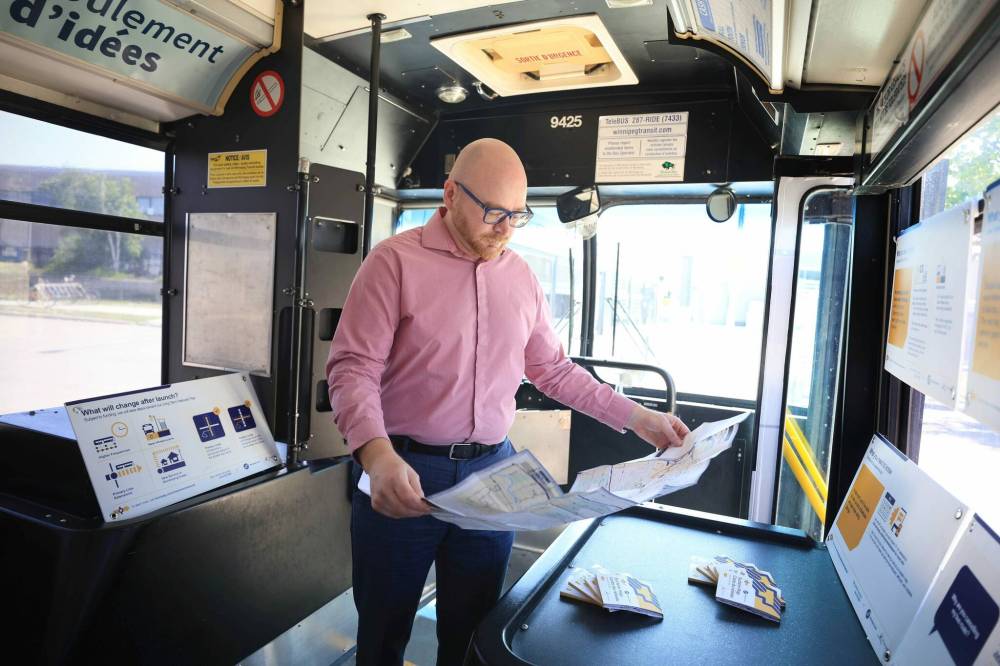
Winnipeg Transit is also making a second request for city council to fund additional service from Linden Woods to Oak Park and Shaftesbury high schools, extend service to Festival Drive and extend service to Highland Pointe.
Implementing all of the proposed changes would require 16.5 more full-time staff positions and cost the city $1.15 million in 2027 (when changes would take effect between June and September) and about $2.5 million in each of the following four years.
“We’re listening to all the complaints and the feedback that people have.”
“We’re listening to all the complaints and the feedback that people have, we’re verifying that through the data we’re collecting…. We really are working all the time at improving (the service),” said Radstrom.
While Lukes said she’d like to implement all proposed changes, she noted the city could have to “pick what we can afford.”
A group that lobbies for more frequent transit wants all of the proposed changes in place sooner.
“The city should expedite that spending immediately,” said Kyle Owens, president of Functional Transit Winnipeg.
“We can’t afford to wait another year of declining ridership. We need to get that service immediately to address people’s frustrations.”
Winnipeg Transit expects to earn $18.4 million less from rider fares this year than the 2026 budget predicted, owing to issues with the new network, fare-evaders and a decline in the numbers of international students and foreign workers (who tend to be frequent riders).

Owens said the new network brought some huge improvements by ramping up frequency on main bus routes, and he credited Transit for expanding night-time service following complaints.
However, a lack of other investments means too many people are left dissatisfied, he said.
“For people taking that (D12) route (on Saturday), there was a 70 per cent chance of their route not being on time,” he said.
joyanne.pursaga@freepress.mb.ca
X: @joyanne_pursaga

Joyanne is city hall reporter for the Winnipeg Free Press. A reporter since 2004, she began covering politics exclusively in 2012, writing on city hall and the Manitoba Legislature for the Winnipeg Sun before joining the Free Press in early 2020. Read more about Joyanne.
Every piece of reporting Joyanne produces is reviewed by an editing team before it is posted online or published in print — part of the Free Press‘s tradition, since 1872, of producing reliable independent journalism. Read more about Free Press’s history and mandate, and learn how our newsroom operates.
Our newsroom depends on a growing audience of readers to power our journalism. If you are not a paid reader, please consider becoming a subscriber.
Our newsroom depends on its audience of readers to power our journalism. Thank you for your support.
Related Articles
Winnipeg Transit needs funding boost, additional staff to follow new provincial accessibility regulations: city report


History
Updated on Wednesday, June 24, 2026 9:34 AM CDT: Minor copy edit