

Province providing funds for Indigenous-led response team helping with drug crisis

Advertisement
Read this article for free:
or
Already have an account? Log in here »
To continue reading, please subscribe:

Digital Subscription
One year of digital access for only $205*
- Enjoy unlimited reading on winnipegfreepress.com
- Read the E-Edition, our digital replica newspaper
- Access News Break, our award-winning app
- Play interactive puzzles
*First annual payment billed as $205.00 + GST for one year. This annual subscription will automatically renew at $233.00 + GST every 52 weeks (10% off the regular annual price of $259.35). Offer available to new and qualified returning subscribers only. Cancel any time.
To continue reading, please subscribe:
Add Free Press access to your Brandon Sun subscription for only an additional
$1 for the first 4 weeks*
- Enjoy unlimited reading on winnipegfreepress.com
- Read the E-Edition, our digital replica newspaper
- Access News Break, our award-winning app
- Play interactive puzzles
*Your next Brandon Sun subscription payment will increase by $1.00 and you will be charged $17.95 plus GST for four weeks. After four weeks, your payment will increase to $24.95 plus GST every four weeks.
Read unlimited articles for free today:
or
Already have an account? Log in here »
An Indigenous-led response team known for mobilizing quickly in missing persons and human trafficking cases is being deployed to help tackle Winnipeg’s escalating overdose crisis.
The province is funding Red Response Team to patrol overdose hot spots across the city, relying on workers with lived experience to connect vulnerable people with supports and intervene before emergencies turn fatal.
The funding is part of a $6.8-million package announced Tuesday aimed at addressing a crisis that is claiming dozens of lives each month and placing immense strain on front-line services.
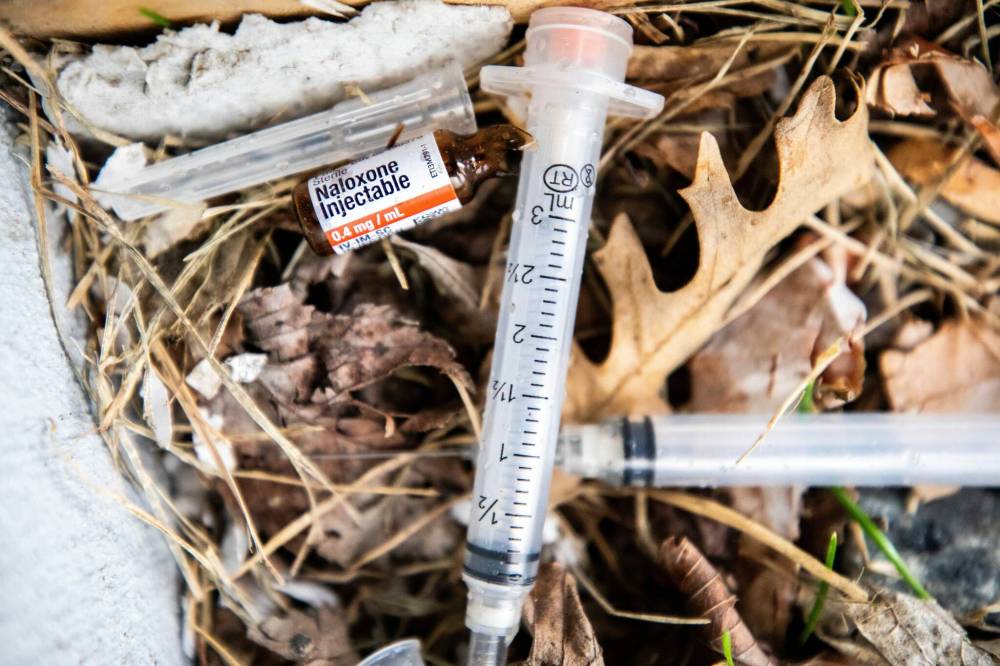
MIKAELA MACKENZIE / FREE PRESS FILES
The province is funding Red Response Team to patrol overdose hot spots across the city.
“We’re trying to assist in taking care of (these overdose calls) with a community-based response rather than over-utilizing the health-care system and emergency response system,” a member of the group, who is not being identified, said Wednesday.
The member said the province approached Red Response for help amid high levels of burnout among front-line workers.
Red Response has already been working with the North End Women’s Centre after a surge in overdose incidents forced the organization to temporarily close its drop-in centre last month.
“All of our folks are peers, so everybody has a deep history with drug use, so they know what they’re doing,” the member said.
Established in 2023, Red Response maintains a low profile.
The group has no social media presence and does not publicly identify its members, citing safety concerns tied to its work. The team of approximately 20 members often enters drug houses, builds relationships with gang members and helps victims of trafficking leave dangerous situations.
The group is also chronically underfunded, with workers frequently pooling their own resources and putting themselves at risk to support vulnerable people in crisis.
Part of that work includes harm reduction and overdose prevention, which members say aligns naturally with the province’s latest initiative.
“What we do is provide 24-7 emergency targeted intervention projects,” the member said. “We provide secure transportation locally, nationally and internationally. We have access to safe houses, trauma-informed system navigation and everything we do is culturally grounded.”
The member said the team’s approach is focused on reducing immediate risk and helping people access longer-term supports.
Meanwhile, the province is providing $2.2 million to Siloam Mission to maintain 100 drop-in spaces at its overnight shelter and drop-in centre through March 2027.
The funding will likely prevent some, if not all, of the 16 layoffs that had been scheduled to take effect July 1, according to sources. Siloam Mission has not yet responded to a request for comment.
Local shelters had been pressuring the province behind the scenes to extend Siloam’s overnight shelter, having seen an influx of people seeking overnight stays after the province closed N’Dinawemak, a nearby 200-bed shelter, earlier this spring. The site, at 190 Disraeli Fwy, is being renovated and will be turned into a navigation centre to help homeless people access housing later this year.
The province is also providing funding to extend drop-in hours at Resource Assistance for Youth and 1JustCity, along with a flexible funding pool for harm-reduction supplies for front-line workers.
Community connection teams will also be deployed to support safety efforts in Osborne Village and along Portage Avenue.
“The toxic drug crisis our province is facing requires immediate and co-ordinated action,” Housing, Addictions and Homelessness Minister Bernadette Smith said in a release. “These funds will be used to work with community partners and front-line workers to ensure services, safe spaces and supports are accessible to the Manitobans that need them.”
The release also announced support in the development of a new drop-in and safe sobering site, although the province did not provide further details.
Earlier this month, the province announced funding for a 24-7 dedicated, two-person ambulance team specifically for overdose interventions.

City council will hold a special meeting on the drug crisis Friday, prompted by a request last week from Coun. Sherri Rollins.
Rollins argues the current approach to the crisis is failing to meet the needs of residents, business owners, emergency responders and vulnerable people dealing with addiction, mental illness and homelessness.
Winnipeg recently recorded its first sustained period with more opioid-related calls for service than calls dealing with alcohol.
The sharpest increase was in April, when opioid calls exceeded alcohol-related calls by 380. WFPS data shows crews responded to 810 opioid patients that month alone — more than triple the number recorded in April 2025.
scott.billeck@freepress.mb.ca
Scott Billeck is a general assignment reporter for the Free Press. A Creative Communications graduate from Red River College, Scott has more than a decade’s worth of experience covering hockey, football and global pandemics. He joined the Free Press in 2024. Read more about Scott.
Every piece of reporting Scott produces is reviewed by an editing team before it is posted online or published in print — part of the Free Press‘s tradition, since 1872, of producing reliable independent journalism. Read more about Free Press’s history and mandate, and learn how our newsroom operates.
Our newsroom depends on a growing audience of readers to power our journalism. If you are not a paid reader, please consider becoming a subscriber.
Our newsroom depends on its audience of readers to power our journalism. Thank you for your support.
Scott Billeck is a general assignment reporter for the Free Press. A Creative Communications graduate from Red River College, Scott has more than a decade’s worth of experience covering hockey, football and global pandemics. He joined the Free Press in 2024. Read more about Scott.
Every piece of reporting Scott produces is reviewed by an editing team before it is posted online or published in print — part of the Free Press‘s tradition, since 1872, of producing reliable independent journalism. Read more about Free Press’s history and mandate, and learn how our newsroom operates.
Our newsroom depends on a growing audience of readers to power our journalism. If you are not a paid reader, please consider becoming a subscriber.
Our newsroom depends on its audience of readers to power our journalism. Thank you for your support.
Related Articles
Community frustration led to drug sweep: police chief



Advertisement Advertise With Us
Advertisement Advertise With Us