

Be a part of the solution
We can all follow Pope Francis’s apology by taking action to be a part of reconciliation
Advertisement
Read this article for free:
or
Already have an account? Log in here »
To continue reading, please subscribe:

Digital Subscription
One year of digital access for only $205*
- Enjoy unlimited reading on winnipegfreepress.com
- Read the E-Edition, our digital replica newspaper
- Access News Break, our award-winning app
- Play interactive puzzles
*First annual payment billed as $205.00 + GST for one year. This annual subscription will automatically renew at $233.00 + GST every 52 weeks (10% off the regular annual price of $259.35). Offer available to new and qualified returning subscribers only. Cancel any time.
To continue reading, please subscribe:
Add Free Press access to your Brandon Sun subscription for only an additional
$1 for the first 4 weeks*
- Enjoy unlimited reading on winnipegfreepress.com
- Read the E-Edition, our digital replica newspaper
- Access News Break, our award-winning app
- Play interactive puzzles
*Your next Brandon Sun subscription payment will increase by $1.00 and you will be charged $17.95 plus GST for four weeks. After four weeks, your payment will increase to $24.95 plus GST every four weeks.
Read unlimited articles for free today:
or
Already have an account? Log in here »
Hey there, time traveller!
This article was published 09/04/2022 (1631 days ago), so information in it may no longer be current.
The recent trip to Rome by a delegation of First Nations, Inuit and Métis representatives and the apology offered to them by Pope Francis has profoundly marked the world. The delegation’s hope was to receive an apology for years of atrocities faced by children forced to attend residential schools.
When thinking about Indian residential schools, think about a world being turned upside down. Think about children being torn away from their mothers. Think about being punished for speaking one’s language. Think about being forced to learn a new spiritual way of life. Think about children dying without parents’ knowledge and then being buried in unmarked graves. Think about the kind of trauma Indigenous children and parents experienced. And finally, think about how this trauma has lasted through the generations and continues to seep into current family and work life.
I can only imagine that some Canadians do not know much about residential schools, that the cultural annihilation and assimilation of Indigenous children was a Canadian government policy legislated by our first prime minister, Sir John A. MacDonald. The result was the creation of 139 residential boarding schools across Canada with the majority operated by the Roman Catholic Church. It is estimated that over 150,000 students attended these boarding schools between the 1860s and 1996. Most of the boarding schools were far from the children’s homes and communities making it very difficult for parents to visit.
Children were forcibly torn from their parents by an Indian Agent, RCMP officers and/or priests who often swooped into communities unannounced and scooped up boys and girls as young as four and as old as 16.
The goal of the government, according to Duncan Campbell Scott, the Indian Affairs deputy superintendent at the time, was “to continue until there is not a single Indian in Canada that has not been absorbed into the body politic and that there is no Indian problem and no Indian Department.” Today, many refer to this as cultural genocide.
An apology from the Catholic Church has been long in coming. Former national chief of the Assembly of First Nations Phil Fontaine of Manitoba had been fighting for an apology since he first shared his story in 1990 of physical and sexual abuse at residential school. While he was successful in arranging an in-person meeting with Pope Benedict XVI in 2009, all he and his delegation received was an expression of sympathy.
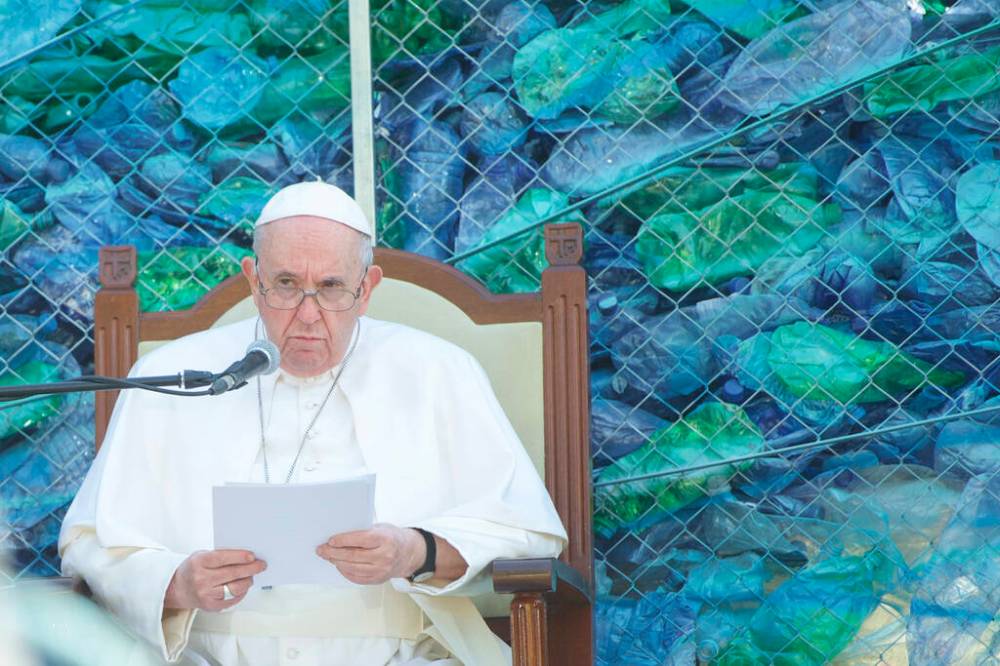
Now with the full backing and the attendance of the Inuit, Métis and First Nation representatives, Pope Francis met with the various groups during the April 2022 visit to Rome and said, “With all my heart, I am very sorry.”
The Honourable Murray Sinclair, former senator and chair of the Truth and Reconciliation Commission, helped to bring greater attention to the atrocities of residential schools and the intergenerational trauma it has caused. He called last week’s papal apology “an important moment.”
It also reminds every citizen of the part we can and should play in reconciliation. With this in mind, I offer the following learning suggestions for educators, business leaders, parents and individuals.
● Read and learn: There are many books on the history of Indigenous people in Canada, ranging from complex tomes to simple picture books for children. There are now an increasing number of books written by Indigenous authors who tell the stories of their lives. It is hard to put yourself in someone else’s shoes, but reading these stories will help to create or deepen a basic understanding. For those readers who want more depth, read the final report by the Truth and Reconciliation Commission of Canada (nctr.ca/records/reports). The report is a plainspoken but hard truth that is worth every page. There are also excellent resources for teachers that can be used by anyone. What I liked about the teaching resources is that they offer thought-provoking questions to help facilitate discussions with friends, family and work colleagues.
● View and listen: There are multiple short videos on the internet that are easily sourced and are very informative. There are videos for every target audience including young children. Be sure to view and listen carefully and then discuss with your family and/or groups of colleagues. Describe what lessons you learned and describe how these stories made you feel. Try to imagine yourself in the various scenarios and envision what your life would have been like if this was your own personal experience. Think about how racism persists and what role you can play to reconcile the greater truth.
● Formal courses: There are also a number of free or cost-effective educational courses of various lengths being offered by several Canadian universities. For instance, the University of Alberta offers a course called Indigenous Canada (coursera.org), which is a free, 12-lesson online course that explores Indigenous histories and contemporary issues in Canada.

● Visit local museums: Take your family to local Manitoba museums. Call ahead of time and register for a tour with an interpretive guide to help provide the historical background of any artifacts you will see. Be sure to come prepared to ask many questions. I guarantee you will return home richer for the experience and the information you will gather.
● Invite guests: Consider approaching First Nations, Métis and Inuit speakers and presenters in Winnipeg and Manitoba.
● Attend events: Consider attending gatherings that Indigenous and Métis communities open to the public to support, learn about and get to know the Indigenous community.
No matter what route you take to educate yourself on Indigenous history and ongoing racism today, take time to reflect on what you have learned through your educational journey. While Indigenous people in the Catholic faith were seeking an apology from the Pope, I invite individuals to take part in helping to redress the hundreds of years of challenges our Indigenous citizens have experienced by becoming part of the solution. By this I mean learning, listening, engaging and appreciating how history can continue to impact people, even over generations, and what this means for today’s workplace and society in general.
Barbara J. Bowes, FCPHR, B.Ed., M.Ed., CCP is an author, radio personality and executive coach. She can be reached at barb@bowesleadership.com