Used cars market faces supply crunch in aftermath of supply chain woes
Advertisement
Read this article for free:
or
Already have an account? Log in here »
To continue reading, please subscribe:

Digital Subscription
One year of digital access for only $205*
- Enjoy unlimited reading on winnipegfreepress.com
- Read the E-Edition, our digital replica newspaper
- Access News Break, our award-winning app
- Play interactive puzzles
*First annual payment billed as $205.00 + GST for one year. This annual subscription will automatically renew at $233.00 + GST every 52 weeks (10% off the regular annual price of $259.35). Offer available to new and qualified returning subscribers only. Cancel any time.
To continue reading, please subscribe:
Add Free Press access to your Brandon Sun subscription for only an additional
$1 for the first 4 weeks*
- Enjoy unlimited reading on winnipegfreepress.com
- Read the E-Edition, our digital replica newspaper
- Access News Break, our award-winning app
- Play interactive puzzles
*Your next Brandon Sun subscription payment will increase by $1.00 and you will be charged $17.95 plus GST for four weeks. After four weeks, your payment will increase to $24.95 plus GST every four weeks.
Read unlimited articles for free today:
or
Already have an account? Log in here »
Hey there, time traveller!
This article was published 28/08/2023 (1134 days ago), so information in it may no longer be current.
TORONTO – The used car market is still experiencing a shortage of vehicles even as the automotive sector recovers from supply chain woes that have plagued the industry since the onset of the COVID-19 pandemic.
Used vehicles became an alternative to consumers when the supply of new vehicles was severely limited during the pandemic, says Daniel Ross of automotive insights company Canadian Black Book, and prices for used cars started to rise.
“But after the increase of interest rates and inflation as a whole, affordability has become the main concern,” he says of the latest moves by the Bank of Canada to clamp down on rising costs.
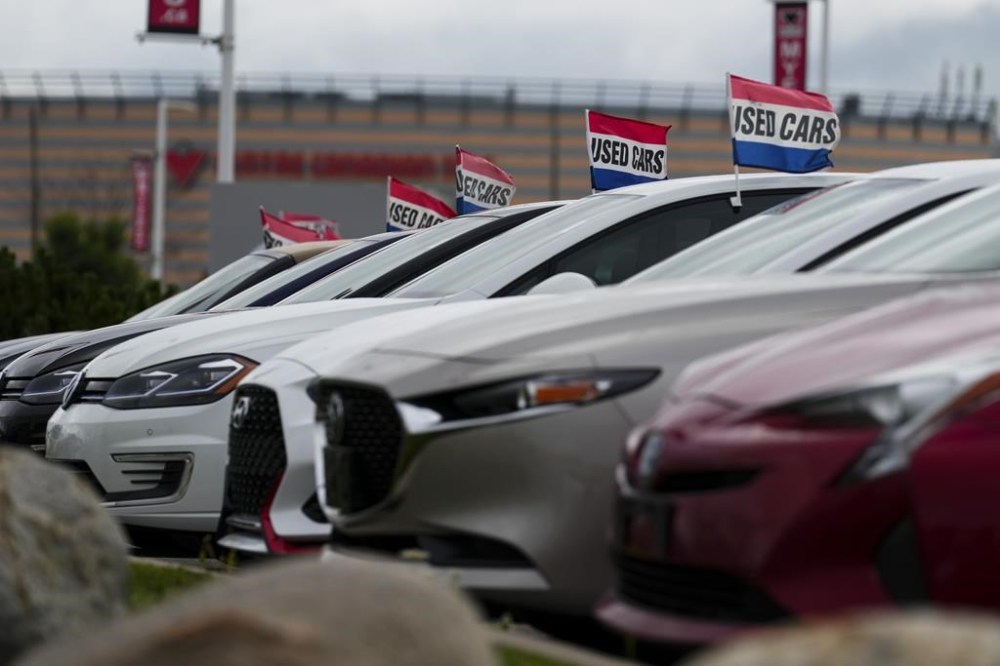
Ross, who is the senior manager of automotive industry insights at CBB, says that’s driving buyers toward smaller, used vehicles rather than previously popular SUVs, pickup trucks or new vehicles with higher market prices — a trend expected to continue for the next 12 to 18 months.
But there are not enough used cars in the market to meet the growing demand. DesRosiers Automotive Consultants Inc. says dealers are having a hard time getting used cars and projects a slowdown in sales in the coming months.
The latest estimates by DesRosiers show the 2023 sales of new cars at franchised used dealers are expected at 305 units per location, and at just 140 for independent used car dealers. That’s lower than the sales projections cited at the beginning of this year.
At least 51 per cent of the car dealers surveyed said their sourcing troubles for used vehicles have worsened since the pandemic, a report earlier this month by DesRosiers found.
The supply constraint is partly because people are holding on to their vehicles longer than usual, creating a bottleneck in the supply chain for used cars, says Jim Hamilton, interim manager at the Used Car Dealers Association of Ontario.
On average, he said, people look to sell their vehicles after four or five years of ownership and move on to newer make.
“Now, they’re hanging on to the cars double that time, which means more money in the service business — oil change, brake repairs and maintenance.”
A separate survey by DeRosiers shows that aftermarket retailers reported higher sales for automobile parts during the first quarter of 2023 — most of them having better sales compared to pre-pandemic levels.
June statistics for retail sales in Canada were driven by motor vehicles and parts dealers, which were up 2.5 per cent from May, much higher than the overall 0.1 per cent growth.
Ross of CBB is seeing those trends, too. He said people are buying out car leases before maturity, spending more on repairs and keeping them out of the used car lots.
Daily rental fleets are also following in the footsteps of regular buyers and holding on to the vehicles longer because they can’t replace the old fleet with the new ones. That means those cars aren’t entering the used market as expected
“This puts constraints on supply even further than what we’ve had in the past,” Ross said.
Between 2020 and 2021, used car prices soared 34.5 per cent as car manufacturers dealt with unprecedented backlogs in the supply of car parts to bring new vehicles to showrooms.
Now that the cost of used cars is stabilizing, people who may have been sitting on the fence in the last two years because of high prices are getting into the market.
Cindy Marques, a financial planner at Open Access Ltd., says she has noticed her clients are moving to buy cars only because they have to — lowering their expectations for new cars or opting for used to fit within their budget instead of delaying purchases.
“It’s not a matter of waiting for interest rates to go down but to bite the bullet and buy different cars than they hope they would get,” she said.
Limited financing options are also a factor in making the used car markets more attractive for buyers, said Ronald Corbett, vice-president for Toronto and southwestern province at Desjardins Ontario Credit Union.
With decreasing purchasing power and higher interest rates, Corbett said, qualification prospects for car loans are a little more difficult.
“People are more apt to be pinching every penny and not wanting to put that extra $40 or $60 a month toward any car purchase when they’re looking at prices for groceries, mortgage, rent and other costs,” he said.
Ross said the supply chain for some new cars has improved this year, with more cars now available at showrooms, alleviating some pressure from used car demand. Still, it remains sporadic.
“With the added effect of higher (market prices), the showrooms are not necessarily seeing as much gravity behind consumers coming to the new car market, as they previously have seen,” Ross said.
Years of limited access to new cars has shifted conditions.
Previously, Ross said, customers bought a new vehicle, then replaced it with another new car — with the original vehicle adding supply to the used market.
“But we’ve seen the opposite. New vehicle inventory is building as used vehicle inventory is still on the downturn.”
He said it takes at least two years for new cars to populate the used vehicle supply chain.
“Recovery stems from the new car market,” he said. “If you don’t have any new cars selling, you’re not going to have any used cars.”
This report by The Canadian Press was first published Aug. 28, 2023.