

Japan announces emergency relief for seafood exporters hit by China’s ban over Fukushima water
Advertisement
Read this article for free:
or
Already have an account? Log in here »
To continue reading, please subscribe:

Digital Subscription
One year of digital access for only $205*
- Enjoy unlimited reading on winnipegfreepress.com
- Read the E-Edition, our digital replica newspaper
- Access News Break, our award-winning app
- Play interactive puzzles
*First annual payment billed as $205.00 + GST for one year. This annual subscription will automatically renew at $233.00 + GST every 52 weeks (10% off the regular annual price of $259.35). Offer available to new and qualified returning subscribers only. Cancel any time.
To continue reading, please subscribe:
Add Free Press access to your Brandon Sun subscription for only an additional
$1 for the first 4 weeks*
- Enjoy unlimited reading on winnipegfreepress.com
- Read the E-Edition, our digital replica newspaper
- Access News Break, our award-winning app
- Play interactive puzzles
*Your next Brandon Sun subscription payment will increase by $1.00 and you will be charged $17.95 plus GST for four weeks. After four weeks, your payment will increase to $24.95 plus GST every four weeks.
Read unlimited articles for free today:
or
Already have an account? Log in here »
Hey there, time traveller!
This article was published 04/09/2023 (1130 days ago), so information in it may no longer be current.
TOKYO (AP) — Japanese Prime Minister Fumio Kishida announced on Monday a 20.7 billion yen ($141 million) emergency fund to help exporters hit by China’s ban on Japanese seafood over the release of treated radioactive wastewater from the damaged Fukushima nuclear power plant.
The discharge of the wastewater into the ocean began Aug. 24 and is expected to continue for decades. Japanese fishing associations and groups in neighboring countries have strongly opposed the release. In addition to China’s ban on all Japanese seafood imports, Hong Kong has banned Japanese seafood from Fukushima and nine other prefectures.
Chinese trade restrictions have affected Japanese seafood exporters since even before the release began, with shipments held up at Chinese customs for weeks. Prices of scallops, sea cucumbers and other seafood popular in China have plunged. The ban has affected prices and sales of seafood from places as far away from Fukushima as the northern island of Hokkaido, home to many scallop growers.
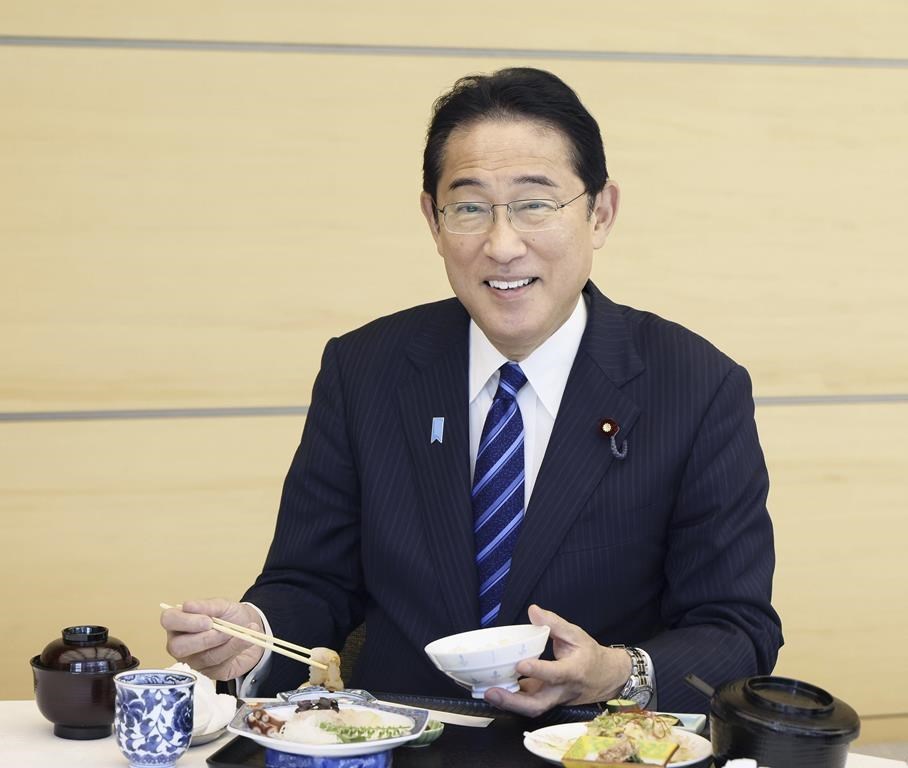
Kishida said the emergency fund is in addition to 80 billion yen ($547 million) that the government previously allocated to support fisheries and seafood processing and combat damage to the reputation of Japanese products.
“We will protect the Japanese fisheries industry at all costs,” Kishida said, asking people to help out by serving more seafood at dinner tables and other ways.
The money will be used to find new markets for Japanese seafood to replace China and fund government purchases of seafood for temporary freezing and storage. The government will also seek to expand domestic seafood consumption.
Officials said they plan to cultivate new export destinations in Taiwan, the United States, Europe, the Middle East and some southeast Asian countries — such as Malaysia and Singapore.
Kishida talked with workers at a fish market last Friday to assess the impact of China’s ban and pledged to protect Japan’s seafood industry.
Kishida heads to Indonesia on Tuesday to attend the annual summit of the Association of Southeast Asian Nations, where he may face criticism over the wastewater release from Chinese Premier Li Qian, who is also attending.
Large amounts of radioactive wastewater have accumulated at the Fukushima plant since a massive earthquake and tsunami in 2011 destroyed its cooling systems and caused three reactors to melt.

All seawater and fish samples taken since the release of the treated wastewater began have been way below set safety limits for radioactivity, Japanese officials and the plant operator say.
Mainland China is the biggest overseas market for Japanese seafood, accounting for 22.5% of the total, followed by Hong Kong with 20%, making the ban a major blow for the fisheries industry.
Seafood exports are a fraction of Japan’s total exports, and the ban’s impact on overall trade will be limited unless tensions escalate and China widens its restrictions to other trade sectors, said Takahide Kiuchi, executive economist at Nomura Research Institute.
Beijing is angry over U.S. trade controls that limit China’s access to semiconductor processor chips and other U.S. technology on security grounds. Japan has also curbed exports of chipmaking technology. Such restrictions imposed by Tokyo and possible future steps could cause an escalation of Chinese trade bans against Japan, Kiuchi said.
“Taking into consideration such risks, the Japanese government needs to carefully think about how to deal with worsening ties with China, not just over the treated water discharge but also how it should cooperate with the United States in areas of investment and trade restrictions with China,” Kiuchi said in a recent analysis.
Related Articles
Residents and fishermen file a lawsuit demanding a halt to the release of Fukushima wastewater
Advertisement Advertise With Us
Advertisement Advertise With Us