Wind, solar operators urged to invest now to protect against extreme weather risks

Advertisement

Advertise with us

CALGARY - Wind and solar operators in Canada are being urged to reduce the likelihood of catastrophic grid outages by making their infrastructure more resilient to climate change.

Read this article for free:


or

Already have an account? Log in here »

To continue reading, please subscribe:

Subscribe and receive a limited-edition Free Press branded hat or tote.

Digital Subscription

One year of digital access for only $205*

  • Enjoy unlimited reading on winnipegfreepress.com
  • Read the E-Edition, our digital replica newspaper
  • Access News Break, our award-winning app
  • Play interactive puzzles

*First annual payment billed as $205.00 + GST for one year. This annual subscription will automatically renew at $233.00 + GST every 52 weeks (10% off the regular annual price of $259.35). Offer available to new and qualified returning subscribers only. Cancel any time.

To continue reading, please subscribe:

Add Free Press access to your Brandon Sun subscription for only an additional

$1 for the first 4 weeks*

  • Enjoy unlimited reading on winnipegfreepress.com
  • Read the E-Edition, our digital replica newspaper
  • Access News Break, our award-winning app
  • Play interactive puzzles
Start now

*Your next Brandon Sun subscription payment will increase by $1.00 and you will be charged $17.95 plus GST for four weeks. After four weeks, your payment will increase to $24.95 plus GST every four weeks.

Hey there, time traveller!
This article was published 10/04/2024 (850 days ago), so information in it may no longer be current.

CALGARY – Wind and solar operators in Canada are being urged to reduce the likelihood of catastrophic grid outages by making their infrastructure more resilient to climate change.

Renewable energy operators from across the country gathered at a conference in Calgary this week to discuss the growing risk that climate change-related extreme weather poses to their industry.

Vittoria Bellissimo, president and CEO of the Canadian Renewable Energy Association, said all types of power generation, including those using fossil fuels, are vulnerable to damage or outages in the event of natural disasters such as wildfire, flooding and severe storms.
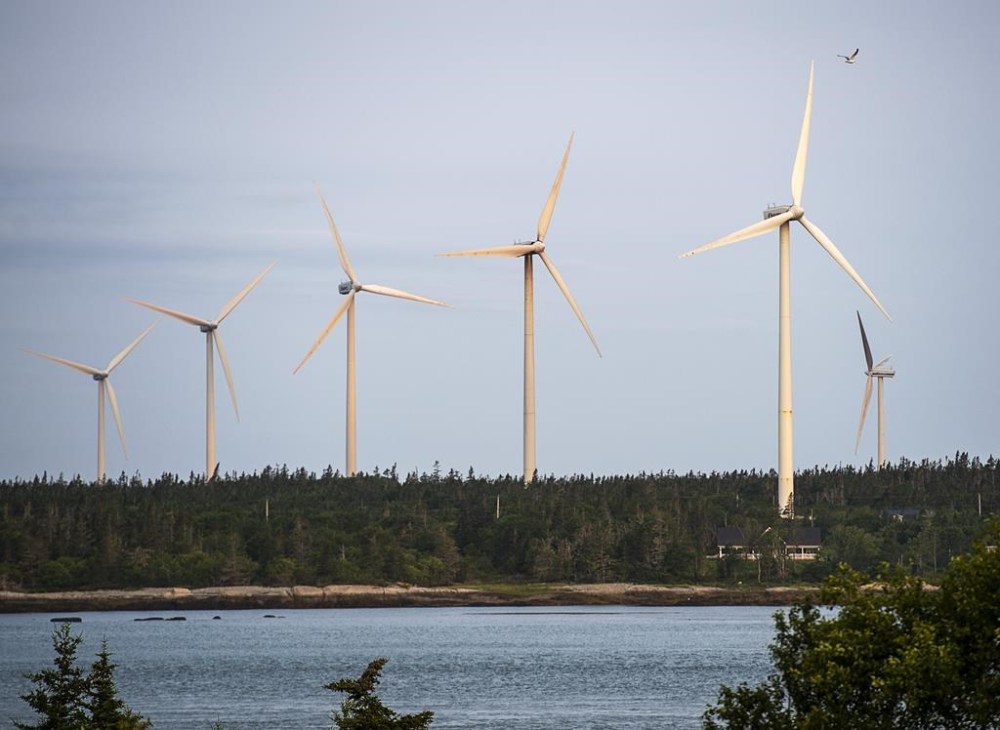
The West Pubnico Point Wind Farm is seen in Lower West Pubnico, N.S. on Monday, Aug. 9, 2021. Wind and solar operators in Canada are being urged to reduce the likelihood of future catastrophic grid outages by making their infrastructure more resilient to climate change. THE CANADIAN PRESS/Andrew Vaughan

But she said as renewable power grows to make up a greater proportion of this country’s overall electricity generation, the industry will need to consider whether their infrastructure is prepared for a changing climate.

“There is a worst-case scenario, but we’d be speculating to guess at what it is, because we don’t know yet,” Bellissimo said in an interview on the sidelines of Wednesday’s conference.

“If you look back at the major events that we’ve seen in the past decade and a half, even just in Alberta, we had floods in 2013 — that was something people weren’t expecting. Fires in Slave Lake and Fort McMurray, people weren’t expecting those … So we are going to have to manage in uncertain conditions going forward.”

In an extreme example of what severe weather can do to renewable energy infrastructure, a 2019 hailstorm that hit a solar farm in Texas damaged 400,000 of the site’s 685,000 panels, resulting in losses estimated at more than US$70 million.

Just last month, another major hailstorm damaged a 3,000-acre solar farm near Houston, shattering hundreds of panels.

George Fan, national natural catastrophe and climate leader for insurance company Marsh Canada, said the 2019 Texas storm was a wake-up call for the industry.

“For (solar farm) operators and asset owners, it resulted in significant rises in insurance premiums,” Fan told conference delegates Wednesday.

“Insurance is the canary in the coal mine when it comes to climate change.”

For its part, the renewable energy sector knows it will be more vulnerable to extreme weather in years to come. For the fast-growing solar sector, it is worrisome that climate models show Western Canada will likely see a significant increase in the number of large hailstone-producing storms as the planet warms.

Wildfire, which is also expected to become more common, poses a direct threat to renewable energy infrastructure in its path, but it can also reduce the generating capacity of solar facilities when smoke in the atmosphere obscures sunlight.

Fan said there are many things renewable energy operators can do to make their assets more climate-resilient, from investing in thicker, less breakable solar panels to creating fire buffer zones by clearing nearby vegetation.

Avoiding building renewable energy infrastructure in areas particularly prone to natural disasters is also important, he said.

The conversation comes as debate rages across the country about how quickly the shift to renewable energy can be accomplished without jeopardizing the stability of the grid.

In Alberta in particular, an explosion of growth in the renewable electricity sector together with the rapid phaseout of coal power has put pressure on grid reliability. During a deep freeze in January of this year, the province was forced to declare an emergency grid alert when its power system — under pressure from a number of natural gas plant outages as well as wind that was not blowing — came close to buckling.

The province also saw electricity shortages last week, with a brief period of rolling blackouts due to multiple fossil fuel generators being offline, as well as low wind and solar generation.

Matt Côté, operations program director for the Canadian Renewable Energy Association, acknowledged that grid reliability is a growing concern, and climate change risks only exacerbate that. But he said one form of generation is not more vulnerable than any other to severe weather.

“Hail is worse for solar than it is for wind. Icing is worse for wind than it is for solar,” Côté said in an interview.

“And then things like that (Alberta) cold snap — it was the intakes on gas plants that had problems … It’s the system as a whole that is vulnerable, for different reasons.”

Making Canada’s grid more resilient in the face of climate change requires financial investment by developers and utilities, and ultimately those costs will be borne by consumers in the form of higher power bills, Côté said.

But he said resiliency investments across the entire grid are what will ultimately guard against costly system outages in the face of Mother Nature’s wrath.

“You can pay up front, or pay when your power’s out and it’s minus 40. I’d rather pay up front, personally,” Côté said.

This report by The Canadian Press was first published April 10, 2024.
Report Error Submit a Tip

More Stories

Local medical scrubs retailer feeling abandoned by U of M, RRC Polytech nursing programs

Maggie Macintosh 4 minute read Preview

Local medical scrubs retailer feeling abandoned by U of M, RRC Polytech nursing programs

Maggie Macintosh 4 minute read Thursday, Aug. 6, 2026

A Winnipeg uniform store is appealing to medical students to shop locally for scrubs this back-to-school season as it grapples with growing competition online and an apparent shutout by local campuses.

Unimor Healthwear has long ordered uniforms in bulk in navy blue, burgundy and pewter, as nurses-in-training are required to wear those colours based on where they’re enrolled in the province.

“It’s not like it used to be,” Evan Schwartz said about customer traffic to his store at 98 Sherbrook St.

The company’s director estimated he spent about $15,000 to stock up on scrubs in pewter in preparation for the launch of Red River College Polytechnic’s upcoming nursing intake.

Read
Thursday, Aug. 6, 2026

Poilievre’s lips moving, but Canadians aren’t interested in what he’s saying

Tom Brodbeck 5 minute read Preview

Poilievre’s lips moving, but Canadians aren’t interested in what he’s saying

Tom Brodbeck 5 minute read Thursday, Aug. 6, 2026

Pierre Poilievre’s biggest political challenge right now isn’t Prime Minister Mark Carney’s popularity.

It’s the fact that he still seems to be campaigning against a political landscape that no longer exists.

More than a year after the 2025 federal election, the Conservative leader is still relying on the same message, the same themes and the same attacks that defined his party’s campaign before voters went to the polls.

And Canadians appear to be tuning it out.

Read
Thursday, Aug. 6, 2026

Israel: the new political divide?

David McLaughlin 5 minute read Preview

Israel: the new political divide?

David McLaughlin 5 minute read 2:01 AM CDT

Abdul won and Avi is thrilled.

Federal NDP Leader Avi Lewis emerged from electoral hiding to tell us how it is “exhilarating to witness” a “wave of progressive populism” in the United States. He was referring to the upset winner of Tuesday’s heavily-watched Michigan Senate primary race, Abdul El-Sayed, who barely prevailed over his establishment opponent for the Democratic nomination.

Premier Wab Kinew’s favourite New Democrat (after himself) steadfastly hesitates to take a risk and run for a House of Commons seat in a byelection to kickstart Canada’s version of progressive populism. No hesitation, though, in Lewis immediately basking in the reflected glory of those international comrades and fellow travellers who do.

Writing about the state of Canada’s New Democrats feels like a hate crime — you hate wasting your time — and this is no exception. A better story is what’s driving this modest but undeniable political movement in U.S. politics and whether it might gain traction here in Canada.

Read
2:01 AM CDT

Venezuela: unfinished business for the U.S.

Gwynne Dyer 5 minute read 2:01 AM CDT

Experienced imperialists understand that you can’t just take over a country and expect it to run itself. It takes time and work to turn it into an obedient and profitable colony and two months is not enough. Donald Trump moved on to his next target too soon and given how Iran’s been working out for him, he probably hasn’t thought of Venezuela in months.

U.S. Secretary of State Marco Rubio, who acts as Trump’s viceroy for Venezuela, hasn’t been there since the U.S. kidnapped President Nicolás Maduro and his wife in January. (In fact, he may never have been there at all — I can find no evidence of it.) But he does think about Venezuela. In fact, he controls the country very tightly from his Washington office.

He and Trump’s choice for interim president, Delcy Rodríguez, talk online every day, we are told. (She was the vice-president under Maduro, so she was the obvious choice if Trump wanted a local collaborator with supporters in the army and the secret police.) Rubio collects the government’s income and he tells her what she can spend her share on.

It’s an awkward arrangement, because the cabinet is still the core Chavista leaders, minus only Maduro himself. Trump thinks Rodríguez is a “terrific person” and doesn’t worry about elections: Venezuelans “wouldn’t even know how to have an election right now.” But Rubio understands that they really do expect an election to be part of the “transition.”

Winnipeggers hoping for shorter waits in rural ERs delay care for all, Selkirk nurse says

Nicole Buffie 5 minute read Preview

Winnipeggers hoping for shorter waits in rural ERs delay care for all, Selkirk nurse says

Nicole Buffie 5 minute read Thursday, Aug. 6, 2026

Nurses and union leaders say Winnipeggers — who are frustrated with wait times at city hospitals — head to rural emergency rooms instead, but the facilities don’t have enough staff to meet the extra demand.

As a result, patients in the Selkirk Regional Health Centre emergency department have waited up to 18 hours during peak times, said one nurse who works there.

The nurse, who spoke to the Free Press on the condition of anonymity, said in recent years they have noted more Winnipeg patients who’ve driven the 25 kilometres north to Selkirk’s ER, believing the wait for treatment would be shorter than in the three emergency departments inside the Perimeter.

“They’re all trying to access health care, right? And everybody deserves health care. And I feel bad, because people have to come out here thinking that the wait times are less,” the nurse said. “I can’t blame people for wanting to seek care, and they’re desperate to see someone.”

Read
Thursday, Aug. 6, 2026

Quaker movement fuelled by a fierce sense of social justice

Josiah Neufeld 11 minute read Preview

Quaker movement fuelled by a fierce sense of social justice

Josiah Neufeld 11 minute read Thursday, Aug. 6, 2026

A few weeks ago, the erstwhile punk-rock-poet John Samson Fellows taught an auditorium full of people how to fold a paper cup.

With each fold, he explained that origami is an activity he likes to do with people who are incarcerated.

“It can be really empowering to make something with your hands in that environment,” he explained over the rustle of fingers creasing paper.

Samson Fellows is perhaps best known as the former frontman for the indie-rock band the Weakerthans and the author of an anthem beloved in his hometown for its self-deprecating refrain: “I hate Winnipeg.”

Read
Thursday, Aug. 6, 2026