

Manitoba to stop selling U.S. liquor in response to U.S. tariffs


Advertisement
Read this article for free:
or
Already have an account? Log in here »
To continue reading, please subscribe:

Digital Subscription
One year of digital access for only $205*
- Enjoy unlimited reading on winnipegfreepress.com
- Read the E-Edition, our digital replica newspaper
- Access News Break, our award-winning app
- Play interactive puzzles
*First annual payment billed as $205.00 + GST for one year. This annual subscription will automatically renew at $233.00 + GST every 52 weeks (10% off the regular annual price of $259.35). Offer available to new and qualified returning subscribers only. Cancel any time.
To continue reading, please subscribe:
Add Free Press access to your Brandon Sun subscription for only an additional
$1 for the first 4 weeks*
- Enjoy unlimited reading on winnipegfreepress.com
- Read the E-Edition, our digital replica newspaper
- Access News Break, our award-winning app
- Play interactive puzzles
*Your next Brandon Sun subscription payment will increase by $1.00 and you will be charged $17.95 plus GST for four weeks. After four weeks, your payment will increase to $24.95 plus GST every four weeks.
Read unlimited articles for free today:
or
Already have an account? Log in here »
Hey there, time traveller!
This article was published 02/02/2025 (582 days ago), so information in it may no longer be current.
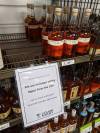
American beer, wine and other alcohol will soon be pulled from Liquor Mart shelves, Premier Wab Kinew announced Sunday, responding to U.S. President Donald Trump’s decision to levy steep tariffs on Canadian goods.
The move, which will come into effect Tuesday and also requires the retailer to stop ordering American products, is expected to take an $80-million bite annually out of the U.S. economy, Kinew said, warning about the seriousness of Trump’s actions.
“This is a trade dispute, this is an economic threat, but we should also be very, very clear-eyed about the threat that this poses to our sovereignty as an independent country,” Kinew told reporters. “If we bow down at this current moment, then what is the next edict that we will be told to respond to as Manitobans and Canadians?”

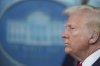
A flurry of tariff announcements kicked off over the weekend. On Saturday, Trump signed an executive order setting in motion 25 per cent tariffs on imported Canadian goods and 10 per cent on Canadian oil and energy starting Tuesday. Trump, who fulfills a campaign promise with the order, has blamed his tariff plans on a lack of border security, saying that Canada has allowed a flow of drugs and undocumented migrants into the U.S.
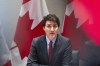
By Saturday evening, Prime Minister Justin Trudeau responded in kind, saying that Canada would implement 25 per cent tariffs against $155-billion worth of U.S. goods, with initial tariffs applied to $30-billion of goods on Tuesday and another round on the remaining $125-billion in three weeks’ time. These tariffs will apply to a wide range of U.S. goods, including alcohol, vegetables, clothing, furniture, sports equipment and lumber, Trudeau said.
Trudeau also emphasized that Canada has made large investments in border security, noting that “less than one per cent of fentanyl, less than one per cent of illegal crossings into the United States come from Canada.”
On Sunday, Kinew said his government’s directive to pull American alcohol will be one of a series of steps to stand up to what he repeatedly referred to as the “Trump tariff tax.” The province has also launched a 24-7 hotline for business owners and workers seeking information about the tariffs. Upcoming plans include targeted “tax deferrals and other supports for business,” Kinew said.
Asked whether eliminating PST on Canadian-made products was an option while tariffs are in place, Kinew paused to consider the idea, but didn’t make any commitments.
Kinew encouraged Manitobans to think about changing their habits in the long-term — whether shopping local, buying Manitoba-made goods, thinking carefully about where they take their vacations, or making a “switch to Crown Royal.”
“I’m asking you to buy Canadian beer and to buy Canadian wine and Canadian liquor, as part of us sticking up for our jobs and sticking up for our economy,” he said.
Other provinces, including Ontario, B.C. and Newfoundland and Labrador, previously announced they’re pulling American products from provincially-run liquor stores as part of their retaliatory plans. (Kinew said Sunday that he is not giving any directives to private retailers.)
Despite assurances from political leaders, confusion swirled over the weekend, with business owners and workers questioning the impact the tariffs may have on their bills, bottom line and job security.
Several small business owners told the Free Press Sunday that the tariffs represent a confusing mess of information that they are now trying to parse — in order to respond and adapt, much as they were forced to during the COVID-19 pandemic.
Jason The, the founder of the Winnipeg-based disc golf and Ultimate Frisbee retailer, Disc Republic, said his business is set to be heavily affected by the retaliatory Canadian tariffs (which will apply to sports equipment), as the popular manufacturers of frisbees are located in the U.S.
“Unfortunately, it is going to hit us pretty hard,” he said.
He said it appears that Canadian tariffs on sports equipment will begin on Feb. 4, meaning that he will not have time to place additional orders from his U.S. suppliers. If his goods were subject to tariffs starting in three weeks’ time, however, he would have rushed to order supply for the entire year to “weather the storm.”
Jason The questions whether tariffs could even be applied on both sides: both when he orders goods from the U.S., then again when U.S. customers — roughly 15 per cent of his online retail base — order his products.
He said that governments could assist businesses like his by helping out with shipping costs from non-tariffed countries, noting it is very expensive to ship from manufacturers in Europe or China.
Darrell Brown, president of Kisik Commercial Furniture, an Indigenous company based in Winnipeg that supplies and installs office furniture, also expects his operation to be significantly affected. He said he could see a drop in sales due to increased prices and low demand, as businesses cut expansion and renovation plans.
“There is a lot of confusion,” Brown said in an e-mail. “I still don’t have a clear picture of what I should be doing to mitigate my company sustainability through this trade war … My question is what assistance could be offered to survive the shrinking sales volume and keep my staff employed?”
He suggested that similar assistance to the supports made available during the pandemic would be welcome if tariffs are applied for a significant period of time.
Meanwhile, Celeste Goncalves, the owner of Pure Wash in St. James, where she sells her own natural bath and body products, as well as nearly 30 other Canadian-made vendors, said the recent announcements leave small business owners like her confused and stressed out.
“A lot of businesses closed down because of the pandemic, and now here we are again being small business owners trying to fight just to stay above water,” she said. “And really, who suffers is our consumers from the States,” she added.
Goncalves said that while she makes an effort to purchase her raw materials from Canadian suppliers, there are a few things that she does buy from the U.S., including soap boxes. She said she planned to find a Canadian alternative, adding, “it’s not even about the money, it’s about the principle of it.”
She also added that she’s aware of the tariff hotline, but that small businesses don’t necessarily have time to be on the phone — or even figure out what questions to be asking. A fact-sheet giving small businesses tips and explaining what they should or shouldn’t do, would be helpful, she added.
With the tariffs set to go into effect, Tabatha Bull, president and CEO of the Canadian Council for Indigenous Business (CCIB), told the Free Press that Indigenous businesses, like so many others, are reporting concerns over increased costs and the competitive disadvantage they will be at, but also of the uncertainty, in general, noting that “even the threat of tariffs have already had an impact on the economy.”
“The list that is out of the $30-billion [in initial tariffs] is a very long list,” she said. “How will the government also be supporting businesses, particularly, small businesses, who are one or two people, to get that support they need to answer the questions that are specific to them?”
She said support will be needed for Indigenous businesses who were looking to expand into the U.S. market — for them to restrategize and find new partners. As well, she noted, the CCIB is focused on advocating for reduced interprovincial trade barriers and simplifying different procurement processes between federal, provincial and territorial governments.

The CCIB is also reminding governments on both sides of the border of the requirements of the 1794 Jay Treaty, which is meant to allow First Nation people to freely trade and travel across the border.
“That has not been upheld,” she said.
— with files from The Canadian Press
marsha.mcLeod@freepress.mb.ca
katie.may@freepress.mb.ca
Marsha McLeod
Investigative reporter
Signal
Marsha is an investigative reporter. She joined the Free Press in 2023.
Katie May is a multimedia producer for the Free Press.
Our newsroom depends on a growing audience of readers to power our journalism. If you are not a paid reader, please consider becoming a subscriber.
Our newsroom depends on its audience of readers to power our journalism. Thank you for your support.
Marsha McLeod
Investigative reporter
Signal
Marsha is an investigative reporter. She joined the Free Press in 2023.
Katie May is a multimedia producer for the Free Press.
Our newsroom depends on a growing audience of readers to power our journalism. If you are not a paid reader, please consider becoming a subscriber.
Our newsroom depends on its audience of readers to power our journalism. Thank you for your support.
Related Articles
Trump is leveraging tariffs. Is he ready for potential fallout? Are consumers? Here's what to know Support, silence and confusion: Republicans respond to Trump's trade war





Advertisement Advertise With Us
Advertisement Advertise With Us
History
Updated on Sunday, February 2, 2025 1:26 PM CST: Updates with more details
Updated on Sunday, February 2, 2025 1:40 PM CST: Adds details from news conference.
Updated on Sunday, February 2, 2025 5:53 PM CST: Updates with additional information
Updated on Sunday, February 2, 2025 6:16 PM CST: Updates with new image of Premier Wab Kinew from the news conference.
Updated on Sunday, February 2, 2025 6:58 PM CST: Clarifies a sentence in the story.
Updated on Sunday, February 2, 2025 9:44 PM CST: Fixes typos
Updated on Monday, February 3, 2025 7:17 AM CST: Corrects wire credit
Updated on Monday, February 3, 2025 9:05 AM CST: Corrects typo