Threat of ban on U.S. booze called ‘eye-opener’ Liquor Marts, biz owners, consumers prepare to switch drinks before Trump calls off tariffs
Read this article for free:
or
Already have an account? Log in here »
To continue reading, please subscribe:

Digital Subscription
One year of digital access for only $205*
- Enjoy unlimited reading on winnipegfreepress.com
- Read the E-Edition, our digital replica newspaper
- Access News Break, our award-winning app
- Play interactive puzzles
*First annual payment billed as $205.00 + GST for one year. This annual subscription will automatically renew at $233.00 + GST every 52 weeks (10% off the regular annual price of $259.35). Offer available to new and qualified returning subscribers only. Cancel any time.
To continue reading, please subscribe:
Add Free Press access to your Brandon Sun subscription for only an additional
$1 for the first 4 weeks*
- Enjoy unlimited reading on winnipegfreepress.com
- Read the E-Edition, our digital replica newspaper
- Access News Break, our award-winning app
- Play interactive puzzles
*Your next Brandon Sun subscription payment will increase by $1.00 and you will be charged $17.95 plus GST for four weeks. After four weeks, your payment will increase to $24.95 plus GST every four weeks.
Read unlimited articles for free today:
or
Already have an account? Log in here »
Hey there, time traveller!
This article was published 03/02/2025 (588 days ago), so information in it may no longer be current.
Henry Schroeder occasionally grabs a case of American beer or a bottle of wine or bourbon made south of the border when he makes a trip to his local Liquor Mart.
He’d have no problem foregoing those brands for Canadian options if a potential trade war between the U.S. and Canada leads to American-made liquor being pulled from shelves in Manitoba.
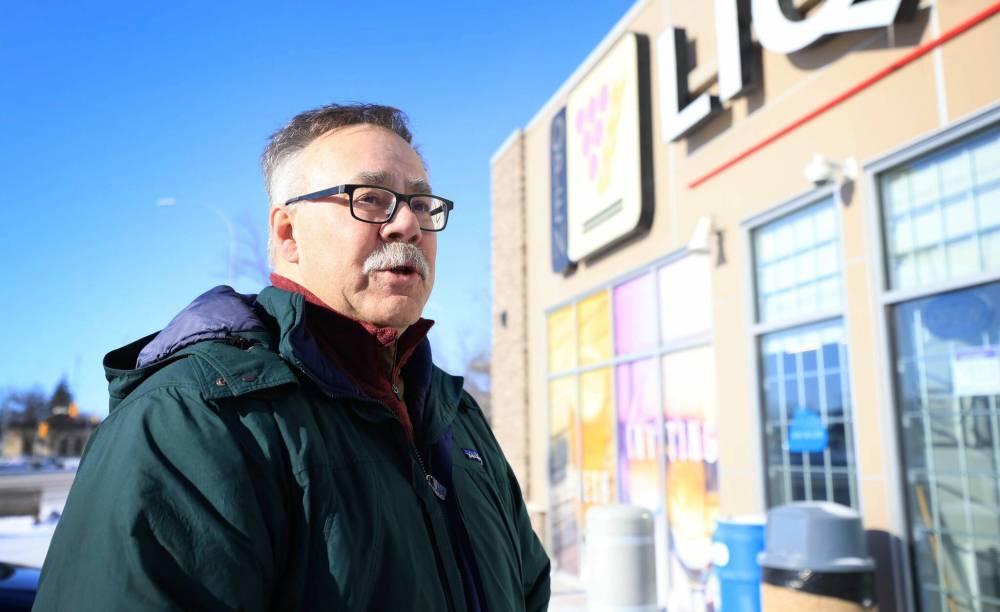
“I don’t think we should be bullied, and I think we should stand up to being bullied,” Schroeder said outside a Liquor Mart at Portage Avenue and Ainslie Street on Monday, when the Manitoba government had been on the verge of halting its sales and imports of U.S. booze.
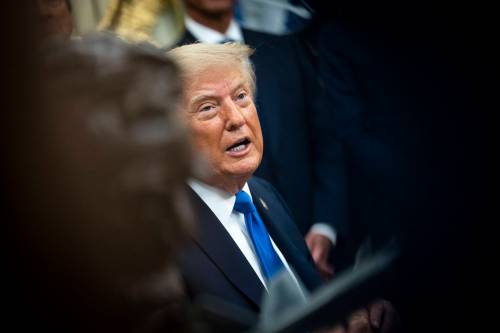
Following the lead of other provinces, Premier Wab Kinew on Sunday directed Manitoba Liquor and Lotteries, a Crown corporation, to pull U.S.-made alcohol from Liquor Marts, starting Tuesday, and halt new orders in response to U.S. President Donald Trump’s proposed 25 per cent tariffs on many Canadian goods.
Manitoba paused the move late Monday afternoon after Prime Minister Justin Trudeau announced Trump will hold off on the tariffs for at least 30 days.
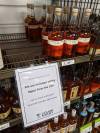
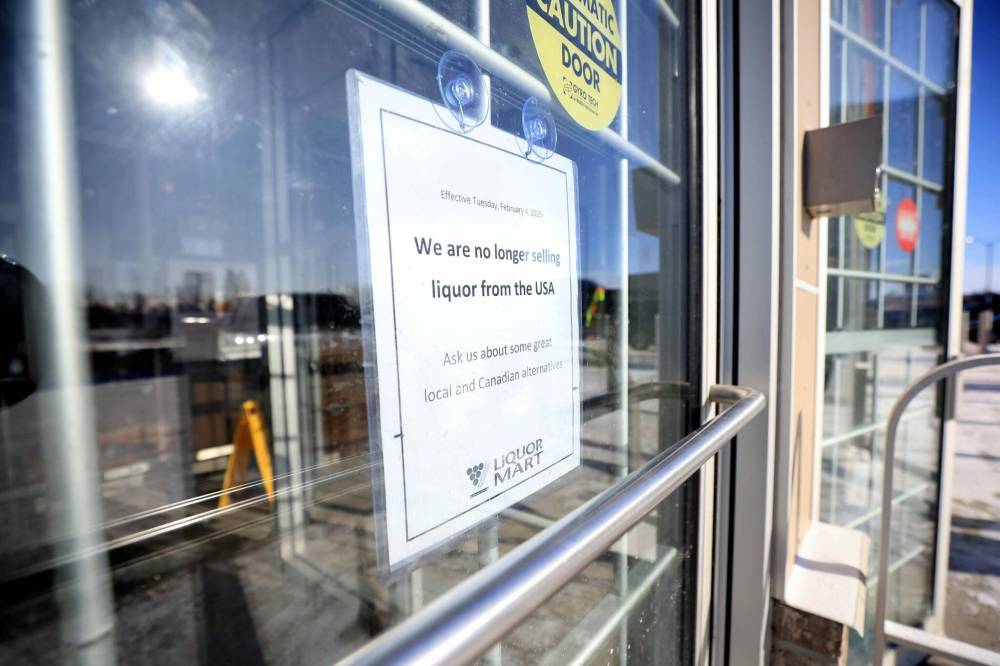
Liquor Marts were displaying signs on front doors and shelves stating: “We are no longer selling liquor from the USA. Ask us about some great local and Canadian alternatives.”
The pause on tariffs came as a relief to Manitoba restaurateurs who were scrambling to source alternatives on less than 48 hours’ notice, and learn more about what Kinew’s directive and Canada’s retaliatory tariffs on many U.S. food products would mean for prices and their industry, which acquires liquor from MLL.
“It’s obviously a step in the right direction. With that being said, there was a lot of work and effort going into it today,” said Shaun Jeffrey, CEO and executive director of the Manitoba Restaurant and Foodservices Association. “It causes a lot of stress on the industry when you don’t know what your next day is going to be like.”
Certain brands of U.S. liquor are among the biggest sellers for some restaurants, he noted.
While the industry is hoping a trade war can be averted, Jeffrey hopes those who would be affected are given enough notice to plan ahead if the U.S. and Canada proceed with tariffs.
He said the situation was a wake-up call for the restaurant association’s members, some of whom said they will explore the possibility of sourcing more local or Canadian products.
“It’s an eye-opener for our industry to see how dependent we were on products from other countries,” Jeffrey said.
Michael Juce, president and CEO of the Manitoba Hotel Association, said the situation “underscores how volatile a world we live in right now.”
“It’s important to show we are united and that we take the U.S threat seriously, and can push back when required to,” he said.
Supporting local is important to Manitoba hotels, 90 per cent of which are locally owned, Juce said.
Ravi Ramberran owns several businesses, including two licensed premises in Winnipeg: the Four Crowns hotel, restaurant, bar and beer vendor on McPhillips Street, and the Saint Restaurant & Pub on Portage Avenue.
He expects Manitobans to switch to alternatives if their alcohol brand of choice is American-made and becomes temporarily unavailable in the future.
Ramberran fears a trade war would be “disastrous” for Canada and lead to higher prices for consumers and his industry.
People will be less likely to go to a restaurant if they have less disposable income, he said.
“We were on our way up after COVID,” Ramberran said.
Silver Heights Restaurant owner Tony Siwicki was more concerned about the potential implications of tariffs on food products than having to find substitutes for a small number of alcohol brands. He hopes tariffs are not applied, otherwise it could become a “back and forth” between the neighbouring countries.
“Where does it end?” he said.
Jeffrey said restaurateurs do not want to pass the extra costs to customers, following the effects of the COVID-19 pandemic and higher inflation.
The looming tariffs and a movement to buy local or Canadian gave a bit of a boost to companies such as Winnipeg’s Patent 5, a distillery and cocktail bar in the Exchange District.
Co-owner Brock Coutts said Patent 5 had more online orders than usual for a Monday morning. Some customers wrote comments saying they were supporting local due to Trump’s threat of tariffs.
The Winnipeg Whisky Festival, which is being held Feb. 28 to March 1, initially said it would not serve U.S. products due to the Manitoba government’s directive.
After Manitoba paused its decision, organizers said American products will remain part of the festival, alongside dozens of whiskies and other spirits from Canada, Mexico, Ireland, Scotland, India and Japan.

An MLL spokesperson said U.S. products, if removed from shelves as initially planned, were to be held in storage.
As for what constitutes an “American” product, MLL looks at the product information that meets federal importation regulations, such as the place of manufacture, the spokesperson said.
Products that would have been taken off Liquor Mart shelves were declared as made in the U.S.
Some American brands are not made in the U.S. but made in Canada, such as Budweiser, Bud Light and MGD, which are owned by multinational companies, the MLL spokesperson said.
chris.kitching@freepress.mb.ca

Chris Kitching is a general assignment reporter at the Free Press. He began his newspaper career in 2001, with stops in Winnipeg, Toronto and London, England, along the way. After returning to Winnipeg, he joined the Free Press in 2021, and now covers a little bit of everything for the newspaper. Read more about Chris.
Every piece of reporting Chris produces is reviewed by an editing team before it is posted online or published in print — part of the Free Press‘s tradition, since 1872, of producing reliable independent journalism. Read more about Free Press’s history and mandate, and learn how our newsroom operates.
Our newsroom depends on a growing audience of readers to power our journalism. If you are not a paid reader, please consider becoming a subscriber.
Our newsroom depends on its audience of readers to power our journalism. Thank you for your support.
Related Articles
Manitoba to stop selling U.S. liquor in response to U.S. tariffs