Tariff effects slide onto grocery store shelves Full impact on consumer prices not likely felt until June-July, researcher says
Read this article for free:
or
Already have an account? Log in here »
To continue reading, please subscribe:

Digital Subscription
One year of digital access for only $205*
- Enjoy unlimited reading on winnipegfreepress.com
- Read the E-Edition, our digital replica newspaper
- Access News Break, our award-winning app
- Play interactive puzzles
*First annual payment billed as $205.00 + GST for one year. This annual subscription will automatically renew at $233.00 + GST every 52 weeks (10% off the regular annual price of $259.35). Offer available to new and qualified returning subscribers only. Cancel any time.
To continue reading, please subscribe:
Add Free Press access to your Brandon Sun subscription for only an additional
$1 for the first 4 weeks*
- Enjoy unlimited reading on winnipegfreepress.com
- Read the E-Edition, our digital replica newspaper
- Access News Break, our award-winning app
- Play interactive puzzles
*Your next Brandon Sun subscription payment will increase by $1.00 and you will be charged $17.95 plus GST for four weeks. After four weeks, your payment will increase to $24.95 plus GST every four weeks.
Read unlimited articles for free today:
or
Already have an account? Log in here »
Hey there, time traveller!
This article was published 16/04/2025 (518 days ago), so information in it may no longer be current.
Bottles of Simply orange juice no longer dot Abbi’s Payfair shelves.
Satish Abbi made the decision nearly a month ago: the orange juice price was rising far too high for his customer base.
“I don’t know why, could be the tariffs. But it’s way up,” Abbi said Wednesday.
MIKE DEAL / FREE PRESS
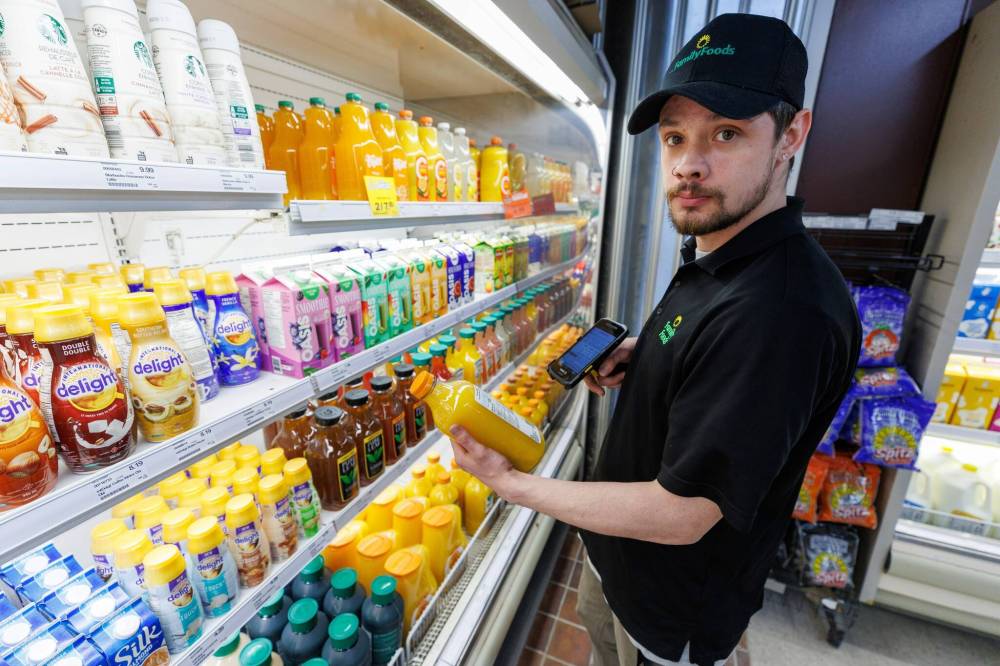
Brayden Halayko, store supervisor of Downtown Family Foods says he's noticed higher costs for orange juice, canned soup and other U.S. imports.He watched his Sargent Avenue store’s operating costs hike during and after the COVID-19 pandemic. Tariffs from the ongoing trade war between Canada and the United States could lead to further revenue reduction.
Canada slapped 25 per cent fees on a number of American food and drink imports in response to initial U.S. tariffs. Canada’s first round of counter-tariffs took effect March 4. Orange juice, peanut butter and beer made the list.
Lately, Manitoba shop owners have been feeling the effects.
Abbi said he can’t single out tariffs as the reason for pricier goods. All he knows is his revenue has decreased between 30 and 40 per cent since the pandemic.
Many American imports seem to be 25 per cent more expensive, said Brayden Halayko, store supervisor of Downtown Family Foods.
Campbell’s canned soup is pricier, he highlighted. The Donald Street grocer has raised its own prices — on some items — as a result of the new order sheets.
“We’re trying to keep it in a range that isn’t too … hard-hitting on the customers,” Halayko said.
G.J. Andrews has both swallowed and passed increased costs of U.S. imports to patrons. Price hikes vary based on the good, from cheese to chocolate, added president Blake Lelyk.
“I don’t think we’ll see the full impact of this situation … until June or even July.”–Stuart Smyth
Downtown Family Foods is swapping U.S. brands for Canadian to avoid levies. Pet food, condiments and ice cream are among those changed, Halayko said.
He’s continuing to see a ‘Shop Canadian’ movement. Staff label Canadian-made goods; those items tend to clear shelves faster, Halayko added.
Produce is the easiest section to find tariff effects in the grocery store, said Stuart Smyth, agri-food innovation and sustainability enhancement chair at the University of Saskatchewan.
Retailers may be sourcing fruit and vegetables from countries other than the U.S. — in Latin American and South American regions — to satisfy buyers avoiding U.S. purchases. However, it’s more costly to import those items than U.S. goods under normal trade conditions, Smyth explained.
“I think there’s starting to be a little bit of evidence of that,” he said.
Tariff impacts disproportionately affect independent grocers, he noted. Larger chains buy mass quantities and often receive discounts. Such deals could soften the blow of tariff increases, Smyth said.
Also, multinationals tend to have more options than local grocers, noted Sylvain Charlebois, director of the Agri-Food Analytics Lab at Dalhousie University in Halifax.
“If (chains) don’t like a price from a supplier, they can go somewhere else because they have the volume,” Charlebois said. “Smaller players don’t have that luxury.”
“If (chains) don’t like a price from a supplier, they can go somewhere else because they have the volume…. Smaller players don’t have that luxury.”–Sylvain Charlebois
It’s hard to tell whether tariffs are impacting grocery prices, Charlebois added. Store food prices rose 3.2 per cent last month and 2.8 per cent in February, per year-over-year data from Statistics Canada.
Charlebois is waiting for the federal agency to release an updated wholesale food price index before making judgments.
Grocery shoppers likely haven’t felt the full effects of tariffs yet, added Smyth.
Canadian and U.S. companies often sign months-long contracts. There’s a good chance many contracts aren’t finished; they could be renewed at higher price points or Canadian companies may ink deals with alternate brands, Smyth said.
“I don’t think we’ll see the full impact of this situation … until June or even July.”
Meantime, he believes Canadian food production could decrease amid economic uncertainty.
It seems Canadian sector manufacturers are, generally, absorbing counter-tariff costs that impact their ingredient lists, Charlebois relayed.

The federal government announced Tuesday it intends to give temporary six-month relief for U.S.-imported goods used in manufacturing, processing, and food and beverage packaging, among other sectors.
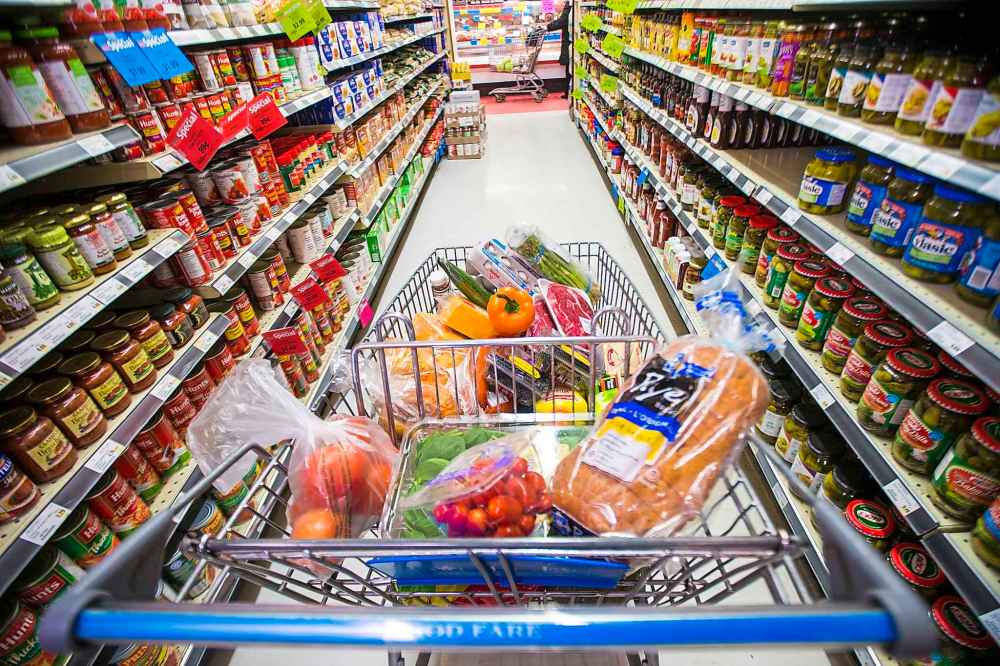
“If you actually eliminate the American option, I suspect that the grocery store will become both more Canadian and more internationalized,” Charlebois said.
There’s a caveat: should food prices rise, Charlebois suspects shoppers will scout the lowest prices. He recalled the pandemic, where a ‘shop local’ movement fizzled as inflation soared.
Canada has imposed 25 per cent tariffs on $59.8 billion worth of U.S. goods. The latest round, which took effect March 13, targets steel and aluminum products.
gabrielle.piche@winnipegfreepress.com

Gabrielle Piché reports on business for the Free Press. She interned at the Free Press and worked for its sister outlet, Canstar Community News, before entering the business beat in 2021. Read more about Gabrielle.
Every piece of reporting Gabrielle produces is reviewed by an editing team before it is posted online or published in print — part of the Free Press‘s tradition, since 1872, of producing reliable independent journalism. Read more about Free Press’s history and mandate, and learn how our newsroom operates.
Our newsroom depends on a growing audience of readers to power our journalism. If you are not a paid reader, please consider becoming a subscriber.
Our newsroom depends on its audience of readers to power our journalism. Thank you for your support.