

CUSMA worries persist, but businesses taking small wins from court’s tariff decision
Advertisement
Read this article for free:
or
Already have an account? Log in here »
To continue reading, please subscribe:

Digital Subscription
One year of digital access for only $205*
- Enjoy unlimited reading on winnipegfreepress.com
- Read the E-Edition, our digital replica newspaper
- Access News Break, our award-winning app
- Play interactive puzzles
*First annual payment billed as $205.00 + GST for one year. This annual subscription will automatically renew at $233.00 + GST every 52 weeks (10% off the regular annual price of $259.35). Offer available to new and qualified returning subscribers only. Cancel any time.
To continue reading, please subscribe:
Add Free Press access to your Brandon Sun subscription for only an additional
$1 for the first 4 weeks*
- Enjoy unlimited reading on winnipegfreepress.com
- Read the E-Edition, our digital replica newspaper
- Access News Break, our award-winning app
- Play interactive puzzles
*Your next Brandon Sun subscription payment will increase by $1.00 and you will be charged $17.95 plus GST for four weeks. After four weeks, your payment will increase to $24.95 plus GST every four weeks.
Read unlimited articles for free today:
or
Already have an account? Log in here »
Hey there, time traveller!
This article was published 25/02/2026 (225 days ago), so information in it may no longer be current.
Canadian business groups say trade uncertainty continues to linger ahead of a formal review of the trade agreement between Canada, the U.S. and Mexico, however there are some reasons for hope after the U.S. Supreme Court’s decision last week curtailing global tariffs.
The ruling has “changed a little bit of the thinking” around tariffs overall, said Canadian Federation of Independent Business president Dan Kelly, even as separate sectoral tariffs remain in place for Canadian industries like steel, aluminum, automobiles, lumber and cabinetry.
The top court’s decision struck down U.S. President Donald Trump’s “Liberation Day” tariffs and fentanyl-related duties on Canada, Mexico and China.
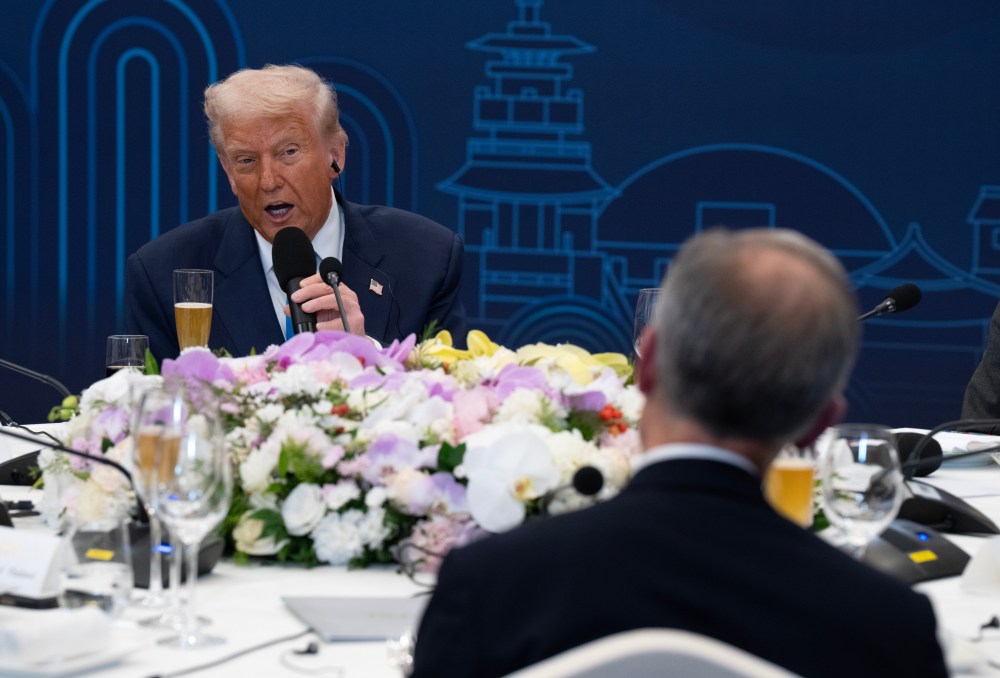
Trump responded by signing an executive order to enact a 10 per cent worldwide tariff using Section 122 of the 1974 Trade Act. That rate will expire after 150 days unless Congress votes to extend it.
But Kelly said there are short-term wins for Canada, even though the court’s decision didn’t affect most Canadian exports. He said relief will be felt especially by small businesses that sell goods not covered by the Canada-U.S.-Mexico Agreement — previously subject to a 35 per cent levy.
“It showed that there are at least some checks and balances in the U.S. system,” said Kelly.
“But we have to factor all of that under the umbrella of the increased uncertainty that this has created.”
Kelly said the bigger worry is what CUSMA will look like over the long-term with a formal review of the trade pact due this summer.
CUSMA-compliant goods crossing the border remain exempt from tariffs after Trump’s latest executive order.
“To us, that signals very clearly … that this is still valued,” said Matthew Holmes, executive vice-president and chief of public policy for the Canadian Chamber of Commerce.
“That gives us the ground to stand on for what we hope is a renewal.”
Holmes, speaking by phone Wednesday from Washington, D.C., said he doubted a new deal would be signed by a meeting scheduled for July 1.
He said his sense from meeting with U.S. and Mexican business community representatives is that all sides are still “a little bit apart” when it comes to details of the framework that would form a renewed agreement.
“I think we’re likely to see this kind of continue for a little bit of time,” he said.
“It might stretch into next year, but … in the meantime, Canadian business should prepare to see more threats, and see the pressure increase from the U.S. administration to work towards the deal.”
Trump reiterated his commitment to realigning global trade through tariffs during his State of the Union speech Tuesday night. His administration’s top trade czar also told CBC on Tuesday that Canada will have to accept “some level of higher tariff” if it wants to reach a new trade deal with Washington.
“It’ll probably get a little worse before it gets better,” said Holmes.

“But I feel cautiously optimistic that the markets and the integrated nature of the North American economy will prevail.”
Kelly said that reality is sinking in among small business owners knowing “there may be some degree of change to CUSMA that probably isn’t going to be in Canada’s interest.”
“But I don’t think … it’s going to be a ripping up of the agreement to then going back to kind of full tariffs on everything,” he said.
“It’ll probably be somewhere in between and that uncertainty is still a pretty significant feeling.”
This report by The Canadian Press was first published Feb. 25, 2026.
Related Articles
U.S. supreme court tariff ruling brings more uncertainty for Manitoba businesses
Advertisement Advertise With Us
Advertisement Advertise With Us