

Farmland values continue inexorable rise
Advertisement
Read this article for free:
or
Already have an account? Log in here »
To continue reading, please subscribe:

Digital Subscription
One year of digital access for only $205*
- Enjoy unlimited reading on winnipegfreepress.com
- Read the E-Edition, our digital replica newspaper
- Access News Break, our award-winning app
- Play interactive puzzles
*First annual payment billed as $205.00 + GST for one year. This annual subscription will automatically renew at $233.00 + GST every 52 weeks (10% off the regular annual price of $259.35). Offer available to new and qualified returning subscribers only. Cancel any time.
To continue reading, please subscribe:
Add Free Press access to your Brandon Sun subscription for only an additional
$1 for the first 4 weeks*
- Enjoy unlimited reading on winnipegfreepress.com
- Read the E-Edition, our digital replica newspaper
- Access News Break, our award-winning app
- Play interactive puzzles
*Your next Brandon Sun subscription payment will increase by $1.00 and you will be charged $17.95 plus GST for four weeks. After four weeks, your payment will increase to $24.95 plus GST every four weeks.
Read unlimited articles for free today:
or
Already have an account? Log in here »
Canadian farmland values have always been a bit of an enigma to outside observers because they continue to rise in both good times and bad.
They may increase at a slower pace from time to time, but it’s unheard of, at least on the Prairies, for values to decline. Even though the per-acre price is loosely correlated with the land’s productive capacity, there are few crops that farmers grow that justify paying up to $13,000 per acre, as is the case in some parts of southern Manitoba.
And yet they do.
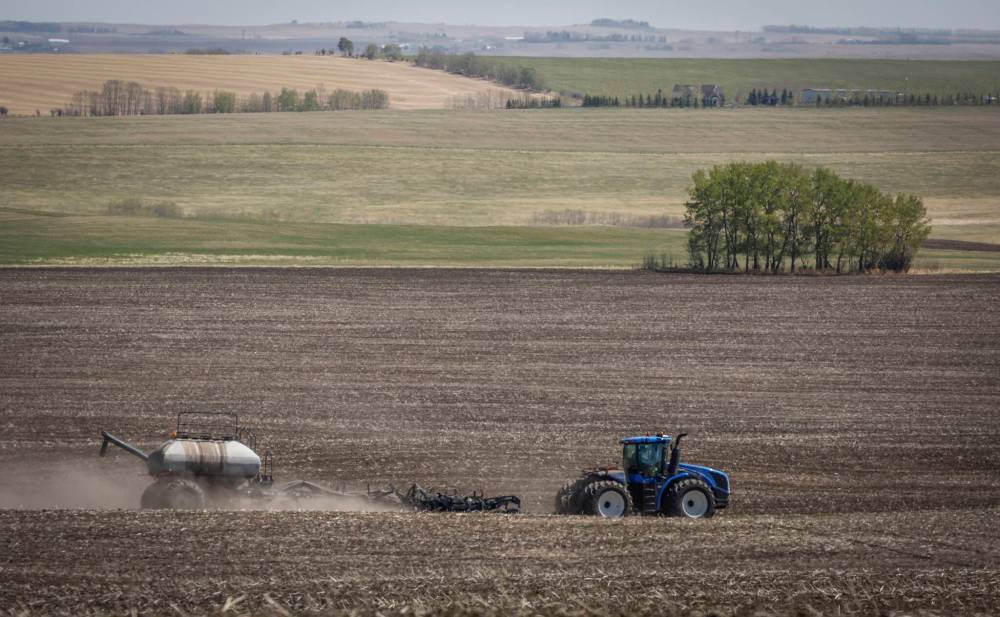
The latest annual farmland values report produced by Farm Credit Canada showed Manitoba leading the nation in value appreciation, with a 12.2 per cent year-over-year increase in 2025. The national increase averaged 9.3 per cent.
This province has recorded double-digit, year-over-year increases in three of the past five years.
Values are growing faster in some areas, such as the northwest at 17.7 per cent year over year, and southwestern Manitoba at 15.1 per cent. Per acre prices in those areas range between $3,900 and $4,700.
The only segment of the farmland market that saw zero appreciation last year was irrigated land, which trades at a premium over dryland acres and where prices range between $7,500 and $15,000 per acre. Because of the investment involved with installing irrigation, those acres don’t change hands very often.
So, is there a backstory to farmland inflation?
The adage that “they aren’t making any more of it” remains relevant in these times when farming is increasingly expensive and resources are in short supply.
Farm operations continue to grow in scale. More of the traditional family farms moving to incorporation as a business model. Traditionally, that has meant expanding their production base through a combination of purchases and rental.
As the boomer generation ages out, a large demographic of farmers is retiring or on the verge. They look at their land as a safe real estate investment as opposed to a production base; they tend to rent it out rather than sell outright. And when it does come to market, demand for it from neighbouring operations is intense.
While there are hundreds of farmers whose land is spread out in pockets located across different townships, and even different provinces.
The ability to find land close to home is a key consideration for any operation.
The FCC report notes trade uncertainties, high input costs or low commodity prices have failed to dampen demand, even though they raise the risk for acquiring operations.
There are hints, however, the farmland market is becoming more nuanced, with demand remaining robust for highly productive acres and a little less so for harder-to-farm parcels.
Two years ago, a super-sized grain operation from Saskatchewan was making the farm news because it sent bulldozers in to clear the bush from pastureland it had acquired near Eddystone for annual crop production.
The tale corresponded with a sudden appreciation in pastureland values in the FCC reports, suggesting at least some of the pastureland trading hands wasn’t being acquired to feed cattle.
Even though cattle prices have been strong by historical standards, the cyclical expansion normally expected in such times has been slow to materialize.
The skeptics foresaw a repeat of earlier times when pastureland was cleared for annual cropping — with disastrous results. It might pencil out for a few years when grain prices are high, but these lands are often prone to erosion and are easily exhausted, even with high fertilizer applications. In the end, some acres cost more to farm than they can produce.

As has been widely reported, fertilizer isn’t getting any cheaper. Neither is fuel, machinery or replacement parts.
That land is back on the market, along with a host of other parcels across the Prairies owned by the same operator.
That’s just one example, and there may be other factors behind this operator’s decision.
But as the cost of farming continues to rise, it makes sense farmers will take a strategic look at their production base, focusing their investment on the acres that offer the best potential.
Laura Rance is editor emeritus for Glacier FarmMedia. She can be reached at lrance@farmmedia.com.
Related Articles
Winnipeg asking prices set record in March
Advertisement Advertise With Us
Advertisement Advertise With Us