

Seed collectors strive to save heirloom plants, sustain food production
Advertisement
Read this article for free:
or
Already have an account? Log in here »
To continue reading, please subscribe:

Digital Subscription
One year of digital access for only $205*
- Enjoy unlimited reading on winnipegfreepress.com
- Read the E-Edition, our digital replica newspaper
- Access News Break, our award-winning app
- Play interactive puzzles
*First annual payment billed as $205.00 + GST for one year. This annual subscription will automatically renew at $233.00 + GST every 52 weeks (10% off the regular annual price of $259.35). Offer available to new and qualified returning subscribers only. Cancel any time.
To continue reading, please subscribe:
Add Free Press access to your Brandon Sun subscription for only an additional
$1 for the first 4 weeks*
- Enjoy unlimited reading on winnipegfreepress.com
- Read the E-Edition, our digital replica newspaper
- Access News Break, our award-winning app
- Play interactive puzzles
*Your next Brandon Sun subscription payment will increase by $1.00 and you will be charged $17.95 plus GST for four weeks. After four weeks, your payment will increase to $24.95 plus GST every four weeks.
Read unlimited articles for free today:
or
Already have an account? Log in here »
Hey there, time traveller!
This article was published 12/09/2013 (4781 days ago), so information in it may no longer be current.
VICTORIA – Trucks are not an uncommon sight on Vancouver streets, but a small Mazda truck whose bed has been converted to a small garden is definitely something that gets a lot of attention.
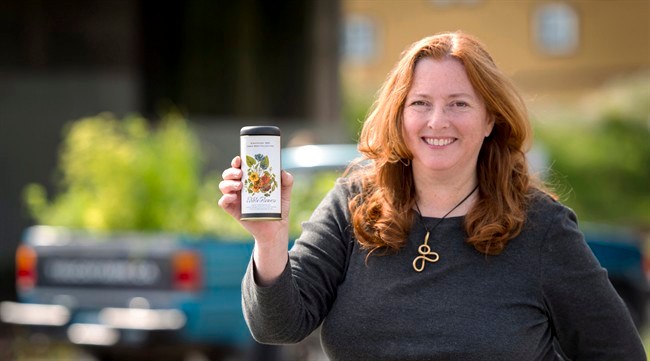
The Truck Farm is the company vehicle for Judy Kenzie, avid gardener and owner of Strathcona 1890 Urban Seed Collections.
Kenzie began her seed business in 2012 as a means to address sustainable food resources. Like many small seed farmers she is focused on non-genetically modified, open pollinated, non-chemically treated heirloom seeds.
“It really comes down to one thing,” said Kenzie. “If we don’t have good seeds we don’t have healthy plants, no fruits and vegetables and no gardens.”
Unlike other seed farmers who have property to grow their seed and test different varieties, Kenzie relies on the balcony of her East Vancouver home.
“I don’t grow as much food as I would like in our garden,” she said. “I don’t have a big yard; most of my stuff is grown in pots.”
But like other seed growers, the seed is just the beginning of a larger goal. Kenzie is using the Strathcona 1890 Urban Seed Collections to teach members of her community about sustainable food production through the classes and workshops of the Urban Seed Projects.
Even though food sovereignty is a potential result of the work done by seed farmers like Kenzie, Kim Delaney, owner of Hawthorn Farm Organic Seeds, is working toward seed sovereignty.
“I am really interested in a ‘do no harm’ approach to seed and farming,” said Delaney from her Palmerston, Ont., farm. “It’s almost impossible to grow corn without having it contaminated by genetically modified corn because corn pollen is wind-borne.
“If people want to grow genetically modified corn that is up to them, but if they make it impossible for other people to grow organic corn, then it is not OK.”
Delaney began collecting seed as a horticulturist for Ontario’s Ministry of Natural Resources. Her interest in seed saving eventually combined with her love of food and she purchased Hawthorn Farm.
Like many other seed savers Delaney began by saving heirloom varieties and eventually stumbled upon the work of Seeds of Diversity.
As a Canadian charity, Seeds of Diversity works toward the conservation, documentation and use of public-domain, non-hybrid plants of Canadian significance.
“The whole idea of being able to produce food is dependent on seed being available so if we lose the ability and knowledge base to save seed we might be in trouble,” said Delaney.
“But the other thing is if we stop saving seed with small companies like mine or backyard and market gardeners, a lot of the open pollinated seed is going to be dropped because a lot of the large seed companies are interested in hybrid seed.”
Heirloom seed savers and farmers like Delaney are focused on preserving heritage varieties but also working toward collecting and saving the heirloom crops of the future.
“We can’t just focus on the heirlooms of the past,” she said.

“It is a continuing process so the word open pollinated seed includes the seed our ancestors have given us but also the seed that we are selecting now for the future.”
———
Online:
www.strathcona1890.com
www.hawthornfarm.ca