

Report addresses rail companies having an ‘effective natural monopoly’ on shipping grain
Advertisement
Read this article for free:
or
Already have an account? Log in here »
To continue reading, please subscribe:

Digital Subscription
One year of digital access for only $205*
- Enjoy unlimited reading on winnipegfreepress.com
- Read the E-Edition, our digital replica newspaper
- Access News Break, our award-winning app
- Play interactive puzzles
*First annual payment billed as $205.00 + GST for one year. This annual subscription will automatically renew at $233.00 + GST every 52 weeks (10% off the regular annual price of $259.35). Offer available to new and qualified returning subscribers only. Cancel any time.
To continue reading, please subscribe:
Add Free Press access to your Brandon Sun subscription for only an additional
$1 for the first 4 weeks*
- Enjoy unlimited reading on winnipegfreepress.com
- Read the E-Edition, our digital replica newspaper
- Access News Break, our award-winning app
- Play interactive puzzles
*Your next Brandon Sun subscription payment will increase by $1.00 and you will be charged $17.95 plus GST for four weeks. After four weeks, your payment will increase to $24.95 plus GST every four weeks.
Read unlimited articles for free today:
or
Already have an account? Log in here »
Hey there, time traveller!
This article was published 20/07/2015 (4094 days ago), so information in it may no longer be current.
Canada’s major railways must provide more information to shippers about their capacity to haul grain and compensate them when they fail to meet service targets, the country’s agriculture minister says.
Speaking in Winnipeg on Monday, Gerry Ritz said the railways must share more information about industry service needs.
“They measure on what they supply when it comes to cars, not what the market is asking them to deliver. So there’s a double standard there,” Ritz said. “They say their commitment is to supplying the cars they’re going to supply, not what’s actually asked of them.”
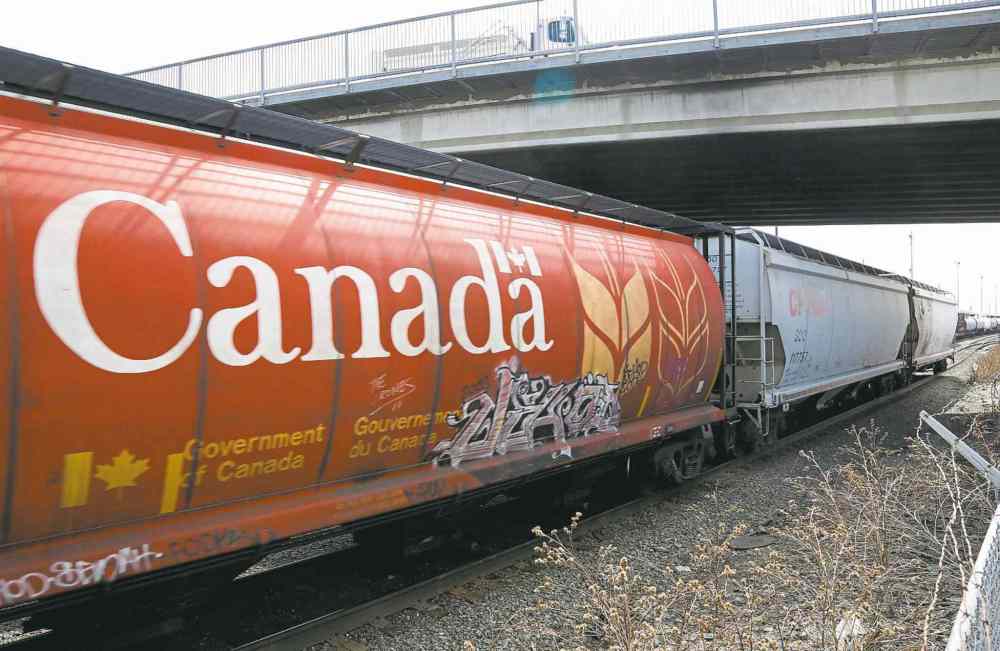
He said grain shippers should also be able to enter into reciprocal service agreements with CN Rail and CP Rail. He said that often the railways are able to levy charges against shippers for not filling a grain car on time, but there is no ability for the shipper to charge the rail company if they do not pick up or deliver the grain on time.
“I, for one, personally think that has to change,” Ritz said in Winnipeg while releasing a report of a grain industry working group on the issue. “You have to have reciprocity of penalties to have a commercial agreement.”
The performance of Canada’s two national railways in moving grain to ports came under particular scrutiny in 2013 when the Prairie provinces produced record grain crops. Farmers and companies were forced to pile grain on the ground due to a lack of rail shipping capacity.
Ottawa set performance targets for CN and CP, and regulators began to examine the relationship between shippers and railways more closely.

According to the Crops Logistics Working Group report released by Ritz on Monday, rail companies have an “effective natural monopoly” when it comes to hauling grain because most shippers are served by only one carrier.
“In a free market, a supplier who fails to meet commitments or refuses to make commitments loses the business,” the working group said. “No such market discipline exists for rail companies.”
The working group, chaired by Murdoch MacKay of the Canadian Grain commission, included representatives of various crop production groups, the association representing major grain companies, and Manitoba’s Keystone Agricultural Producers, among others.
Its report calls for greater transparency on the part of railways about grain shipping needs, increased protection and support for small shippers and greater regulatory powers for the Canadian Transportation Agency in dealing with the railways.