

Beef emerging as sticking point in free trade talks between Canada and Britain
Advertisement
Read this article for free:
or
Already have an account? Log in here »
To continue reading, please subscribe:

Digital Subscription
One year of digital access for only $205*
- Enjoy unlimited reading on winnipegfreepress.com
- Read the E-Edition, our digital replica newspaper
- Access News Break, our award-winning app
- Play interactive puzzles
*First annual payment billed as $205.00 + GST for one year. This annual subscription will automatically renew at $233.00 + GST every 52 weeks (10% off the regular annual price of $259.35). Offer available to new and qualified returning subscribers only. Cancel any time.
To continue reading, please subscribe:
Add Free Press access to your Brandon Sun subscription for only an additional
$1 for the first 4 weeks*
- Enjoy unlimited reading on winnipegfreepress.com
- Read the E-Edition, our digital replica newspaper
- Access News Break, our award-winning app
- Play interactive puzzles
*Your next Brandon Sun subscription payment will increase by $1.00 and you will be charged $17.95 plus GST for four weeks. After four weeks, your payment will increase to $24.95 plus GST every four weeks.
Read unlimited articles for free today:
or
Already have an account? Log in here »
Hey there, time traveller!
This article was published 24/03/2022 (1641 days ago), so information in it may no longer be current.
OTTAWA – A potential clash over hormone-treated Canadian beef is emerging as a sticking point as free trade talks between Canada and Britain formally begin.
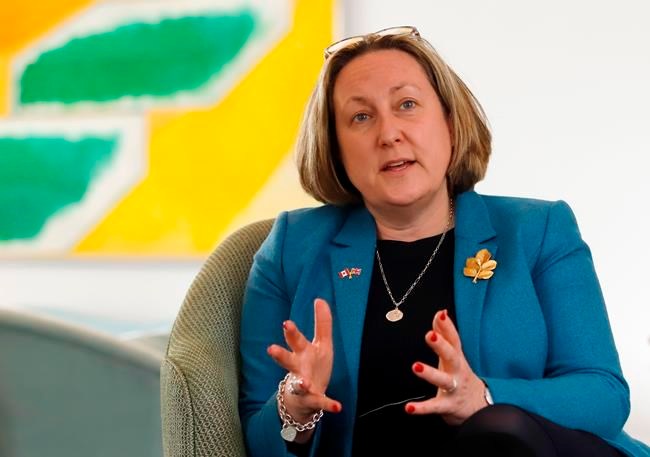
In an interview with The Canadian Press, U.K. International Trade Secretary Anne-Marie Trevelyan confirmed her government would not compromise on allowing hormone-treated Canadian beef into Britain.
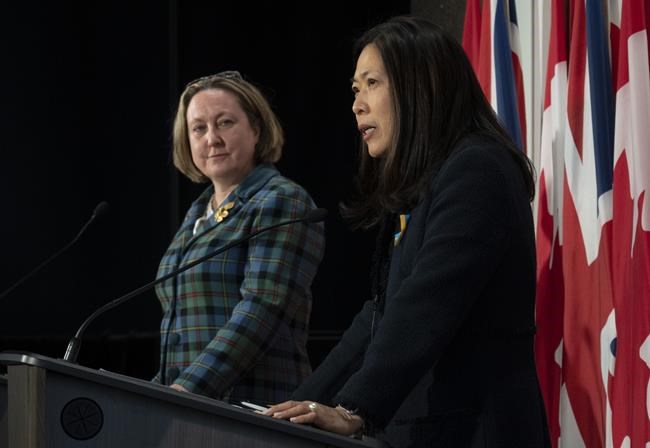
“In terms of hormone-treated meat, we have some very clear safety food standards in the U.K., which are ours, and we don’t compromise on those,” she said prior to joining her Canadian counterpart, Mary Ng, in Ottawa on Thursday to announce the formal launch of talks. Negotiators from both governments are to meet next week in London for the first round.
But Trevelyan said there is much room for the two parties to make other gains in agriculture, including sustainable food production. Both ministers also extolled the potential to make gains in digital trade, and expand investment flows.
Standing next to Trevelyan at Global Affairs Canada headquarters, Ng said the quality of Canadian beef and its producers are “second to none,” and she tried to sound an upbeat note, saying an eventual agreement would create new opportunities for Canadian and British exporters.
“We’re always going to try to push for access for Canadian producers,” Ng said in an interview afterward. “Beef is an important sector. So, I’m always going to push.”
Doug Sawyer, the co-chair Canadian Cattlemen’s Association foreign trade committee, said it’s “vitally important” that hormone-treated beef is a part of the trade agreement with Britain.
“We can supply hormone-free, but it’s at what cost?” he said. The use of “efficiencies” and additives that improve cattle growth are good for the environment, the protection of which will be a key plank of the eventual Canada-Britain agreement, Sawyer added.
“They want all this verification of the environmental impacts, and then they put a ban on a product that improves our efficiency, and is actually really good for the environment,” he said. “Because we can move cattle through far more efficiently. They’re less days on feed.”
Mark Agnew of the Canadian Chamber of Commerce said a deal with Britain is needed now more than ever, including to address digital trade and agriculture issues.
“Canadian exporters need to see substantial outcomes in the agriculture and agri-food sector by reducing tariff barriers as well as ensuring regulations are based on science to provide predictability,” he said.
Britain and Canada have already negotiated an interim trade agreement to replace the broader Comprehensive Economic and Trade Agreement, or CETA, that Canada negotiated with the European Union. The interim deal led to the elimination of tariffs on 98 per cent of Canadian exports to Britain, but the U.K.’s decision to leave the EU forced it out of CETA at the end of 2020.
Lawrence Herman, an international trade lawyer and former diplomat, said the path to a deal could be relatively smooth but there might be some bumps in the road when it comes to agriculture.
“The Canadian dairy lobby is fighting its usual lobbying battle to prevent any increased duty-free access for U.K. cheese,” Herman said.
“That could be a sticking point in putting the final deal together, but I think it can be finessed because there are larger access gains for both the Brits and Canadian exporters in other areas.”
Pierre Lampron, president of Dairy Farmers of Canada, said that when Ng tabled Canada’s negotiating objectives last month she made it clear that there would be no more import access to Canada’s supply managed dairy market.
“We validated that the issue of access to the Canadian dairy market was not on the agenda of these trade talks. We continue to monitor them closely,” he said in a statement.
Ng said in the interview that as the Russian invasion of Ukraine stokes unrest, a trade deal between Canada and Britain would help strengthen the resilience of global supply chains, as well as standing as an affirmation of the world trading order.

“It’s really important that Canada and the U.K. do this because of our shared history, the strength of our democracies, the strength of our institutions, the enormous respect for the rules-based system, rules-based international trade,” she said.
“It is important for not only the commercial relationship, which the free trade agreement will yield, but also for what we stand for.”
Britain is following Canada’s lead this week by revoking Russia’s most favoured nation trading status, which will lead to additional 35-per-cent tariffs on key Russian goods.
“We share the same objective — the same objective being that the egregious invasion of Russia into Ukraine is not something that can be allowed to succeed,” Ng said.
This report by The Canadian Press was first published March 24, 2022.