Enrolment drops in N.L.’s oil-focused engineering programs; students in it for change

Advertisement

Advertise with us

ST. JOHN'S, N.L. - Newfoundland and Labrador's post-secondary institutions are seeing a steep drop in enrolment in oil-focused engineering programs as the province's offshore oil industry tries to claw its way out of a downturn.

Read this article for free:


or

Already have an account? Log in here »

To continue reading, please subscribe:

Subscribe and receive a limited-edition Free Press branded hat or tote.

Digital Subscription

One year of digital access for only $205*

  • Enjoy unlimited reading on winnipegfreepress.com
  • Read the E-Edition, our digital replica newspaper
  • Access News Break, our award-winning app
  • Play interactive puzzles

*First annual payment billed as $205.00 + GST for one year. This annual subscription will automatically renew at $233.00 + GST every 52 weeks (10% off the regular annual price of $259.35). Offer available to new and qualified returning subscribers only. Cancel any time.

To continue reading, please subscribe:

Add Free Press access to your Brandon Sun subscription for only an additional

$1 for the first 4 weeks*

  • Enjoy unlimited reading on winnipegfreepress.com
  • Read the E-Edition, our digital replica newspaper
  • Access News Break, our award-winning app
  • Play interactive puzzles
Start now

*Your next Brandon Sun subscription payment will increase by $1.00 and you will be charged $17.95 plus GST for four weeks. After four weeks, your payment will increase to $24.95 plus GST every four weeks.

Hey there, time traveller!
This article was published 31/10/2021 (1783 days ago), so information in it may no longer be current.

ST. JOHN’S, N.L. – Newfoundland and Labrador’s post-secondary institutions are seeing a steep drop in enrolment in oil-focused engineering programs as the province’s offshore oil industry tries to claw its way out of a downturn.

And many of those who have enrolled say they did so because they want to bring change to the industry in the era of climate change.

“What I would like to do is to make it more sustainable,” said Brooklyn Hollett, a fourth-year undergraduate student in process engineering at Memorial University in St. John’s. “To make it so there’s less emissions and it’s not so hard on the environment.”
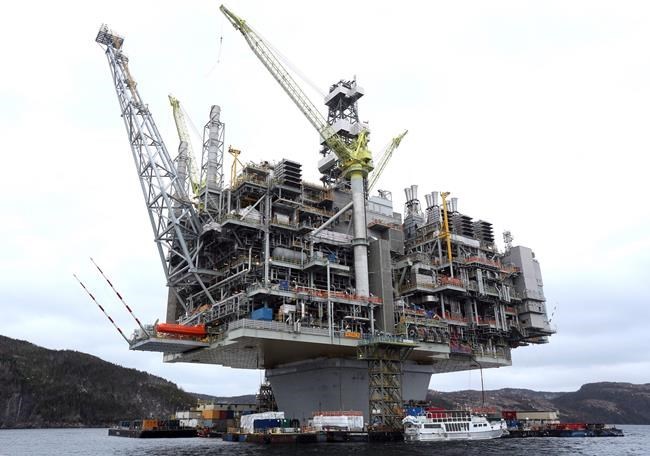
The Hebron Platform, anchored in Trinity Bay, N.L., is shown on April 18, 2017. Fewer students are signing up for oil-focused engineering programs at Newfoundland and Labrador's college and university, and many who have enrolled say they're in it to change the industry. THE CANADIAN PRESS/Paul Daly

Figures from the College of the North Atlantic show the number of students in its programs geared toward the oil industry — petroleum and chemical process engineering technology — declined steadily from 157 students in 2016-2017 to 73 in 2020-2021. The school did not provide data for this academic year.

At Memorial, the number of students completing a master’s degree in oil and gas engineering went from 56 in 2016-17 to 69 in 2017-18, before falling to 30, then 20, then 19 in successive years.

Just two students are enrolled in the university’s oil and gas engineering PhD program this year, down from 11 students in 2016-2017.

“With COVID, oil took a big downturn, so I think people were hesitant to put all their eggs in that basket,” Hollett said in a recent interview, adding that she’s one of 15 students in her fourth-year class.

Her program allows students two paths: one with a strict focus on petroleum, the other with a wider scope that includes sustainability methods, renewable energy and even mining. “Usually, there’s a lot of students in the petroleum stream, but this year, my class, not a single person is in it. All 15 of us are in the sustainability stream,” she said.

Hollet said her classmates are on “both sides of the oil spectrum.” One woman wants to work at a big operator and just keep producing oil, she said, “and there’s other people that are, like, totally against it, and they want to work in green energy, wind energy, that type of thing.”

Hollett grew up in the small community of Arnold’s Cove, where the Come By Chance oil refinery is the town’s biggest employer, so she knows how unpredictable jobs in the sector can be. She wants to improve the oil industry, but she’s made sure she can work in renewables or even in mining if those goals don’t work out.

Newfoundland and Labrador’s oil industry was hit hard in recent years by a crash in global oil prices, which was promptly followed by the onset of the COVID-19 pandemic.In response, three of the province’s four offshore oil projects halted some or all of their plans or operations, and the provincial government parcelled out $320 million in aid provided by Ottawa.

All four projects are big polluters: in 2019, they were among the top six per cent of greenhouse gas emitters among over 700 Canadian oil and gas extraction projects, according to data from the federal Greenhouse Gas Reporting Program. All are expected to keep pumping for at least another decade.

A request for an interview with a College of the North Atlantic representative wasn’t granted, but spokesman Roger Hulan noted by email that the oil and gas sector is a cyclical industry, and there are signs of a strong recovery. “Enrolment for both programs is beginning to improve, and now would be the optimal time for students … to enter this field and prepare for this recovery and future demand,” he said.

Greg Naterer, dean of engineering and applied science at Memorial, said the pandemic had an impact on enrolment. But students are also driven by growing concern about climate change and the need for the industry to curb emissions and develop renewable energy sources, he said.

The university is looking to adapt its programs, “largely because of what’s happening in the world around us, to be more environmentally responsible,” Naterer said in a recent interview. “We’re broadening the scope of the current undergraduate programs in process engineering … incorporating other forms of green energy like biodiesel, hydrogen fuel cells and others.”

The University of Calgary has suspended admissions for its undergraduate program inoil and gas engineering, citing a growing student interest in more renewable forms of energy. A similar move wouldn’t make sense at Memorial, Naterer said. “This is not the first time that we’ve ever seen fluctuations in enrolments,” he said. “The students want to be part of the solution rather than the problem, and that’s what our programs allow them to do.”

This report by The Canadian Press was first published Oct. 31, 2021.

Report Error Submit a Tip

More Stories

Day 1 of Jets training camp in the books with pairings essentially cemented

Ken Wiebe 7 minute read Preview

Day 1 of Jets training camp in the books with pairings essentially cemented

Ken Wiebe 7 minute read Yesterday at 6:08 PM CDT

Nearly six minutes into his question-and-answer session, Scott Arniel took a welcome detour from the news of the day.

After exhausting the discussion around the goalie who wasn’t in training camp, the head coach of the Winnipeg Jets finally got a query about the line combinations and defensive pairings that were unveiled in training camp.

And unlike past years, when exhibition games were more frequent and the training camp wasn’t this condensed, Arniel conceded these groupings were intentional and were likely staying together for some time.

The expansion to an 84-game regular season brings with it a reduction to four pre-season games and a much shorter training camp, which could limit the amount of experimentation that Arniel can do during the next two weeks.

Read
Yesterday at 6:08 PM CDT

United Way, other charities fight for dollars as donor base shrinks

Scott Billeck 7 minute read Preview

United Way, other charities fight for dollars as donor base shrinks

Scott Billeck 7 minute read 2:00 AM CDT

Winnipeg’s charitable sector is being squeezed from both sides: demand for help is growing while the pool of donors to meet that need is shrinking.

The imbalance is increasingly being carried by a relatively small group of deep-pocketed donors. Last year, 600 people — about three per cent of United Way Winnipeg’s individual donors — accounted for roughly $8 million, or 55 per cent of individual donations.

The fundraising pitch isn’t getting any easier.

Homelessness and public drug use have become increasingly visible, household budgets remain strained and the problems charities are trying to address can seem so entrenched that donors may reasonably wonder what difference another contribution can make.

Read
2:00 AM CDT

Siloam Mission, WFPS discussing on-site paramedic to reduce staggering number of emergency calls

Scott Billeck 4 minute read Preview

Siloam Mission, WFPS discussing on-site paramedic to reduce staggering number of emergency calls

Scott Billeck 4 minute read 2:00 AM CDT

Winnipeg’s fire-paramedic service and its largest homeless-serving organization are discussing what it would look like to station at least one paramedic at Siloam Mission, as emergency calls to the downtown facility surge.

The ongoing discussions come as Winnipeg Fire Paramedic Service crews were dispatched 1,771 times during the first eight months of the year to the two adjacent Siloam properties at 303 Stanley St. and 300 Princess St.

WFPS said most of the calls were related to overdoses or other consequences of substance use, with the total nearly double the 854 calls recorded over the same period last year. By comparison, there were 831 calls during the same span in 2024, and 591 in 2023.

“The number of emergency calls isn’t sustainable for us as a service, but it’s certainly not sustainable for them as an agency trying to provide services,” WFPS chief Ryan Sneath told the Free Press. “And they recognize that they’re impacting emergency services, not them specifically, but the site in a significant way.”

Read
2:00 AM CDT

‘One of a kind’: CEO, philanthropist Doug Harvey dies at 72

Morgan Modjeski 5 minute read Preview

‘One of a kind’: CEO, philanthropist Doug Harvey dies at 72

Morgan Modjeski 5 minute read Updated: Yesterday at 12:57 PM CDT

Doug Harvey, a Winnipeg business titan and philanthropist, has died after battling cancer for more than a decade.

Harvey gave millions of dollars to Winnipeg organizations while he was CEO of DLH Group, a nationwide network of businesses that support heavy duty truck and trailer users.

Loren Remillard, CEO and president of the Winnipeg Chamber of Commerce, said the business community is mourning the loss of the influential businessman who helped shape Winnipeg.

“We are a transportation and logistics hub in Winnipeg and it was partly the result of geography, and a big part because of leaders and visionaries like Doug Harvey,” he said.

Read
Updated: Yesterday at 12:57 PM CDT

N.L.'s oil-focused programs see enrolment drop

Sarah Smellie, The Canadian Press 5 minute read Preview

N.L.'s oil-focused programs see enrolment drop

Sarah Smellie, The Canadian Press 5 minute read Sunday, Oct. 31, 2021

ST. JOHN'S, N.L. - Newfoundland and Labrador's post-secondary institutions are seeing a steep drop in enrolment in oil-focused engineering programs as the province's offshore oil industry tries to claw its way out of a downturn.

And many of those who have enrolled say they did so because they want to bring change to the industry in the era of climate change.

"What I would like to do is to make it more sustainable," said Brooklyn Hollett, a fourth-year undergraduate student in process engineering at Memorial University in St. John's. "To make it so there's less emissions and it's not so hard on the environment."

Figures from the College of the North Atlantic show the number of students in its programs geared toward the oil industry — petroleum and chemical process engineering technology — declined steadily from 157 students in 2016-2017 to 73 in 2020-2021. The school did not provide data for this academic year.

Read
Sunday, Oct. 31, 2021

Desperate Poilievre wants Canadians to believe the sky is falling when it’s just cloudy outside

Tom Brodbeck 5 minute read Preview

Desperate Poilievre wants Canadians to believe the sky is falling when it’s just cloudy outside

Tom Brodbeck 5 minute read 12:47 PM CDT

Pierre Poilievre has a problem.

Canadians just don’t seem to be paying much attention to him anymore.

So, naturally, the Conservative Opposition leader has decided to turn up the volume.

At a recent party caucus retreat in Penticton, B.C., Poilievre delivered the familiar message: Canada is in trouble, Canadians are hurting and the Liberal government is making everything worse.

Read
12:47 PM CDT