Facebook froze as anti-vaccine comments swarmed users

Advertisement

Advertise with us

WASHINGTON (AP) — In March, as claims about the dangers and ineffectiveness of coronavirus vaccines spun across social media and undermined attempts to stop the spread of the virus, some Facebook employees thought they had found a way to help.

Read this article for free:


or

Already have an account? Log in here »

To continue reading, please subscribe:

Subscribe and receive a limited-edition Free Press branded hat or tote.

Digital Subscription

One year of digital access for only $205*

  • Enjoy unlimited reading on winnipegfreepress.com
  • Read the E-Edition, our digital replica newspaper
  • Access News Break, our award-winning app
  • Play interactive puzzles

*First annual payment billed as $205.00 + GST for one year. This annual subscription will automatically renew at $233.00 + GST every 52 weeks (10% off the regular annual price of $259.35). Offer available to new and qualified returning subscribers only. Cancel any time.

To continue reading, please subscribe:

Add Free Press access to your Brandon Sun subscription for only an additional

$1 for the first 4 weeks*

  • Enjoy unlimited reading on winnipegfreepress.com
  • Read the E-Edition, our digital replica newspaper
  • Access News Break, our award-winning app
  • Play interactive puzzles
Start now

*Your next Brandon Sun subscription payment will increase by $1.00 and you will be charged $17.95 plus GST for four weeks. After four weeks, your payment will increase to $24.95 plus GST every four weeks.

Hey there, time traveller!
This article was published 26/10/2021 (1788 days ago), so information in it may no longer be current.

WASHINGTON (AP) — In March, as claims about the dangers and ineffectiveness of coronavirus vaccines spun across social media and undermined attempts to stop the spread of the virus, some Facebook employees thought they had found a way to help.

By subtly altering how posts about vaccines are ranked in people’s newsfeeds, researchers at the company realized they could curtail the misleading information individuals saw about COVID-19 vaccines and offer users posts from legitimate sources like the World Health Organization.

“Given these results, I’m assuming we’re hoping to launch ASAP,” one Facebook employee wrote in March, responding to the internal memo about the study.
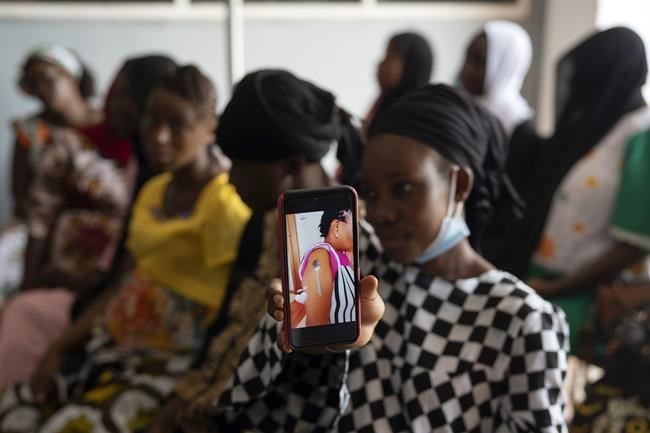
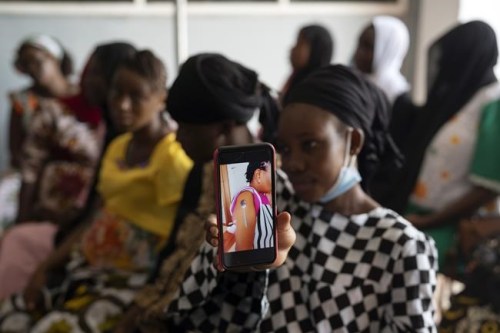
FILE - In this Sept. 23, 2021, file photo, Oumie Nyassi shows a video circulating on the internet and that has been confirmed as fake news of a woman claiming she was magnetized after receiving the COVID-19 vaccine, in a doctor's office at Serrekunda, Gambia hospital. Last spring, as false claims about vaccine safety threatened to undermine the world's response to COVID-19, researchers at Facebook wrote that they could reduce vaccine misinformation by tweaking how vaccine posts show up on users' newsfeeds, or by turning off comments entirely. Yet despite internal documents showing these changes worked, Facebook was slow to take action. (AP Photo/Leo Correa, File)

Instead, Facebook shelved some suggestions from the study. Other changes weren’t made until April.

When another Facebook researcher suggested disabling comments on vaccine posts in March until the platform could do a better job of tackling anti-vaccine messages lurking in them, that proposal was ignored at the time.

Critics say Facebook was slow to act because it worried it might impact the company’s profits.

“Why would you not remove comments? Because engagement is the only thing that matters,” said Imran Ahmed, the CEO of the Center for Countering Digital Hate, an internet watchdog group. “It drives attention and attention equal eyeballs and eyeballs equal ad revenue.”

In an emailed statement, Facebook said it has made “considerable progress” this year with downgrading vaccine misinformation in users’ feeds.

Facebook’s internal discussions were revealed in disclosures made to the Securities and Exchange Commission and provided to Congress in redacted form by former Facebook employee-turned-whistleblower Frances Haugen’s legal counsel. The redacted versions received by Congress were obtained by a consortium of news organizations, including The Associated Press.

The trove of documents shows that in the midst of the COVID-19 pandemic, Facebook carefully investigated how its platforms spread misinformation about life-saving vaccines. They also reveal rank-and-file employees regularly suggested solutions for countering anti-vaccine misinformation on the site, to no avail. The Wall Street Journal reported on some of Facebook’s efforts to deal with antivaccine comments last month.

The inaction raises questions about whether Facebook prioritized controversy and division over the health of its users.

“These people are selling fear and outrage,” said Roger McNamee, a Silicon Valley venture capitalist and early investor in Facebook who is now a vocal critic. “It is not a fluke. It is a business model.”
FILE - In this Nov. 15, 2018 file photo, the icons of Facebook and WhatsApp are pictured on an iPhone, in Gelsenkirchen, Germany. Last spring, as false claims about vaccine safety threatened to undermine the world's response to COVID-19, researchers at Facebook wrote that they could reduce vaccine misinformation by tweaking how vaccine posts show up on users' newsfeeds, or by turning off comments entirely. Yet despite internal documents showing these changes worked, Facebook was slow to take action. (AP Photo/Martin Meissner, File)

Typically, Facebook ranks posts by engagement — the total number of likes, dislikes, comments and reshares. That ranking scheme may work well for innocuous subjects like recipes, dog photos or the latest viral singalong. But Facebook’s own documents show that when it comes to divisive, contentious issues like vaccines, engagement-based ranking only emphasizes polarization, disagreement and doubt.

To study ways to reduce vaccine misinformation, Facebook researchers changed how posts are ranked for more than 6,000 users in the U.S., Mexico, Brazil and the Philippines. Instead of seeing posts about vaccines that were chosen based on their engagement, these users saw posts selected for their trustworthiness.

The results were striking: a nearly 12% decrease in content that made claims debunked by fact-checkers and an 8% increase in content from authoritative public health organizations such as the WHO or U.S. Centers for Disease Control.

Employees at the company reacted with exuberance, according to internal exchanges.

“Is there any reason we wouldn’t do this?” one Facebook employee wrote in response.

Facebook said it did implement many of the study’s findings — but not for another month, a delay that came at a pivotal stage of the global vaccine rollout.

In a statement, company spokeswoman Dani Lever said the internal documents “don’t represent the considerable progress we have made since that time in promoting reliable information about COVID-19 and expanding our policies to remove more harmful COVID and vaccine misinformation.”

The company also said it took time to consider and implement the changes.

Yet the need to act urgently couldn’t have been clearer: At that time, states across the U.S. were rolling out vaccines to their most vulnerable — the elderly and sick. And public health officials were worried. Only 10% of the population had received their first dose of a COVID-19 vaccine. And a third of Americans were thinking about skipping the shot entirely, according to a poll from The Associated Press-NORC Center for Public Affairs Research.
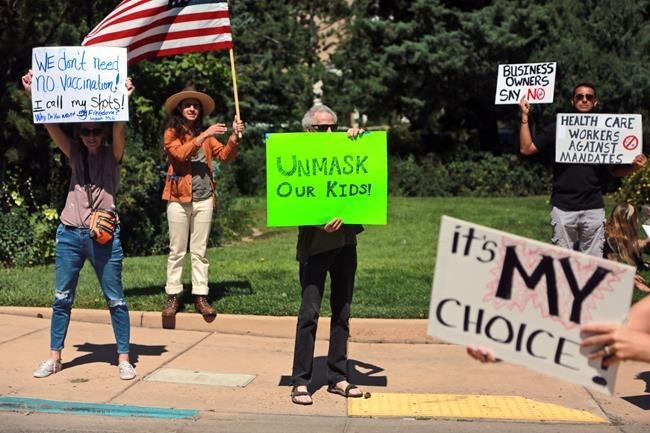
FILE - In this Aug. 20, 2021, file photo, protesters against vaccine and mask mandates demonstrate near the state capitol, in Santa Fe, New Mexico. Last spring, as false claims about vaccine safety threatened to undermine the world's response to COVID-19, researchers at Facebook wrote that they could reduce vaccine misinformation by tweaking how vaccine posts show up on users' newsfeeds, or by turning off comments entirely. Yet despite internal documents showing these changes worked, Facebook was slow to take action. (AP Photo/Cedar Attanasio, File)

Despite this, Facebook employees acknowledged they had “no idea” just how bad anti-vaccine sentiment was in the comments sections on Facebook posts. But company research in February found that as much as 60% of the comments on vaccine posts were anti-vaccine or vaccine reluctant.

Even worse, company employees admitted they didn’t have a handle on catching those comments, or a policy in place to take them down.

“Our ability to detect (vaccine hesitancy) in comments is bad in English — and basically non-existent elsewhere,” another internal memo posted on March 2 said.

Los Angeles resident Derek Beres, an author and fitness instructor, sees anti-vaccine content thrive in the comments every time he promotes immunizations on his account on Instagram, which is owned by Facebook. Last year, Beres began hosting a podcast after noticing conspiracy theories about COVID-19 and vaccines were swirling on the social media feeds of health and wellness influencers.

Earlier this year, when Beres posted a picture of himself receiving the COVID-19 shot, some on social media told him he would likely drop dead in six months’ time.

“The comments section is a dumpster fire for so many people,” Beres said.

Some Facebook employees suggesting disabling all commenting on vaccine posts while the company worked on a solution.

“Very interested in your proposal to remove ALL in-line comments for vaccine posts as a stopgap solution until we can sufficiently detect vaccine hesitancy in comments to refine our removal,” one Facebook employee wrote on March 2.

The suggestion went nowhere until mid-April, when Lever said the company stopped showing previews of popular comments on vaccine posts.
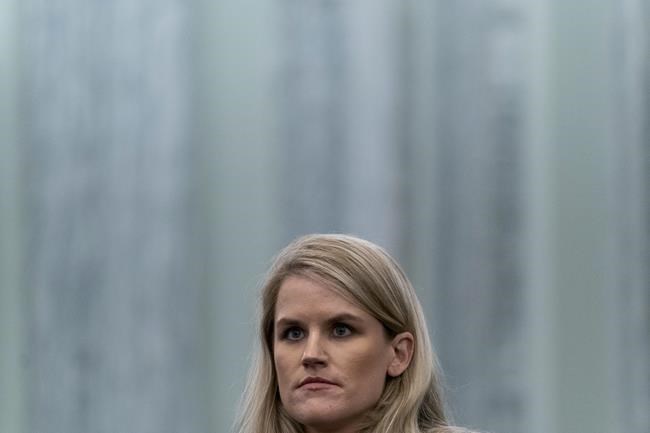
FILE - In this Oct. 5, 2021, file photo, former Facebook data scientist Frances Haugen speaks during a hearing of the Senate Commerce, Science, and Transportation Subcommittee on Consumer Protection, Product Safety, and Data Security, on Capitol Hill, in Washington. Last spring, as false claims about vaccine safety threatened to undermine the world's response to COVID-19, researchers at Facebook wrote that they could reduce vaccine misinformation by tweaking how vaccine posts show up on users' newsfeeds, or by turning off comments entirely. Yet despite internal documents showing these changes worked, Facebook was slow to take action. (AP Photo/Alex Brandon, File)

Instead, Facebook CEO Mark Zuckerberg announced on March 15 that the company would start labeling posts about vaccines that described them as safe.

The move allowed Facebook to continue to get high engagement — and ultimately profit — off anti-vaccine comments, said Ahmed of the Center for Countering Digital Hate.

“Facebook has taken decisions which have led to people receiving misinformation which caused them to die,” Ahmed said. “At this point, there should be a murder investigation.”

___

Seitz reported from Columbus, Ohio.
Report Error Submit a Tip

More Stories

‘Parental rights’ issue resurfaces

Maggie Macintosh 5 minute read Preview

‘Parental rights’ issue resurfaces

Maggie Macintosh 5 minute read Yesterday at 2:00 AM CDT

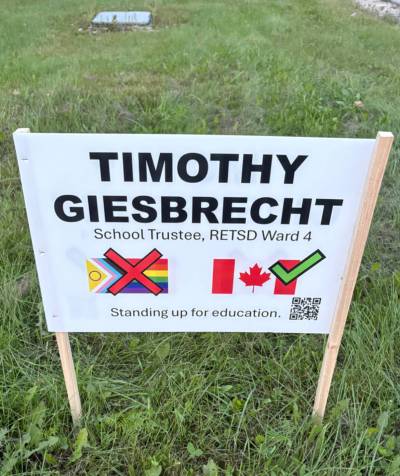
Trustee campaign material that condemns rainbow flags is being met with outrage of all kinds, written complaints and, in one case, a cease-and-desist order.

“Parental rights,” including questions about classroom diversity, equity and inclusion policies, are resurfacing heading into school board elections across Manitoba.

“People are trying to advance their politics and their issues while simultaneously calling teachers ideologues and brainwashers,” said Shannon Moore, an associate professor at the University of Manitoba who studies sexual health education. “And I find that rich.”

Moore said parents have a right to choose independent school or homeschool, but they do not have a right to dictate curriculum that is currently developed using research and mainstream morals.

Read
Yesterday at 2:00 AM CDT

Winnipeg author relies on typewriter collection to punch out manuscripts

Sheldon Birnie 8 minute read Preview

Winnipeg author relies on typewriter collection to punch out manuscripts

Sheldon Birnie 8 minute read Yesterday at 6:22 PM CDT

Local author Michael Clark has not only taken the words “keep at it” to heart, but repeated them so often that last year, his daughter, 29, suggested the pair get matching tattoos bearing the mantra before her wedding.

The words are inked to appear as though they were punched onto his forearm by a typewriter.

Clark has a thing for typewriters. The award-winning crime fiction author figures he has 50 or more stashed in various nooks and crannies of his St. Vital home.

“There’s a joke in the typewriter community: if you leave four typewriters in your car unlocked, when you come back there’ll be three more,” the 57-year-old says with a laugh.

Read
Yesterday at 6:22 PM CDT

Lauded Manitoba author chronicled life in the Interlake

By Sheldon Birnie 5 minute read Preview

Lauded Manitoba author chronicled life in the Interlake

By Sheldon Birnie 5 minute read Wednesday, Sep. 16, 2026

Longtime Manitoba author, editor and professor David Arnason died on Monday at age 86.

Read
Wednesday, Sep. 16, 2026

Facebook froze as anti-vaccine comments swarmed users

David Klepper And Amanda Seitz, The Associated Press 8 minute read Preview

Facebook froze as anti-vaccine comments swarmed users

David Klepper And Amanda Seitz, The Associated Press 8 minute read Tuesday, Oct. 26, 2021

WASHINGTON (AP) — In March, as claims about the dangers and ineffectiveness of coronavirus vaccines spun across social media and undermined attempts to stop the spread of the virus, some Facebook employees thought they had found a way to help.

By subtly altering how posts about vaccines are ranked in people’s newsfeeds, researchers at the company realized they could curtail the misleading information individuals saw about COVID-19 vaccines and offer users posts from legitimate sources like the World Health Organization.

“Given these results, I’m assuming we’re hoping to launch ASAP,” one Facebook employee wrote in March, responding to the internal memo about the study.

Instead, Facebook shelved some suggestions from the study. Other changes weren’t made until April.

Read
Tuesday, Oct. 26, 2021

‘She was looking to destroy me’: convicted harasser faces new charges

Dean Pritchard 6 minute read Preview

‘She was looking to destroy me’: convicted harasser faces new charges

Dean Pritchard 6 minute read Yesterday at 6:54 PM CDT

When Agnieszka Ciochon-Newton moved into the 55-plus apartment building on Stradbrook Avenue last year, she came across as “timid, soft-spoken and sensitive,” said building manager Tanya Owen.

Little did Owen know the meek-looking 58-year-old woman would soon turn her life and the lives of many of her tenants upside down and threaten her career and family.

“She was looking to destroy me for a simple tenant disagreement,” Owen said Thursday.

Court records show Ciochon-Newton was arrested earlier this month and charged with seven counts of criminal harassment, two counts of uttering threats and one count each of fraud, breaking and entering, attempting to obstruct justice, intimidation of a justice official, mischief and defamatory libel.

Read
Yesterday at 6:54 PM CDT

Teenage e-scooter driver in critical condition after crash

Chris Kitching 6 minute read Preview

Teenage e-scooter driver in critical condition after crash

Chris Kitching 6 minute read Wednesday, Sep. 16, 2026

A teenager riding an e-scooter suffered life-threatening injuries when he was struck by an SUV in southwest Winnipeg on Monday night.

Witnesses provided first aid to the injured rider, who police said is under 18, after the collision happened at Waverley Street and Arbour Meadow Gate/Lake Crest Road at about 9:30 p.m.

“It feels like it happened in slow motion,” said driver Audrey Vanderspek, who was waiting at a red light when she witnessed the incident. “Maybe it’s because you’re helpless, that it just feels like everything slows down in the moment.”

Police said the electric scooter rider was crossing Waverley and was hit by a southbound 2010 Honda CR-V. The posted speed limit on that stretch of Waverley is 70 kilometres per hour.

Read
Wednesday, Sep. 16, 2026