Germany says pandemic not over as court OKs vaccine mandate
Advertisement
Read this article for free:
or
Already have an account? Log in here »
To continue reading, please subscribe:

Digital Subscription
One year of digital access for only $205*
- Enjoy unlimited reading on winnipegfreepress.com
- Read the E-Edition, our digital replica newspaper
- Access News Break, our award-winning app
- Play interactive puzzles
*First annual payment billed as $205.00 + GST for one year. This annual subscription will automatically renew at $233.00 + GST every 52 weeks (10% off the regular annual price of $259.35). Offer available to new and qualified returning subscribers only. Cancel any time.
To continue reading, please subscribe:
Add Free Press access to your Brandon Sun subscription for only an additional
$1 for the first 4 weeks*
- Enjoy unlimited reading on winnipegfreepress.com
- Read the E-Edition, our digital replica newspaper
- Access News Break, our award-winning app
- Play interactive puzzles
*Your next Brandon Sun subscription payment will increase by $1.00 and you will be charged $17.95 plus GST for four weeks. After four weeks, your payment will increase to $24.95 plus GST every four weeks.
Read unlimited articles for free today:
or
Already have an account? Log in here »
Hey there, time traveller!
This article was published 19/05/2022 (1548 days ago), so information in it may no longer be current.
BERLIN (AP) — The coronavirus pandemic is not over yet, Germany’s health minister warned Thursday as the country’s highest court approved rules requiring health workers to be vaccinated against COVID-19.
Health Minister Karl Lauterbach noted the sharp rise in cases currently happening in some Asian countries, such as North Korea, but also parts of Europe.
“In Germany, too, an average of 130 to 150 people are dying every day due to the pandemic,” Lauterbach told reporters in Berlin. “So the impression that the pandemic has been defeated is wrong.”

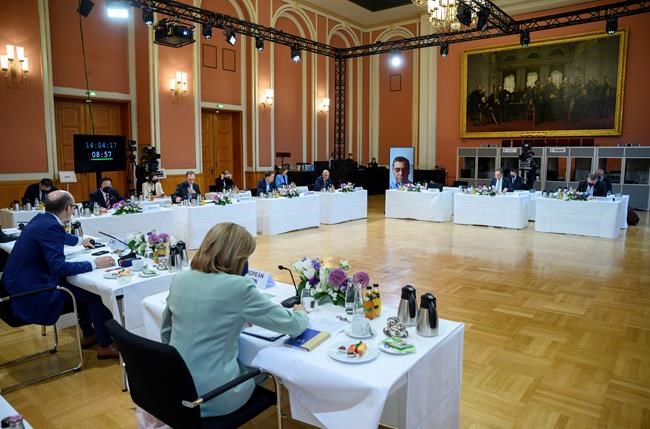
Lauterbach was holding a two-day meeting with his counterparts from the Group of Seven leading democracies on Thursday and Friday.
U.S. Health Secretary Xavier Becerra had been due to attend in person but tested positive in Berlin on Wednesday — a day after meeting Lauterbach and other prominent figures in Germany’s pandemic response effort. Becerra planned to take part in the meetings by video, officials said.
Lauterbach said the G-7 health ministers would conduct an exercise in how to respond to a new pandemic, involving a fictitious new strain of pox that’s spread to humans by way of a leopard bite and affects mainly young people.
“There is indeed a realistic backdrop to such a scenario,” he said, referring to the recent outbreak of monkeypox cases reported in Britain, Portugal and the United States.
Lauterbach said the monkeypox cases would also be discussed, along with the growing risk of diseases spreading from animals to humans due to climate change.
Separately, Germany’s Federal Constitutional Court announced Thursday that it has rejected complaints against compulsory vaccinations for health workers, arguing that the importance of protecting vulnerable people in hospitals and nursing homes outweighs any infringement of employees’ rights.
The limited mandate came into effect in mid-March. The constitutional court had previously refused to issue an injunction blocking its implementation while it reached a final decision.
Lauterbach welcomed the ruling, saying that “the state is obliged to protect vulnerable groups.” He thanked health facilities that have implemented the mandate, arguing that they have helped prevent more deaths from the omicron variant.
Chancellor Olaf Scholz initially wanted to extend the vaccine mandate to all adults, but even a proposal to impose one on people aged 60 and older was rejected by lawmakers.
Almost 76% of Germany’s people have received two shots against coronavirus so far, and nearly 60% have also received a booster shot. The demand for vaccination is very low at present, but the government on Wednesday approved spending more money on new vaccines that will allow Germany to deal with a series of possible variants this fall.
Germany has seen over 138,000 confirmed COVID-19 deaths in the pandemic, according to Johns Hopkins University.
___
Follow all of AP’s pandemic coverage at https://apnews.com/hub/coronavirus-pandemic