How to protect your spending power from inflation
Advertisement
Read this article for free:
or
Already have an account? Log in here »
To continue reading, please subscribe:

Digital Subscription
One year of digital access for only $205*
- Enjoy unlimited reading on winnipegfreepress.com
- Read the E-Edition, our digital replica newspaper
- Access News Break, our award-winning app
- Play interactive puzzles
*First annual payment billed as $205.00 + GST for one year. This annual subscription will automatically renew at $233.00 + GST every 52 weeks (10% off the regular annual price of $259.35). Offer available to new and qualified returning subscribers only. Cancel any time.
To continue reading, please subscribe:
Add Free Press access to your Brandon Sun subscription for only an additional
$1 for the first 4 weeks*
- Enjoy unlimited reading on winnipegfreepress.com
- Read the E-Edition, our digital replica newspaper
- Access News Break, our award-winning app
- Play interactive puzzles
*Your next Brandon Sun subscription payment will increase by $1.00 and you will be charged $17.95 plus GST for four weeks. After four weeks, your payment will increase to $24.95 plus GST every four weeks.
Read unlimited articles for free today:
or
Already have an account? Log in here »
Hey there, time traveller!
This article was published 17/02/2022 (1696 days ago), so information in it may no longer be current.
Inflation — the rise in consumer prices — is a slow erosion of your money over time. Before 2021, the United States hadn’t seen annual core inflation much above 3% for the better part of 25 years, says Michael Ashton, managing principal of Enduring Investments, a consulting and investing firm in Morristown, New Jersey.
So the 7.5% spike seen over the past year in the costs of fuel, used vehicles, groceries and just about everything else is the kind of sudden and systemic rise that can give a jolt to most peoples’ everyday spending.
Ashton also says that the COVID-19 pandemic stimulus checks and tax relief, combined with the reopening of the economy, fed consumer demand but didn’t replace product inventories. The result: shortages that lead to higher prices.
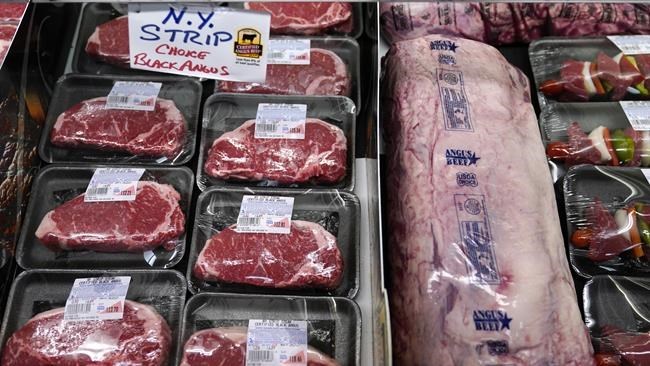
“Having supply chain difficulties is part of what inflation looks like,” Ashton says.
With inflation chipping away at your spending power, how can you protect yourself?
EXAMINE YOUR SPENDING
— Trim discretionary spending, voluntary spending in categories like entertainment or travel, by just 5%. This is one of those incremental changes that isn’t that difficult to do and goes directly to your personal bottom line.
— Don’t delay a major purchase; prices will likely rise.
— Shop strategically. Buy more generic brand products and prescriptions. Save on necessary expenses by using coupons and store loyalty programs. Use membership cards (like Walmart+ and others) to pay 5 cents less per gallon for gasoline.
LOOK FOR SAVINGS
— Eliminate any fees you pay for credit cards or bank accounts (late fees, monthly or annual service fees, ATM fees, etc.). Many banks are waiving such fees and credit cards often have fee-free options.
— Renegotiate your cable, streaming or cell phone bill for any possible savings.
“I can say from my own personal experience – it’s amazing how easy this is,” Ashton notes. He says that every time he would call his cell phone provider, it would offer him a plan that was far better than his current one. “And it doesn’t happen unless you call,” Ashton adds.
He now makes a habit of calling once a year and asking, “What’s the best plan you have and should I be on that?”
— Reduce the number of subscriptions you have, even if by just one.
“You should do an audit of those from time to time because sometimes they sneak in a price increase, and it just shows up on your credit card,” Ashton says.
TRY TO BRING MORE MONEY IN
— Search for financial institutions that pay higher interest rates than you are earning now (if you are earning anything at all). Online banks and credit unions often offer high-yield savings accounts that sweeten returns, especially as interest rates rise.
— Perhaps the most powerful idea of all: Ask for a raise. If you haven’t received an increase in salary in a few years, you’ve likely experienced what amounts to a pay cut because of inflation, Ashton says.
THE INFLATION-MATCHING SAVINGS ACCOUNT
Another inflation-fighting idea: Series I savings bonds. They were created specifically to protect consumers’ purchasing power against inflation, says Zvi Bodie, professor emeritus in finance at Boston University. Bodie holds a doctorate in economics from the Massachusetts Institute of Technology and has become an avid proponent of I bonds.
I bonds rates are keyed to the rate of inflation, which lately has been over 7%, he notes. They are a perfect safe haven for near-term savings. And not a bad addition to your long-term nest egg, too.
A minimum investment i n I bonds through TreasuryDirect.gov is only $25, and an individual can put up to $10,000 annually into the savings bonds with electronic purchases. The bonds pay fixed interest plus the inflation rate, adjusted twice per year.
You can withdraw your savings without penalty after one year, but if you cash them in before five years, you’ll lose the last three months’ worth of interest.
“So what you get is essentially a savings account that can’t go down, and that’s going to go up with inflation,” Bodie adds. “Do I need to say more?”
INFLATION IS NOT THE SAME FOR EVERYONE
Inflation hit a 7.5% national average in January, but that’s not likely to be your inflation rate, says Ashton.
You may consume different items than the average person and you may not live in an average place, so your particular rate of inflation quite likely varies from the average, according to Ashton.
So, rather than agonizing over a single number as a spending power loss to recoup, use the small money moves above to improve your financial position slowly but surely.
_________________________________
This article was provided to The Associated Press by the personal finance website NerdWallet. Hal M. Bundrick is a writer at NerdWallet. Email: hal@nerdwallet.com. Twitter: @halmbundrick.
RELATED LINKS:
NerdWallet: Discretionary Expenses: The Extras, Not Essentials https://bit.ly/nerdwallet-discretionary-expenses
TreasuryDirect: Series I Savings Bonds https://www.treasurydirect.gov/indiv/products/prod_ibonds_glance.htm
___
This article has been corrected to show the correct address for the Treasury Direct website.