Liz Weston: A year-end money checklist for people 50 and up

Advertisement

Advertise with us

Age brings unique opportunities and obligations, including some important year-end tasks that can help you make the most of your money. For people 50 and older, here are some to consider:

Read this article for free:


or

Already have an account? Log in here »

To continue reading, please subscribe:

Subscribe and receive a limited-edition Free Press branded hat or tote.

Digital Subscription

One year of digital access for only $205*

  • Enjoy unlimited reading on winnipegfreepress.com
  • Read the E-Edition, our digital replica newspaper
  • Access News Break, our award-winning app
  • Play interactive puzzles

*First annual payment billed as $205.00 + GST for one year. This annual subscription will automatically renew at $233.00 + GST every 52 weeks (10% off the regular annual price of $259.35). Offer available to new and qualified returning subscribers only. Cancel any time.

To continue reading, please subscribe:

Add Free Press access to your Brandon Sun subscription for only an additional

$1 for the first 4 weeks*

  • Enjoy unlimited reading on winnipegfreepress.com
  • Read the E-Edition, our digital replica newspaper
  • Access News Break, our award-winning app
  • Play interactive puzzles
Start now

*Your next Brandon Sun subscription payment will increase by $1.00 and you will be charged $17.95 plus GST for four weeks. After four weeks, your payment will increase to $24.95 plus GST every four weeks.

Hey there, time traveller!
This article was published 13/12/2021 (1761 days ago), so information in it may no longer be current.

Age brings unique opportunities and obligations, including some important year-end tasks that can help you make the most of your money. For people 50 and older, here are some to consider:

PLAY CATCH-UP, IF YOU CAN

If you’re still employed, use a retirement calculator to see if you should boost your savings rate.
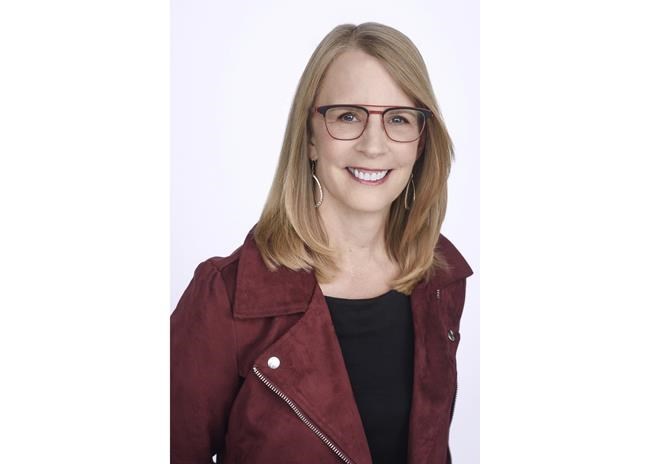
FILE - This undated file photo provided by NerdWallet shows Liz Weston, a columnist for personal finance website NerdWallet.com. For people 50 and older, taking care of year-end financial tasks can help you make the most of your money. As 2021 draws to a close, begin your end-of-the-year financial to-do list with evaluating your retirement savings rate and considering making catch-up contributions to tax-advantaged accounts such as a 401(k) or IRA. (NerdWallet via AP, File)

Catch-up contributions could allow you to save more in tax-advantaged accounts. Someone who is 50 or older can contribute up to $26,000 to a workplace 401(k) in 2021, and up to $7,000 to an IRA, says Mark Luscombe, principal analyst for Wolters Kluwer Tax & Accounting.

You have until Dec. 31 to contribute to workplace plans for 2021 and until April 15 to make your 2021 IRA contributions. The ability to contribute to a Roth in 2021 phases out beginning at modified adjusted gross income of $125,000 for singles and $198,000 for married couples filing jointly.

Slightly different rules apply for health savings accounts, which are paired with qualifying high-deductible health insurance plans, Luscombe says. Contribution limits for 2021 are $3,600 for people with individual coverage and $7,200 for people with family coverage. People 55 and older can make an additional catch-up contribution of $1,000. As with IRAs, you have until the tax filing deadline, April 15, to contribute for the year.

To contribute to an HSA, the account owner must have a qualifying health insurance plan with an annual deductible of at least $1,400 for individual coverage and $2,800 for family coverage. People on Medicare cannot contribute to an HSA, but they can withdraw money tax-free from an HSA to pay medical expenses, including Medicare premiums, deductibles and copayments, Luscombe says.

PLAN FOR REQUIRED MINIMUM DISTRIBUTIONS

Money can’t stay in retirement accounts indefinitely, says certified public accountant Mary Kay Foss, a member of the American Institute of CPAs’ individual and self-employed tax committee. Withdrawals must begin at some point, typically age 72. If you miss a deadline or withdraw too little, you could face a tax penalty equal to 50% of the amount you should have withdrawn but didn’t. Your retirement fund or brokerage can help you calculate the appropriate amount, or you can use the tables in IRS Publication 590-B.

The IRS specifies the minimum you need to take each year based on your Dec. 31 account balance for the prior year. Your required minimum distribution for 2021, for example, will be based on your Dec. 31, 2020, balance.

You must typically take your distributions by the end of the year, although you can delay your first RMD until April 1 of the year after you turn 72. If you delay, you’ll have to take your second RMD by the end of that year, Foss says.

You can put off RMDs from a workplace plan such as a 401(k) if you’re still working for the company that sponsors the plan and you don’t own 5% or more of the company.

Also, there are no RMDs for Roth IRAs during the account owner’s lifetime. A spouse who inherits a Roth IRA can treat it as their own, also avoiding required distributions, but other heirs must begin to empty the account after it’s inherited.

CONSIDER ACCOUNT CONVERSIONS

Another way to avoid RMDs is by converting an IRA or other retirement account to a Roth, but doing so means paying taxes on the money now rather than later.

Conversions can make sense when you expect to be in a higher tax bracket in retirement and you can pay the tax without raiding your retirement savings, says certified financial planner Michael Kitces, publisher of financial planning strategy site Nerd’s Eye View . Young people are often good candidates for conversions since their tax bracket likely will rise along with their earnings. Most people nearing retirement will be in the opposite situation — their tax bracket will drop once they stop working, so conversions may not be a good idea.

People who have been diligent savers, however, could find themselves pushed into a higher tax bracket once they’re required to start making minimum withdrawals, Kitces says. In that case, Roth conversions before age 72 could be smart, but you’ll want to consult with a tax pro. Converting too much could jack up your tax bill and, if you’re on Medicare, potentially increase your premiums.

MAKE CHARITABLE CONTRIBUTIONS

You can also avoid required minimum distributions through qualified charitable distributions from your IRA, which can start once you’re 70 1/2, Foss says. The money must be transferred directly from the IRA to a qualified charity. These contributions can be excluded from your income but count toward your yearly required minimum distribution if the funds leave your account by your RMD deadline, which is typically Dec. 31.

Qualified charitable distributions can be made from most types of IRAs: traditional, rollover and inherited, as well as from inactive simplified employee pensions known as SEPs and SIMPLEs, which are savings incentive match plans for employees . (Inactive means you’re no longer contributing to these plans.) The maximum annual amount you can contribute this way is $100,000.

__________________________

This column was provided to The Associated Press by the personal finance website NerdWallet. The content is for educational and informational purposes and does not constitute investment advice. Liz Weston is a columnist at NerdWallet, a certified financial planner and author of “Your Credit Score.” Email: lweston@nerdwallet.com. Twitter: @lizweston.

RELATED LINK:

NerdWallet: Retirement calculator http://bit.ly/nerdwallet-calculate-retirement
Report Error Submit a Tip

More Stories

PCs renew calls for CFS inquiry

Carol Sanders 6 minute read Preview

PCs renew calls for CFS inquiry

Carol Sanders 6 minute read Updated: Yesterday at 7:54 PM CDT

The Progressive Conservatives renewed calls to put Manitoba’s child and welfare system under the microscope Thursday, tabling a motion that urged the province to appoint a commissioner to lead a public inquiry.

Families critic Jodie Byram’s opposition day motion, which was ultimately defeated by the NDP majority, reiterated demands for an inquiry into the systemic failures of Child and Family Services, more than 20 years after the death of Phoenix Sinclair first prompted demands for answers.

“We have seen far too many children die under the care of CFS, and we need to determine where the gaps are in the system in order to make the system a safer place for children,” Byram told reporters before the motion was defeated in the legislature.

Families Minister Nahanni Fontaine said in an interview that her department, CFS agencies and authorities are “doing good work” and won’t call an inquiry.

Read
Updated: Yesterday at 7:54 PM CDT

Green growth focus of hydroponic gathering

Aaron Epp 4 minute read Preview

Green growth focus of hydroponic gathering

Aaron Epp 4 minute read Yesterday at 8:00 PM CDT

In a town where fresh produce is hard to come by, Rick Barentsen has a line on some lettuce.

Barentsen is part of an initiative at an education centre in Leaf Rapids that grows 60 heads of fresh leafy greens each week, year-round, using indoor hydroponic growing systems.

The veggies are distributed to many of the northwestern Manitoba town’s 300 residents. It’s a boon to a community where Barentsen said the local grocery store has not carried fresh produce for the last six months.

“Being the only food grower in the community, it makes a big difference for the 90 families that we have,” he said. “We harvest it, we wrap it in plastic food bags (and) we hand it out the same day.”

Read
Yesterday at 8:00 PM CDT

‘Please excuse us from writing these notes …’

Editorial 4 minute read Preview

‘Please excuse us from writing these notes …’

Editorial 4 minute read 2:01 AM CDT

It’s a common-sense prescription for the health-care system. The only wonder is that it took so long to happen.

On Oct. 1, new provincial legislation came into effect that will stop employers from requiring employees to get a sick note from a physician unless the employee has been absent for more than a week or has called in sick 10 or more times in a calendar year.

And the legislation could have a big effect.

Doctors Manitoba has calculated that its members write over 600,000 sick notes every year — a process that costs the provincial health-care system approximately $8 million annually. And the effort doesn’t even help sick workers get better: one-third of sick notes are written for patients who don’t even have symptoms anymore, making them little more than a comfortable fiction. To put it simply, doctors have to trust that a symptom-less patient was sick and write a note saying they were ill, in order to satisfy an employer who doesn’t share that same level of trust.

Read
2:01 AM CDT

Other cities build rapid transit, while we wait

Ken Klassen 4 minute read Preview

Other cities build rapid transit, while we wait

Ken Klassen 4 minute read 2:00 AM CDT

Winnipeg’s civic election campaign has produced no shortage of promises to improve transit safety and fix problems with the new network. Those issues are real and urgent. But they should not distract from a larger failure — while other Canadian urban regions secure billions in federal support to transform their transit systems, Winnipeg is falling further behind.

The Winnipeg Transit Master Plan, approved in 2021, sets the right vision — frequent, reliable service anchored by an expanded bus rapid transit (BRT) network. Yet not a single additional BRT corridor has been approved for construction. The modest network proposed in the plan is not projected to be completed until 2045 or beyond. Despite that, city council voted this summer to delay updating the master plan by two years.

The full BRT network was estimated at $588 million to $1.1 billion in 2020 — or roughly $720 million to $1.34 billion today, after accounting for construction inflation. That is substantial, but modest compared with what other cities are spending. Calgary, Edmonton, Hamilton, Ottawa and Quebec City have rapid transit projects under way or recently completed, totalling about $26 billion and backed by $7.3 billion in federal commitments. Vancouver, Toronto and Montreal are spending billions more with federal support.

Other cities build. Winnipeg waits.

Read
2:00 AM CDT

Province to fund livestock cop to cut down on theft

Connor McDowell 3 minute read Preview

Province to fund livestock cop to cut down on theft

Connor McDowell 3 minute read Updated: Yesterday at 1:08 PM CDT

BRANDON — The Manitoba government will fund a new RCMP position dedicated to investigating livestock theft.

The province made the announcement Thursday.

Agriculture Minister Ron Kostyshyn said the investigative role will fill a pressing need.

“Personally speaking, I think this has been a long time waiting for this to come to reality,” the Dauphin MLA said Wednesday. “We are doing a great thing for the industry.”

Read
Updated: Yesterday at 1:08 PM CDT

Letters, Oct. 9

7 minute read 2:01 AM CDT

Manitoba Hydro at it again

As a former resident of Windsor Park, I often ride my bicycle through the neighbourhood or walk the shaded pathway from Elizabeth Road to Cottonwood Drive. It’s a favourite walkway for residents with dogs as well. While passing the pathway at Elizabeth Road the other day I was dismayed to see crews clear-cutting the mature trees between the pathway and the CPKC tracks that stretch the length of Archibald Street.

At first I thought that the crews were clearing out the dense bushes and trees at the start of the pathway. I made a note to return to see if that was all that was going to be done. (When) I drove by the trees had been clear-cut to the end of the first street and access point to it, much to my dismay and horror. I parked my car and went to speak with a worker doing the tree removal.

I was informed that it was a Hydro corridor and that the work would clear-cut every tree between Elizabeth Road and Cottonwood Road. Perhaps the plan is to continue on through Southdale and Island Lakes. At a time of diminishing tree canopies around Winnipeg and the drive to plant a million trees, this decision is outrageous and lacks respect for our current climate situation and neighbourhood esthetics.