New York jury holds drugmaker Teva liable in opioid crisis
Advertisement
Read this article for free:
or
Already have an account? Log in here »
To continue reading, please subscribe:

Digital Subscription
One year of digital access for only $205*
- Enjoy unlimited reading on winnipegfreepress.com
- Read the E-Edition, our digital replica newspaper
- Access News Break, our award-winning app
- Play interactive puzzles
*First annual payment billed as $205.00 + GST for one year. This annual subscription will automatically renew at $233.00 + GST every 52 weeks (10% off the regular annual price of $259.35). Offer available to new and qualified returning subscribers only. Cancel any time.
To continue reading, please subscribe:
Add Free Press access to your Brandon Sun subscription for only an additional
$1 for the first 4 weeks*
- Enjoy unlimited reading on winnipegfreepress.com
- Read the E-Edition, our digital replica newspaper
- Access News Break, our award-winning app
- Play interactive puzzles
*Your next Brandon Sun subscription payment will increase by $1.00 and you will be charged $17.95 plus GST for four weeks. After four weeks, your payment will increase to $24.95 plus GST every four weeks.
Read unlimited articles for free today:
or
Already have an account? Log in here »
Hey there, time traveller!
This article was published 30/12/2021 (1721 days ago), so information in it may no longer be current.
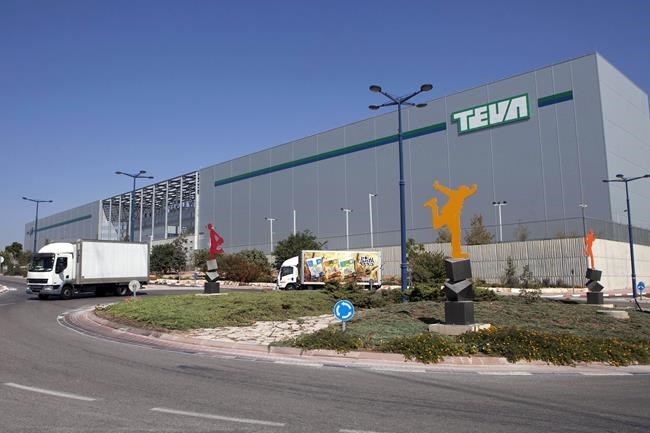
NEW YORK (AP) — Drugmaker Teva Pharmaceuticals contributed to the opioid crisis, a suburban New York jury ruled Thursday in one of few verdicts so far among thousands of lawsuits nationwide over the painkillers.
A separate trial will follow to determine what Teva will have to pay in the case, in which New York state and two Long Island counties took on a swath of drug companies.
In Thursday’s verdict, a Suffolk County jury found the drug company played a role in what is legally termed a public nuisance but had lethal consequences — an opioid use epidemic linked to more than 500,000 deaths in the U.S. in the past two decades.
“Teva Pharmaceuticals USA and others misled the American people about the true dangers of opioids,” James, a Democrat, said in a news release. “Today, we took a significant step in righting the wrongs this country has collectively experienced over the last two decades.”
Israel-based Teva, which makes medications using the powerful opioid fentanyl, said it “strongly disagrees” with the verdict and plans to appeal.
“The plaintiffs presented no evidence of medically unnecessary prescriptions, suspicious or diverted orders, no evidence of oversupply” by Teva and didn’t show that Teva’s marketing caused harm to New Yorkers, the company said in a statement. It is also arguing for a mistrial, based on various issues.
The price of Teva’s U.S.-listed stock fell after the verdict was announced, ending down 6.3% at $7.90.
Around the country, state and local governments, Native American tribes, unions, school districts and others have sued the drug industry over the painkillers.
New York’s lawsuit, filed in 2019, targeted several opioid producers and distributors, companies that buy medications in bulk and sell them to pharmacies.
The suit accused drug companies of breaching their legal duties “to profiteer from the plague they knew would be unleashed.” The state and counties said that drug manufacturers collaborated to mislead people and downplay the serious risks of opioid addiction, and that drug distributors skirted systems meant to limit orders for painkillers.
Teva is known for making generic drugs, but the lawsuit focused on Actiq and Fentora, two brand-name fentanyl drugs approved for some cancer patients. Teva repeatedly promoted them more broadly for other types of pain, in a “deceptive and dangerous marketing strategy,” the lawsuit said.
“They try to say they’re selling legal products. The only problem is: They’re selling them illegally,” lawyer Hunter Shkolnik, who represented Nassau County, said at a virtual news conference Thursday. “The jury saw that what they’re doing is wrong.”
Teva said Thursday it “continues to focus on increasing access to essential medicines to patients” and believes a national settlement of opioid issues is in patients’ best interest.
New York said the conduct of the various opioid companies named in the suit cost the state hundreds of millions of dollars in addiction treatment bills and other expenses. Lawyers for the counties suggested the Teva could be held liable for tens of billions of dollars, or more, in damages.
“The numbers are staggering, what it has cost our communities and what it will continue to cost our communities” in emergency services for overdose victims, drug rehabilitation programs and more, Suffolk County’s lawyer, Jayne Conroy, said at the virtual news conference.
Teva was the sole manufacturing defendant left in the suit after others settled, most recently Allergan Finance LLC in December. The various settlements have netted New York up to $1.5 billion.
The trial started months ago. The jury began deliberating Dec. 14, taking some days off for Christmas.
Elsewhere, only a few opioid cases have gone to verdicts to date, with no clear consensus on outcomes.
An Oklahoma judge ruled against drugmaker Johnson & Johnson in 2019, but the state’s supreme court overturned that decision in November. A week earlier, a California judge in ruled in favor of drugmakers — including Teva.
Then, late last month, a federal jury in Cleveland sided with two Ohio county governments that had claims against pharmacy chains.
Some observers thought the California and Oklahoma rulings doomed the idea of using state public nuisance laws to pursue opioid suits, said Carl Tobias, a University of Richmond law professor who is following the litigation nationwide.
“But now we’re really seeing that that’s not true,” at least in some places, Tobias said. He suggested Thursday’s ruling could reinvigorate such suits.

A trial has been completed but a judge has not yet ruled in a West Virginia case, and a trial is ongoing in Washington state. Thousands of other cases are in the process of heading to trial.
There have also been settlements. Some of the biggest industry names — such as distributors AmerisourceBergen, Cardinal Health and McKesson and drugmakers Johnson & Johnson, Mallinckrodt Pharmaceuticals — have reached nationwide settlements with a cumulative value potentially well over $30 billion. Most of the money is being directed to fight the epidemic.
But most of those deals have not been finalized, and there has been one very big reversal. In mid-December, a federal judge rejected OxyContin maker Purdue Pharma’s sweeping deal to settle thousands of lawsuits over the toll of opioids.
___
This story has been corrected to show that a jury, not a judge, decided the case in Cleveland. Associated Press writer Deepti Hajela contributed to this report.