Solar project delays create hurdles for New Mexico utility

Advertisement

Advertise with us

ALBUQUERQUE, N.M. (AP) — A utility in sun-drenched New Mexico is struggling to get enough solar-generated electricity as it prepares to shut down a coal-fired power plant amid supply chain disruptions, one of the problems threatening to delay or cancel projects around the world as pressure mounts to reduce carbon emissions and tackle climate change.

Read this article for free:


or

Already have an account? Log in here »

To continue reading, please subscribe:

Subscribe and receive a limited-edition Free Press branded hat or tote.

Digital Subscription

One year of digital access for only $205*

  • Enjoy unlimited reading on winnipegfreepress.com
  • Read the E-Edition, our digital replica newspaper
  • Access News Break, our award-winning app
  • Play interactive puzzles

*First annual payment billed as $205.00 + GST for one year. This annual subscription will automatically renew at $233.00 + GST every 52 weeks (10% off the regular annual price of $259.35). Offer available to new and qualified returning subscribers only. Cancel any time.

To continue reading, please subscribe:

Add Free Press access to your Brandon Sun subscription for only an additional

$1 for the first 4 weeks*

  • Enjoy unlimited reading on winnipegfreepress.com
  • Read the E-Edition, our digital replica newspaper
  • Access News Break, our award-winning app
  • Play interactive puzzles
Start now

*Your next Brandon Sun subscription payment will increase by $1.00 and you will be charged $17.95 plus GST for four weeks. After four weeks, your payment will increase to $24.95 plus GST every four weeks.

Hey there, time traveller!
This article was published 17/02/2022 (1672 days ago), so information in it may no longer be current.

ALBUQUERQUE, N.M. (AP) — A utility in sun-drenched New Mexico is struggling to get enough solar-generated electricity as it prepares to shut down a coal-fired power plant amid supply chain disruptions, one of the problems threatening to delay or cancel projects around the world as pressure mounts to reduce carbon emissions and tackle climate change.

New Mexico law requires publicly owned utilities and cooperatives to roll into their portfolios more renewable sources and eliminate carbon emissions over the next two decades.

As part of that push, the San Juan Generating Station — a coal-fired power plant that has produced electricity for millions of customers in the Southwest for decades — was slated to close in June.
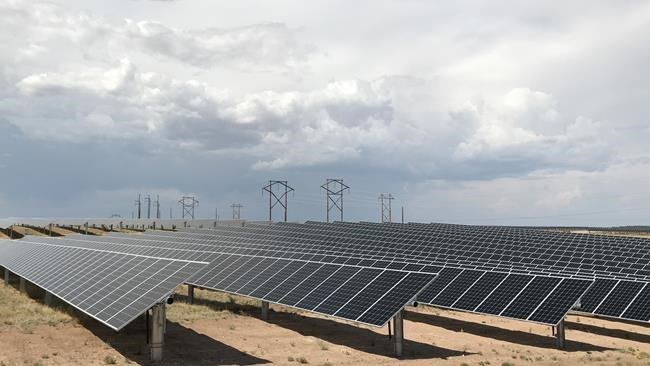
FILE - This June 15, 2021 photo shows a Public Service Co. of New Mexico solar farm west of Rio Rancho, N.M. The utility in sun-drenched New Mexico is struggling to get enough solar-generated electricity as it prepares to shut down a coal-fired power plant amid supply chain disruptions, one of the problems threatening to delay or cancel projects around the world amid pressure to reduce carbon emissions and tackle climate change. Public Service Co. of New Mexico initially proposed replacing the lost capacity with a mix of natural gas, solar and battery storage. The Public Regulation Commission instead opted for solar and storage to make up some of the difference after environmentalists pushed back on gas. (AP Photo/Susan Montoya Bryan, File)

Public Service Co. of New Mexico initially proposed replacing the lost capacity with a mix of natural gas, solar and battery storage. The Public Regulation Commission instead opted for solar and storage to make up some of the difference after environmentalists pushed back on gas.

But utility executives have acknowledged bumps in the renewable energy road, citing a perfect storm of regulatory challenges, lengthier periods of unseasonably hot weather that affect demand and the supply chain issues.

Soaring material and shipping costs are being felt across a wide range of industries. When it comes to worldwide utility-scale solar projects planned for 2022, analysts with the independent research company Rystad Energy predicted in the fall that 56% of projects risked delay or cancelation due to the factors.

In New Mexico, utility executives on Thursday submitted a plan to state regulators aimed at ensuring adequate supplies to avoid rolling blackouts during peak demands this summer. One unit of the coal-fired plant would keep running through September.

The utility says state regulators would need to sign off within weeks to have enough coal to feed the plant for an extra three months.

After that? The ability to fill the gap left by taking more around-the-clock generation offline before renewable sources are ready remains uncertain.

Even if inflation eases, the Washington, D.C.-based Solar Energy Industries Association has said longer term solutions are needed. That would include diversifying the supply chain by expanding domestic manufacturing.

The New Mexico utility also is on the hook for finding enough renewable power to replace what will be lost starting in 2023 and again in 2024 when its leases for electricity from the Palo Verde nuclear plant in Arizona expire. Regulators have approved more solar and storage in that case as well.

PNM President and CEO Pat Vincent-Collawn said in a statement to The Associated Press that the utility has a responsibility to balance reliability, cost and the environment.

“This solution may impact the timing of our plans to close the San Juan plant, but it does not change our direction and goals for delivering clean energy to New Mexicans, and it keeps our commitments to provide a financially backed just transition,” she said.

Bringing more renewable energy projects online fast is the immediate challenge in New Mexico and other states, including California, where officials who run the state’s main power grid have urged regulators to order utilities to significantly boost capacity over the next few years to ensure there’s enough electricity to meet demands.
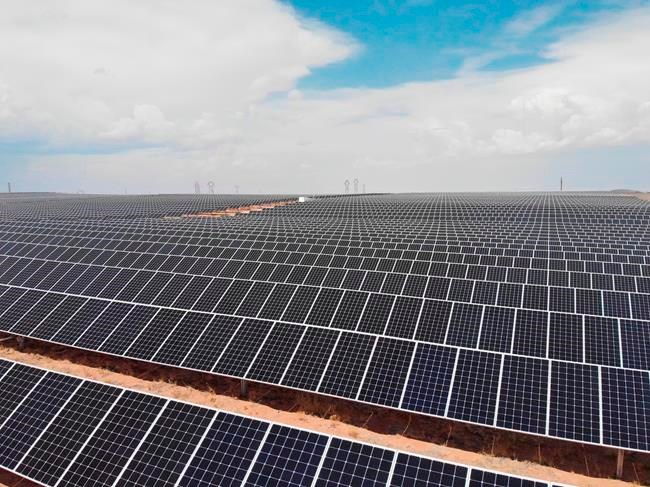
FILE - This June 15, 2021 photo shows a Public Service Co. of New Mexico solar farm west of Rio Rancho, N.M. The utility in sun-drenched New Mexico is struggling to get enough solar-generated electricity as it prepares to shut down a coal-fired power plant amid supply chain disruptions, one of the problems threatening to delay or cancel projects around the world amid pressure to reduce carbon emissions and tackle climate change. Public Service Co. of New Mexico initially proposed replacing the lost capacity with a mix of natural gas, solar and battery storage. The Public Regulation Commission instead opted for solar and storage to make up some of the difference after environmentalists pushed back on gas. (AP Photo/Susan Montoya Bryan, File)

Blackouts in August 2020 were the first in nearly 20 years because of an energy shortage, putting California’s quest to have 100% of its energy come from renewable sources under more scrutiny. The electrical grid has seen some storage and transmission upgrades since then, but officials were still forced to call for voluntary energy conservation last summer.

In New Mexico, concerns first were raised in 2021 when it became clear that developers working on the solar and battery projects meant to replace the San Juan plant were defaulting. PNM said it analyzed numerous options and spent months securing firm electricity supplies from other utilities to help meet summer demands.

The other key is the continued operation of one unit at San Juan. Utility executives say the one-time temporary extension will keep the system reliable and helps control customer costs.

Without that option, PNM would have a negative 3.4% reserve margin. The historical reserve margin is 13%.

Having a healthy reserve is more important now with demands fluctuating amid extreme weather from climate change, the utility said.

Environmentalists also are acknowledging that keeping San Juan running through September may be necessary, but they stressed that the long-term solution needs to be ending the state’s reliance on coal and gas plants and passing more legislation to address climate change.

Tom Fallgren, PNM vice president of generation, said New Mexico’s energy transition law adopted in 2019 made for good policy and provided a clear direction for the state. However, he said reliability and cost issues arise when people try to push too fast.

“That has the opportunity to derail the whole path to carbon-free,” he said. “Our caution when that bill was passed was ‘Yes, we’re all moving in the same direction, but let’s do it responsibly so we all stay moving in the same direction.’ And again, that voice has not been heard.”

Report Error Submit a Tip

More Stories

Man, 21, killed in animal attack on Manitoba First Nation

Chris Kitching 5 minute read Preview

Man, 21, killed in animal attack on Manitoba First Nation

Chris Kitching 5 minute read Monday, Sep. 14, 2026

The family of “a kind and gentle giant” is grief-stricken as officials try to determine what kind of animal killed the 21-year-old man in western Manitoba.

Moses Campeau was walking on a road to a friend’s house in Sapotaweyak Cree Nation, about 600 kilometres northwest of Winnipeg, when he was fatally injured Sept. 9, his mother, Paula Campeau, said Monday.

“Moses was a kind and gentle giant,” she said. “He was a person who (people) would ask to come and help them, and he would go without even hesitating.”

Manitoba RCMP said officers from the Swan River detachment responded to a report of a suspicious death at about 3:10 a.m. The scene was held and the RCMP’s major crime services took over the investigation.

Read
Monday, Sep. 14, 2026

Federal Court awards OCN $27M, 62 years after construction of hydro dam

Nicole Buffie 5 minute read Preview

Federal Court awards OCN $27M, 62 years after construction of hydro dam

Nicole Buffie 5 minute read Yesterday at 6:34 PM CDT

The Federal Court has ordered Ottawa pay Opaskwayak Cree Nation $27 million over damages suffered due to the construction of the Grand Rapids hydro dam in the 1960s.

In a decision dated Sept. 3, Federal Court Justice Sébastien Grammond says the federal government had a fiduciary duty to protect the community from the impacts of the dam.

“When the Crown exercises a discretionary power over an Indigenous interest, it has a fiduciary duty and it must exercise the discretion in the best interests of the Indigenous group,” the ruling said. “Canada breached its fiduciary duty to OCN because it approved the (project) without ensuring that the impacts of the Grand Rapids dam on OCN’s traditional way of life were mitigated or compensated.”

The First Nation took the federal government to court in February over impacts on the community after the dam, located about 145 kilometres southeast of Opaskwayak Cree Nation, was installed on the Saskatchewan River in 1964. The case was heard over 14 days in a judge-alone trial in Winnipeg.

Read
Yesterday at 6:34 PM CDT

Suspension on the horizon for Hellebuyck as pre-season set to start

Ken Wiebe 7 minute read Preview

Suspension on the horizon for Hellebuyck as pre-season set to start

Ken Wiebe 7 minute read Yesterday at 6:21 PM CDT

In this high stakes game of chicken, Kevin Cheveldayoff, Connor Hellebuyck or any of the potential suitors for the Winnipeg Jets franchise netminder appear ready to blink.

Read
Yesterday at 6:21 PM CDT

Short-staffed Ste. Rose du Lac hospital overwhelmed by Dauphin ER reopening

Scott Billeck 5 minute read Updated: Yesterday at 10:01 AM CDT

A rural Manitoba physician is warning that Ste. Rose du Lac could face significant emergency department closures after its doctors were stretched thin helping absorb the fallout from the flooding and prolonged shutdown of Dauphin Regional Health Centre.

Letters, Sept. 16

7 minute read 2:01 AM CDT

Say what you’ll do

I must say that I agree with what Laura Reimer wrote (What do we elect a school trustee to do?, Think Tank, Sept. 12).

I would add, though, that school trustees and school board candidates also have a responsibility to clearly state where they stand on issues in order for people to come out and vote in school board elections.

Simply putting out very generic campaign material (“I’ll work hard on your behalf”; “I live in the area”; “education is important”; and so on …) is insufficient to generate interest or to motivate taxpayers/voters to go out and support candidate X.

Winnipeg, economic diversity and risks from AI

Al Vigier 5 minute read 2:00 AM CDT

I run a company that builds software to read documents and fill out forms. When I look at Winnipeg, I see a lot of potential customers. I also think the city should be asking some fairly uncomfortable questions about what companies like mine are selling.

Winnipeg has spent decades building an economy that does not depend on any one industry. Insurance, agriculture, transportation, aerospace, manufacturing, government, health care. That mix has served it well. A bad year for one employer does not necessarily become a bad year for the whole city.

But there is another way to look at that economy: what people actually do when they arrive at work.

Great-West Lifeco, Wawanesa, IGM Financial and Manitoba Public Insurance are all headquartered in Winnipeg. There are provincial departments, Shared Health and businesses handling the freight moving through CentrePort. Their purposes are different. A surprising amount of their paperwork follows the same routine.