South African regulator rejects Russia’s COVID-19 vaccine
Advertisement
Read this article for free:
or
Already have an account? Log in here »
To continue reading, please subscribe:

Digital Subscription
One year of digital access for only $205*
- Enjoy unlimited reading on winnipegfreepress.com
- Read the E-Edition, our digital replica newspaper
- Access News Break, our award-winning app
- Play interactive puzzles
*First annual payment billed as $205.00 + GST for one year. This annual subscription will automatically renew at $233.00 + GST every 52 weeks (10% off the regular annual price of $259.35). Offer available to new and qualified returning subscribers only. Cancel any time.
To continue reading, please subscribe:
Add Free Press access to your Brandon Sun subscription for only an additional
$1 for the first 4 weeks*
- Enjoy unlimited reading on winnipegfreepress.com
- Read the E-Edition, our digital replica newspaper
- Access News Break, our award-winning app
- Play interactive puzzles
*Your next Brandon Sun subscription payment will increase by $1.00 and you will be charged $17.95 plus GST for four weeks. After four weeks, your payment will increase to $24.95 plus GST every four weeks.
Read unlimited articles for free today:
or
Already have an account? Log in here »
Hey there, time traveller!
This article was published 19/10/2021 (1796 days ago), so information in it may no longer be current.
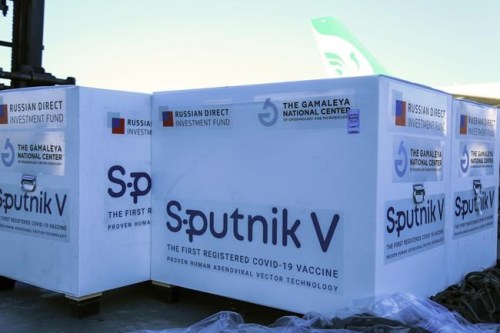
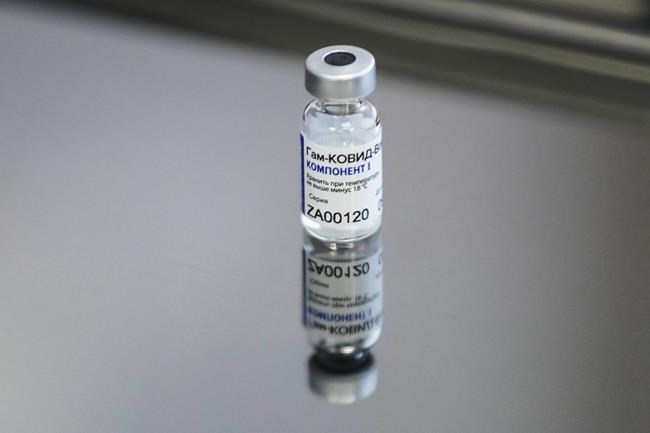
JOHANNESBURG (AP) — The South African drug regulator has rejected the Russian-made coronavirus vaccine Sputnik V, citing some safety concerns the manufacturer wasn’t able to answer.
The South African Health Products Regulatory Authority, or SAHPRA, said in a statement Tuesday that the request for Sputnik V to be authorized could “not be approved at this time,” referring to past failed HIV vaccines that used a similar technology. But the regulator added that its review process was continuing and that it was still open to receiving any further safety data from the Russian manufacturer.
A late-stage study published in the journal Lancet last year in more than 20,000 participants found that Sputnik V was safe and about 91% effective in preventing people from becoming severely ill with COVID-19.
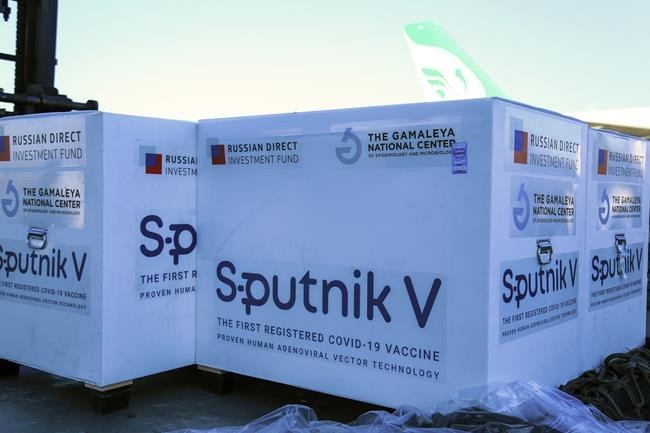
Sputnik V uses two types of harmless viruses known as adenoviruses to carry the spike protein into the body, which then primes the immune system to produce antibodies against COVID-19. SAHPRA said concerns have been raised about the safety of Adenovirus Type 5, which is used in one of the Sputnik V doses. The other dose contains Adenovirus Type 26, which is also used by Johnson & Johnson.
South African officials pointed to two failed research studies testing an HIV vaccine also using Adenovirus Type 5, which found men who were vaccinated had a higher risk of being infected with HIV. The regulators said they had asked the Russian makers of Sputnik V to provide data proving the vaccine’s safety in a country with high rates of HIV but that “the applicant was not able to adequately address (their) request.”
In a statement, the Gamaleya Center, Sputnik V’s manufacturer, called the concerns about the vaccine’s vector “completely unfounded.” It said speculation about the link between Adenovirus Type 5 and HIV transmission in high-risk populations was based on “small-scale inconclusive studies among volunteers with highly probable risky behavior.” It noted that the same vector was used in China’s CanSino vaccine, which has been widely used in China.
Dr. Julian Tang, a virologist at Britain’s University of Leicester, was perplexed by the South African decision to reject Sputnik V.
“It’s a strange connection to make,” he said, explaining that while past concerns have been raised about using the particular virus vector in Sputnik V, much remains uncertain. “It’s not the vector that caused HIV so you can’t just blame it on that,” Tang said.
The vaccine made by AstraZeneca uses a related chimpanzee adenovirus; both it and the Johnson & Johnson shot have been approved in South Africa.
Amid widespread vaccine hesitancy in Russia, authorities have struggled to convince people to get vaccinated and the immunization rate in the country has remained stubbornly low, at about 32%, despite availability of Sputnik V.

Sputnik V is currently also being considered for authorization by the World Health Organization and the European Medicines Agency. The shot has been given the green light in more than 70 countries. To date no significant safety problems have been identified.
___
AP Medical Writer Maria Cheng reported from London.
___
Follow all AP stories on the coronavirus pandemic at https://apnews.com/hub/coronavirus-pandemic.