

Feds told to halt ID cards
They pose privacy risk to users, group says
Advertisement
Read this article for free:
or
Already have an account? Log in here »
To continue reading, please subscribe:
Monthly Digital Subscription
$1 per week for 24 weeks*
- Enjoy unlimited reading on winnipegfreepress.com
- Read the E-Edition, our digital replica newspaper
- Access News Break, our award-winning app
- Play interactive puzzles
*Billed as $4.00 plus GST every four weeks. After 24 weeks, price increases to the regular rate of $19.95 plus GST every four weeks. Offer available to new and qualified returning subscribers only. Cancel any time.
Monthly Digital Subscription
$4.99/week*
- Enjoy unlimited reading on winnipegfreepress.com
- Read the E-Edition, our digital replica newspaper
- Access News Break, our award-winning app
- Play interactive puzzles
*Billed as $19.95 plus GST every four weeks. Cancel any time.
To continue reading, please subscribe:
Add Free Press access to your Brandon Sun subscription for only an additional
$1 for the first 4 weeks*
*Your next subscription payment will increase by $1.00 and you will be charged $16.99 plus GST for four weeks. After four weeks, your payment will increase to $23.99 plus GST every four weeks.
Read unlimited articles for free today:
or
Already have an account? Log in here »
Hey there, time traveller!
This article was published 25/03/2009 (6236 days ago), so information in it may no longer be current.
OTTAWA — A coalition of civil liberties groups asked the federal government Tuesday to put the kibosh on new high-tech identification documents such as Manitoba’s identification card.
The groups fear the cards are a privacy risk and a "back door" route to a national or even North American identification card that could be used to track an individual’s movements.
Because the cards are being introduced at the provincial level, there hasn’t been the type of national debate in Parliament that the issue deserves, the coalition said.
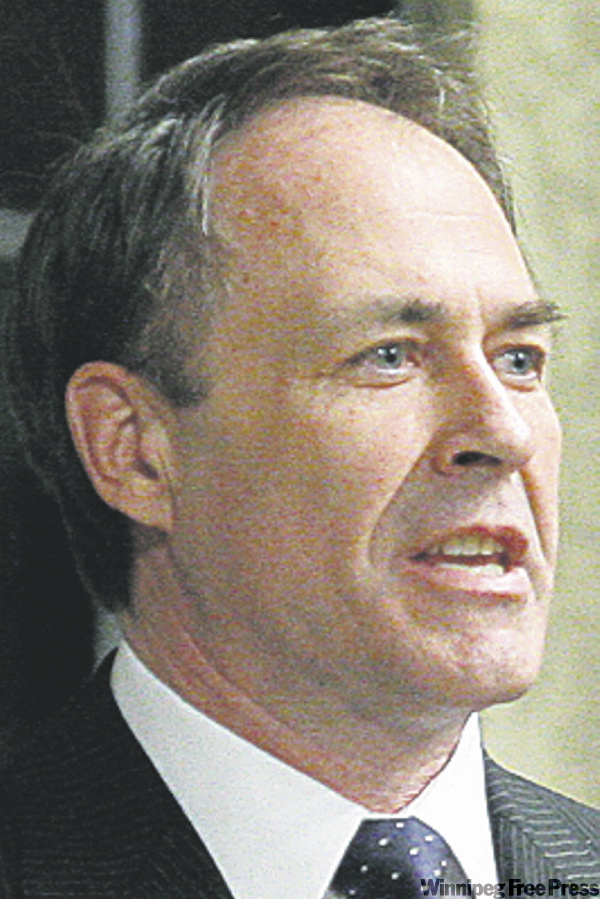
The cards are "unnecessary, invasive" and will not make us safer from terrorism or ease border crossings, Roch Tasse of the International Civil Liberties Monitoring Group said.
The groups met this week at the first-ever national public forum on enhanced drivers’ licences, also known as EDLs.
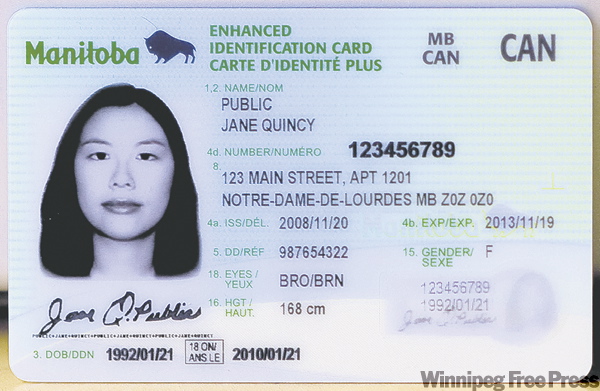
Manitoba is in the process of rolling out an enhanced identification card that within a year will become a new one-piece driver’s licence.
Ontario, Quebec and British Columbia are among the other provinces also looking to introduce EDLs, as provinces try to work with the United States on new identification requirements to cross the border.
After June 1, Canadians will need a passport or one of the EDLs to cross into the U.S. by land. They will still need a passport to go into the U.S. by air.
The cards are fitted with radio frequency identification chips loaded with a unique number that identifies the individual owner of the card. The chips can be read by transponders from as far as 4.5 metres away.
More than 1,000 Manitobans have applied for the new cards since Feb. 1, but the first ones will not be ready for issue until June 1.
The cards are still being tested, Brian Smiley, spokesman for Manitoba Public Insurance, said.
Smiley said the Manitoba identification comes with a removable protective sleeve that makes the chips unreadable until necessary.
The identifying number is connected to an individual’s identity only in a secure database of the Canadian Border Services Agency, Smiley said.
Saskatchewan put plans to introduce EDLs on hold this week because of privacy concerns.
Manitoba Ombudsman Irene Hamilton said there are always more ways to protect people’s privacy. One of her concerns is that it is up to an individual to keep the card protected by ensuring it is in the sleeve.
The civil liberties groups lauded Manitoba for being the only province to recognize the information contained on the chips is personal data, which makes them subject to the protection of the Privacy Act.
Winnipeg NDP MP Pat Martin said he would like Parliament to debate the issue.
"The Privacy Act is federal legislation and there’s a very real concern that the expanding use of the identification chips could compromise Canadians’ right to privacy."
mia.rabson@freepress.mb.ca