

Physicist a Nobel Prize winner for developing image sensor
Charge-coupled device used in digital cameras, camcorders
Advertisement
Read this article for free:
or
Already have an account? Log in here »
To continue reading, please subscribe:
Monthly Digital Subscription
$1 per week for 24 weeks*
- Enjoy unlimited reading on winnipegfreepress.com
- Read the E-Edition, our digital replica newspaper
- Access News Break, our award-winning app
- Play interactive puzzles
*Billed as $4.00 plus GST every four weeks. After 24 weeks, price increases to the regular rate of $19.95 plus GST every four weeks. Offer available to new and qualified returning subscribers only. Cancel any time.
Monthly Digital Subscription
$4.99/week*
- Enjoy unlimited reading on winnipegfreepress.com
- Read the E-Edition, our digital replica newspaper
- Access News Break, our award-winning app
- Play interactive puzzles
*Billed as $19.95 plus GST every four weeks. Cancel any time.
To continue reading, please subscribe:
Add Free Press access to your Brandon Sun subscription for only an additional
$1 for the first 4 weeks*
*Your next subscription payment will increase by $1.00 and you will be charged $16.99 plus GST for four weeks. After four weeks, your payment will increase to $23.99 plus GST every four weeks.
Read unlimited articles for free today:
or
Already have an account? Log in here »
Hey there, time traveller!
This article was published 07/10/2009 (6025 days ago), so information in it may no longer be current.
HALIFAX — Willard Boyle was born in a small town in Nova Scotia and spent most of his childhood in a rough-and-tumble logging community in northern Quebec, where his mother home-schooled him in a log cabin.
His nickname was Butch.
It was an unlikely beginning for a man who would later help invent a complex gizmo that would lead to the birth of digital photography, earning him the 2009 Nobel Prize in physics.
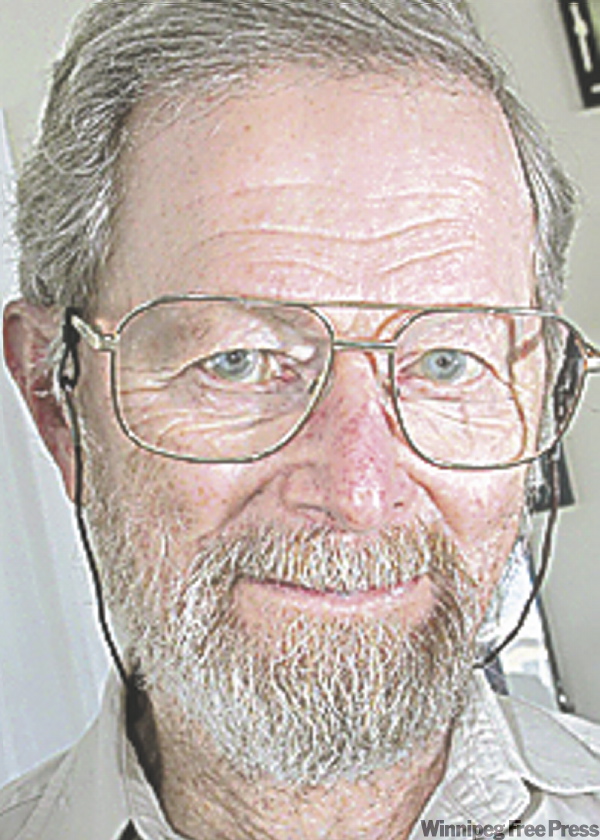
Boyle, who learned of winning the prestigious award Tuesday at 5 a.m., said much of the credit for his groundbreaking work should go to his mother, who always inspired him to do great things.
“She liked to read about science and then ask me to explain to her how this worked … ‘How did they do this?’ ” the 85-year-old Halifax resident said in an interview.
“She felt I could do no wrong … I knew differently, but that didn’t bother her. She was convinced that I was the brightest thing on two legs. That helped, really.”
When he was 14, Boyle was sent to Lower Canada College, a private school in Montreal, where one teacher challenged him to excel at physics. He went on to earn a PhD in physics at Montreal’s McGill University.
He was a fighter pilot during the Second World War and later spent one year at Canada’s Radiation Lab and two years teaching physics at the Royal Military College in Kingston, Ont.
He joined Bell Labs in New Jersey in 1953.
“There were many times when we stayed up late in the lab … nine o’clock, 10 o’clock at night,” he recalled. “We might have had a beer at the end. That was it.”
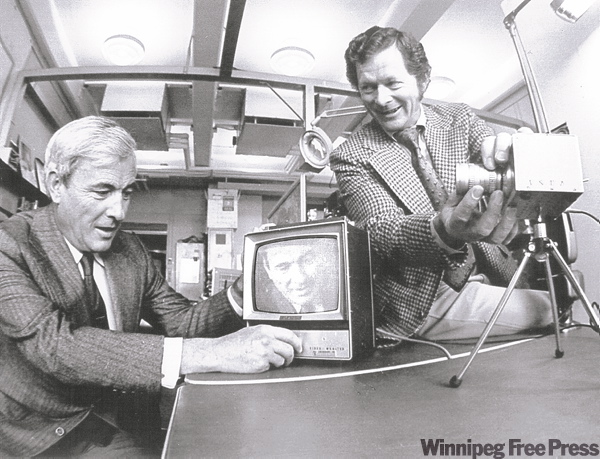
He co-invented a type of laser, worked on the Apollo space program, and in 1969 helped develop an image sensor, later hailed as a scientific breakthrough.
The charge-coupled device or CCD, developed with the help of American scientist George Smith, transforms light into a large number of digitized image points, or pixels, in a split second.
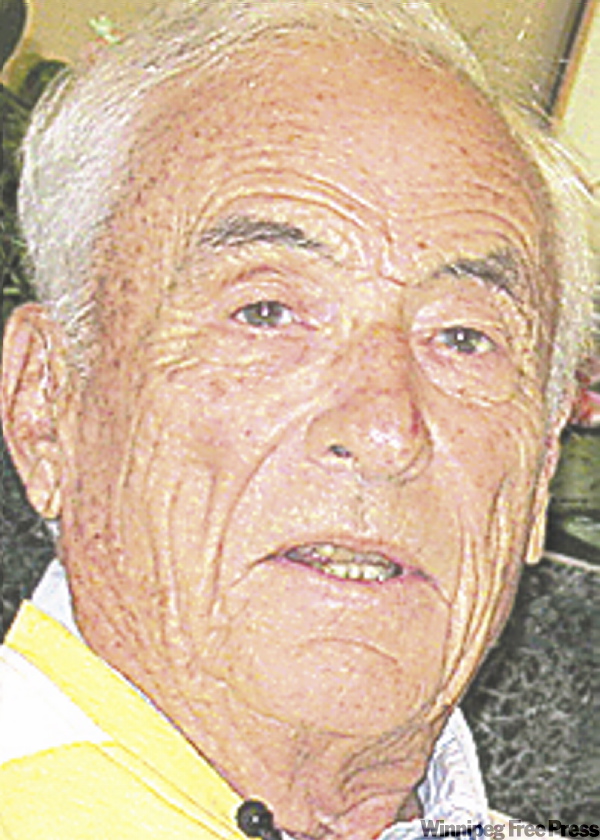
Today, the device is used in most digital cameras and camcorders, including the tiny, delicate ones found in operating rooms and the heavy-duty versions inside massive telescopes.
The stunning deep-space images from the Hubble Space Telescope and the Mars Rovers came from CCDs.
“Digital cameras are big and everyone has one,” Boyle said Tuesday. “It’s having a tremendous effect on how we live and how we do things.”
He said the CCD enabled people to handle light in the same way the transistor allowed them to handle sound.
“That’s something you couldn’t do with plain film,” he said. “Before that, with good old Kodak films, you had to wind them up, put them in the baths and all the rest of it.”
In its citation, the Royal Swedish Academy of Sciences said: “CCD technology makes use of the photoelectric effect, as theorized by Albert Einstein and for which he was awarded the 1921 year’s Nobel Prize.”
The academy said the CCD “revolutionized photography, as light could now be captured electronically instead of on film.”
But Boyle, who retired in 1979 and spends most of his time at his cottage in Wallace, N.S., remains humble about his accomplishment.
“These things come and go,” he said, adding that he still enjoys dabbling in digital photography.
Boyle said he knew the Nobel Prize was about to be awarded but thought it was taking too long and he had written off any chance of winning.
The award’s US$1.4-million purse will be split between the three men who shared the prize Tuesday.
Boyle and Smith will get US$350,000 each. American scientist Charles K. Kao gets US$700,000 for his breakthrough involving the transmission of light in fibre optics.
The prize ceremonies will be held in Stockholm on Dec. 10, and Boyle plans to attend.
Boyle is the second graduate of McGill to receive a Nobel Prize this week. Jack Szostak won the Nobel Prize in medicine on Monday.
— The Canadian Press