

Bourbon hangover lets you function
Advertisement
Read this article for free:
or
Already have an account? Log in here »
To continue reading, please subscribe:
Monthly Digital Subscription
$1 per week for 24 weeks*
- Enjoy unlimited reading on winnipegfreepress.com
- Read the E-Edition, our digital replica newspaper
- Access News Break, our award-winning app
- Play interactive puzzles
*Billed as $4.00 plus GST every four weeks. After 24 weeks, price increases to the regular rate of $19.95 plus GST every four weeks. Offer available to new and qualified returning subscribers only. Cancel any time.
Monthly Digital Subscription
$4.99/week*
- Enjoy unlimited reading on winnipegfreepress.com
- Read the E-Edition, our digital replica newspaper
- Access News Break, our award-winning app
- Play interactive puzzles
*Billed as $19.95 plus GST every four weeks. Cancel any time.
To continue reading, please subscribe:
Add Free Press access to your Brandon Sun subscription for only an additional
$1 for the first 4 weeks*
*Your next subscription payment will increase by $1.00 and you will be charged $16.99 plus GST for four weeks. After four weeks, your payment will increase to $23.99 plus GST every four weeks.
Read unlimited articles for free today:
or
Already have an account? Log in here »
Hey there, time traveller!
This article was published 19/12/2009 (5976 days ago), so information in it may no longer be current.
HOLIDAY revellers looking to party with bourbon instead of vodka this year may feel worse for it the morning after — but at least they won’t be any slower.
A recent study by a U.S. team of researchers at Brown University examined the morning-after effects on drinkers of bourbon and vodka — two of the United States’ most popular spirits — and found that while bourbon drinkers definitely felt more hungover the next day, they performed just as well when completing tasks.
“(We) wanted to know if performance impairments the morning after drinking were associated with how hungover the person felt,” said lead author Damaris J. Rohsenow.
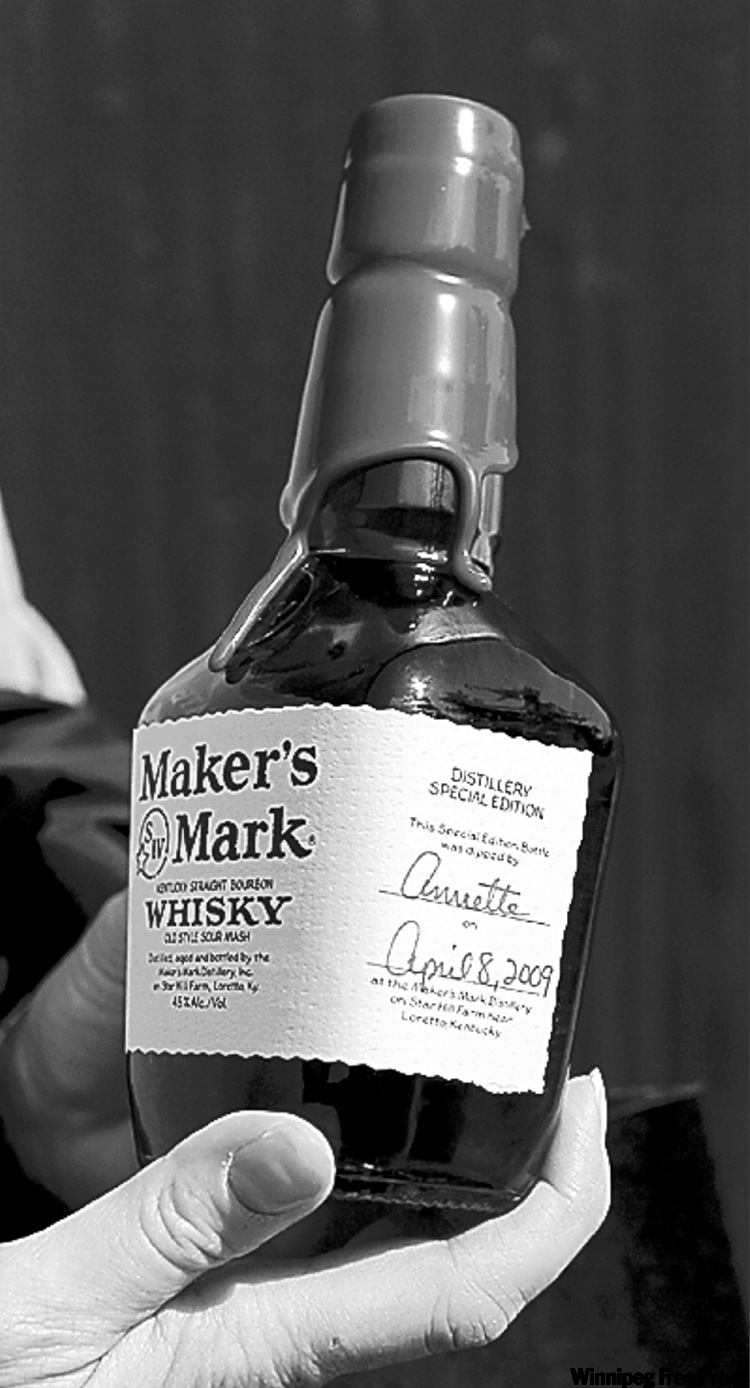
Bourbon has 37 times the amount of congeners — chemical constituents that give alcohol flavour but also cause disagreeable side-effects as the body reacts — than that of vodka.
As a general rule, darker liquors have more congeners than lighter ones.
Popular bourbon brands include Jack Daniel’s, Wild Turkey and Jim Beam.
The study enlisted 95 healthy, heavy drinkers between the ages of 21 and 35 to test the effects of the spirits over a three-night period.
Following an initial acclimatization night, the participants underwent two nights of drinking — they were given either of bourbon or vodka mixed with Coke one of the nights and a placebo the other.
Over a 21/2-hour period, the participants were expected to reach a blood-alcohol level of 0.11 per cent.
Participants were then tested on four factors: sleep patterns, self-described hangover symptoms, next-day performance and perceived impairment.
Bourbon drinkers only noted a significant difference in their morning-after state — feelings of headache, nausea, thirst, fatigue and general lousiness.
“As congener content affects only how people feel the next day, the congeners in bourbon versus vodka do not appear to increase risk (of performance),” the study said.
Participants who didn’t sleep well also reported more hangover symptoms, regardless of what had been drank.
The overall performance of the drinkers — measured through neurocognitive tests using accuracy and speed over a prolonged period — was two per cent weaker following alcohol consumption than it would have been had they opted to remain sober — a small margin, but one Rohsenow said could make all the difference in tense situations.
“This effect probably would not make a difference in ability to drive on an empty street. However, ability to drive in rush-hour traffic, be an air traffic controller or operate dangerous machinery requiring vigilance and split-second decisions would be affected and this slowness could be enough to decrease safety,” she said.
The results of the study will be published in the March edition of the journal Alcoholism: Clinical and Experimental Research.
— Canwest News Service