

City-born spymaster key wartime figure
Book chronicles his efforts to fight anti-Brit sentiment
Advertisement
Read this article for free:
or
Already have an account? Log in here »
To continue reading, please subscribe:

Digital Subscription
One year of digital access for only $205*
- Enjoy unlimited reading on winnipegfreepress.com
- Read the E-Edition, our digital replica newspaper
- Access News Break, our award-winning app
- Play interactive puzzles
*First annual payment billed as $205.00 + GST for one year. This annual subscription will automatically renew at $233.00 + GST every 52 weeks (10% off the regular annual price of $259.35). Offer available to new and qualified returning subscribers only. Cancel any time.
To continue reading, please subscribe:
Add Free Press access to your Brandon Sun subscription for only an additional
$1 for the first 4 weeks*
- Enjoy unlimited reading on winnipegfreepress.com
- Read the E-Edition, our digital replica newspaper
- Access News Break, our award-winning app
- Play interactive puzzles
*Your next Brandon Sun subscription payment will increase by $1.00 and you will be charged $17.95 plus GST for four weeks. After four weeks, your payment will increase to $24.95 plus GST every four weeks.
Read unlimited articles for free today:
or
Already have an account? Log in here »
Hey there, time traveller!
This article was published 02/10/2010 (5854 days ago), so information in it may no longer be current.
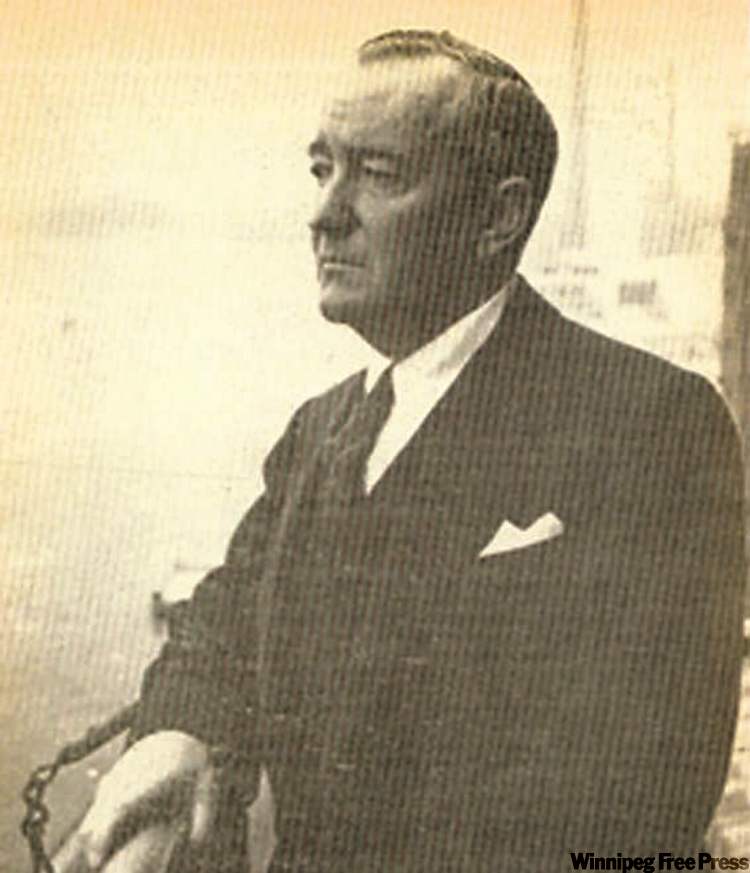
A newly published official history of MI6, the British spy agency popularized by the James Bond books and movies, has highlighted the key role played by Canadian-born intelligence operative William Stephenson in combating anti-British sentiment in the United States in the early 1940s and in setting the stage for direct U.S. participation in the Second World War.
The Winnipeg-born Stephenson, a decorated First World War flying ace, later became a successful businessman and an influential adviser to British leader Winston Churchill on industrial security and foreign intelligence, eventually heading the U.K.’s efforts in the U.S. in the 1940s to deepen Anglo-American political and military ties.
Among the previously classified documents brought to light by U.K. historian Keith Jeffery, author of The Secret History of MI6: 1909-1949, is a “caustic” message wired to the agency’s London headquarters in November 1940 by the New York-based Stephenson.
He warned that “a great deal of harm” was being done to the British cause by Joseph P. Kennedy, then the U.S. ambassador to Britain and father of future U.S. president John F. Kennedy.
“He is now busily affecting MOVIE magnates on west coast,” Stephenson, widely viewed as the inspiration for novelist Ian Fleming’s Bond character, communicated to his MI6 superiors. “He tells them that they will eventually have to look to Hitler for their market.”
Stephenson’s status report on Kennedy’s activities was transmitted at a time when Britain faced the genuine threat of German invasion and the U.S. government was still steadfastly non-committal about joining Britain, Canada and other Allied nations in the war against Nazism.
Kennedy had been spreading anti-British sentiment “with such alarming effect,” Stephenson’s memo continued, the key pro-British American official close to then U.S. president Franklin D. Roosevelt — U.S. secretary of the navy Frank Knox — “has informed the President ‘If that son of a bitch comes anywhere near my people again there will be trouble for him.’ “
The U.S. eventually did enter the war in December 1941, following the Japanese attack on Pearl Harbor.
But by then it had already signed the Lend-Lease agreement with Britain, committing U.S. factories to supply much of the material needed for the Allied war effort.
And Stephenson — the vaunted “Man Called Intrepid” who was believed to have been given the moniker by Churchill himself — is described in Jeffery’s chronicle as the key figure leading the effort “to organize American public opinion in favour of aid to Britain.”
In an interview from Washington, where Jeffery launched a U.S. book tour Friday, he said Stephenson’s postwar “mythmaking” campaign and “terrific hubris” about his own exploits have made him a “problematic figure” for historians.
“The problem is, he really is a very important person who does very significant things,” said Jeffery, whose book has also shed new light on Canadian history’s biggest spy story — the 1945 defection of Soviet cipher clerk Igor Gouzenko.
— Postmedia News