

Outraged chief slams release of salary stats
Calls reporters in, refuses questions
Advertisement
Read this article for free:
or
Already have an account? Log in here »
To continue reading, please subscribe:
Digital Subscription
One year of digital access for only $1.44 a week*
- Enjoy unlimited reading on winnipegfreepress.com
- Read the E-Edition, our digital replica newspaper
- Access News Break, our award-winning app
- Play interactive puzzles
*Billed as $5.77 plus GST every four weeks. After 52 weeks, price increases to the regular rate of $19.95 plus GST every four weeks. Offer available to new and qualified returning subscribers only. Cancel any time.
To continue reading, please subscribe:
Add Free Press access to your Brandon Sun subscription for only an additional
$1 for the first 4 weeks*
- Enjoy unlimited reading on winnipegfreepress.com
- Read the E-Edition, our digital replica newspaper
- Access News Break, our award-winning app
- Play interactive puzzles
*Your next Brandon Sun subscription payment will increase by $1.00 and you will be charged $17.95 plus GST for four weeks. After four weeks, your payment will increase to $24.95 plus GST every four weeks.
Read unlimited articles for free today:
or
Already have an account? Log in here »
Hey there, time traveller!
This article was published 24/11/2010 (5811 days ago), so information in it may no longer be current.
HALIFAX — First Nations leaders say new disclosures that show many chiefs and councillors are making more money than the prime minister lack context and paint them unfairly.
Glooscap First Nation, a tiny Nova Scotia reserve of 300 people in rural Nova Scotia, is governed by three of the highest-paid politicians in Canada, including one band councillor who made almost $1 million in tax-free income last year, according to federal government records released by the Canadian Taxpayers Federation.
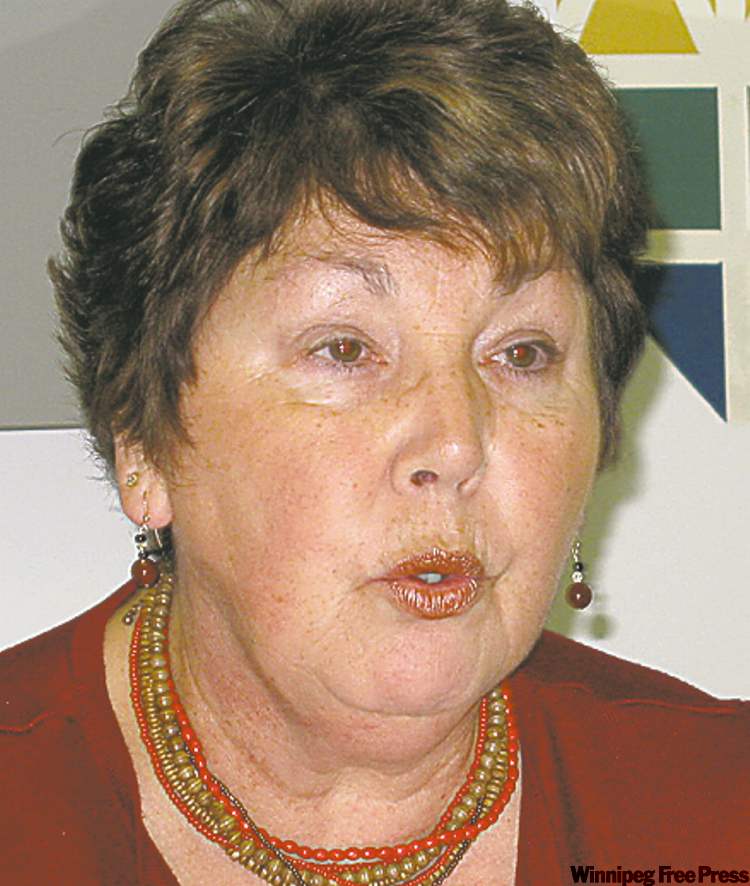
Glooscap Chief Shirley Clarke reacted angrily on Tuesday to what she described as “inaccurate, negative publicity.” Yet, she refused to explain what was inaccurate, or discuss what she and her two band councillors — her sister Lorraine Whitman and their cousin Michael Halliday — are paid.
The documents show hundreds of reserve politicians made six-figure salaries last year, including 82 who were paid more than Prime Minister Stephen Harper’s income of roughly $300,000.
The councillor who made $978,000 received more than $700,000 of that amount for what the federal government calls “other remuneration” — income paid for work related to band-owned enterprises, such as gas stations and casinos, or band-awarded contracts, such as snow plowing.
On Tuesday Clarke, Whitman and Halliday invited journalists to the Glooscap band office to hear a statement from the chief.
“Unlike non-Mi’kmaq politicians, we do not receive vehicle allowances, pensions, benefits, insurance or dry cleaning reimbursements,” said Clarke.
“It is unfortunate that once again, the public is too easily entertained by inaccurate, negative publicity once again, focusing on the Mi’kmaq.
“The issues of compensation for chiefs and council in Atlantic Canada is complex at this time. We don’t fully agree with the conclusions that have been reached.”
After her statement, Clarke and her councillors left the room, refusing to answer questions from reporters.
Elsewhere on the reserve, band members said they were shocked to learn through the media that their chief and councillors were paid such sums for running a small community.
Although Glooscap’s official membership stands at 300, only 87 members live in the community, which consists of a store and gas bar, a video lottery parlour and the band office and health centre, all surrounded by a small neighbourhood of modest homes on the outskirts of the town of Hantsport.
One Mi’kmaq woman — a long time Glooscap resident who did not want her name published for fear of losing her job at one of the band-owned businesses –said many Glooscap residents are unemployed, and collect $110 per week in welfare payments.
She said the Glooscap reserve is run by a small group of powerful families.
The federation released the information Monday in advance of debate in the House of Commons on a private member’s bill that seeks to make public the salaries of politicians in First Nations communities. Across the country, 82 chiefs and councillors make more than the prime minister’s annual salary of $317,574. The figures include salaries, honorariums and travel per diems, and the money is tax-free.
Kevin Lacey, CTF Atlantic director, defended the release of the figures. “The intention of this is to ask that transparency be extended to reserves.”
Chief Lawrence Paul of Nova Scotia’s Millbrook band said he had no problem with making such information public if the same standard applied to all governments and corporations.

“If you’re going to be fair don’t just pick on one race of people. Pick on everybody,” he said. “We run a pretty tight financial administration. Nobody’s getting their fingers in the pie.”
Paul said some of the higher salaries may address shortfalls in other areas such as lack of pension plans.
“If a chief is defeated and he doesn’t have any Canada Pension or Old Age Pension cheques coming in he has to go on social assistance,” he said.
— Postmedia News, Canadian Press