

Dangerous-offender status for killer?
Advertisement
Read this article for free:
or
Already have an account? Log in here »
To continue reading, please subscribe:
Digital Subscription
One year of digital access for only $75*
- Enjoy unlimited reading on winnipegfreepress.com
- Read the E-Edition, our digital replica newspaper
- Access News Break, our award-winning app
- Play interactive puzzles
*Billed as $5.77 plus GST every four weeks. After 52 weeks, price increases to the regular rate of $19.95 plus GST every four weeks. Offer available to new and qualified returning subscribers only. Cancel any time.
Monthly Digital Subscription
$4.99/week*
- Enjoy unlimited reading on winnipegfreepress.com
- Read the E-Edition, our digital replica newspaper
- Access News Break, our award-winning app
- Play interactive puzzles
*Billed as $19.95 plus GST every four weeks. Cancel any time.
To continue reading, please subscribe:
Add Free Press access to your Brandon Sun subscription for only an additional
$1 for the first 4 weeks*
- Enjoy unlimited reading on winnipegfreepress.com
- Read the E-Edition, our digital replica newspaper
- Access News Break, our award-winning app
- Play interactive puzzles
*Your next Brandon Sun subscription payment will increase by $1.00 and you will be charged $17.95 plus GST for four weeks. After four weeks, your payment will increase to $24.95 plus GST every four weeks.
Read unlimited articles for free today:
or
Already have an account? Log in here »
Hey there, time traveller!
This article was published 10/05/2011 (5494 days ago), so information in it may no longer be current.
A dangerous-offender hearing will start Tuesday for Johnson Aziga, the first person in Canada to be convicted of first-degree murder for knowingly spreading HIV to two sexual partners.
The hearing in Hamilton, Ont., is expected to last up to three weeks and hear from numerous witnesses for both the Crown and defence who will speak to the options available for sentencing and parole for the 54-year-old.
Aziga was found guilty of two counts of first-degree murder, 10 counts of aggravated assault and one count of attempted aggravated sexual assault by a jury in 2009, following 21/2 days of deliberation.
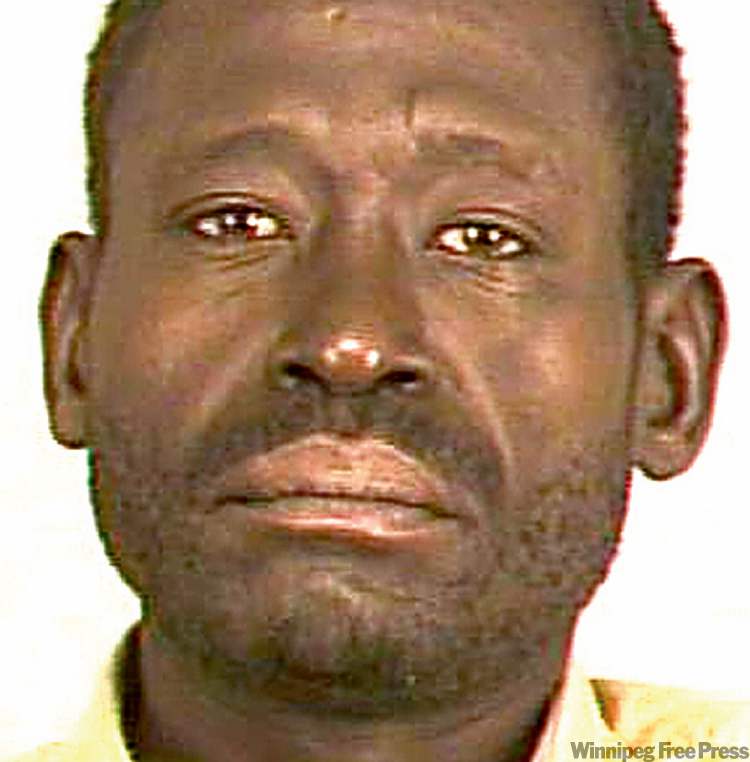
During the trial, the jury heard that two women, identified only as H.C. and S.B., were lethally infected with HIV by Aziga, who never told them about his medical status.
As a result, the two women were unable to seek effective treatment when they became ill, which led to AIDS-related cancers and their deaths. Another five of Aziga’s sexual partners tested positive for HIV, while four other women tested negative.
Prosecutors told the jury that Aziga “outright lied” about his HIV-status and, in some cases, convinced his sex partners that condoms were not necessary.
The human immunodeficiency virus (HIV) can result in AIDS, a frequently fatal disease that attacks the immune system and can spread through the exchange of blood, semen, vaginal fluid and breast milk.
Aziga, a former research analyst with Ontario’s Ministry of the Attorney General, has been in prison since his arrest in August 2003. He still faces a sentencing hearing for his conviction, which will follow the dangerous offender hearing.
His Toronto-based lawyer, Davies Bagambiire, said this process has been lengthy because both sides have had to go through volumes of documents and line up experts to testify.
“This has been a long and difficult case,” he said Monday. “It’s unprecedented.”
A dangerous offender designation allows the court to impose an indeterminate sentence: a dangerous offender can be held in custody until he is no longer considered to be a threat to the public. A first-degree murder conviction carries a life sentence with no parole eligibility for 25 years.
Bagambiire said one of his arguments will be whether institutionalization is the best method to deal with someone like Aziga, who has been dealing with HIV since he was diagnosed in 1996.
He added that his client, a native of Uganda, continues to suffer in prison from the stigma associated with the disease.
“The stigma continues. It has nothing to do with him, it has to do with the nature of society,” said Bagambiire. “In prison, the population obviously has him stigmatized as someone with HIV. They think they’re being careful because they don’t want to be infected by him. That hasn’t stopped and that has nothing to do with him, it’s the nature of prison life.”
— Postmedia News