

Quebec woman crusading for assisted suicide
Hopes high court strikes down law
Advertisement
Read this article for free:
or
Already have an account? Log in here »
To continue reading, please subscribe:

Digital Subscription
One year of digital access for only $205*
- Enjoy unlimited reading on winnipegfreepress.com
- Read the E-Edition, our digital replica newspaper
- Access News Break, our award-winning app
- Play interactive puzzles
*First annual payment billed as $205.00 + GST for one year. This annual subscription will automatically renew at $233.00 + GST every 52 weeks (10% off the regular annual price of $259.35). Offer available to new and qualified returning subscribers only. Cancel any time.
To continue reading, please subscribe:
Add Free Press access to your Brandon Sun subscription for only an additional
$1 for the first 4 weeks*
- Enjoy unlimited reading on winnipegfreepress.com
- Read the E-Edition, our digital replica newspaper
- Access News Break, our award-winning app
- Play interactive puzzles
*Your next Brandon Sun subscription payment will increase by $1.00 and you will be charged $17.95 plus GST for four weeks. After four weeks, your payment will increase to $24.95 plus GST every four weeks.
Read unlimited articles for free today:
or
Already have an account? Log in here »
Hey there, time traveller!
This article was published 01/09/2011 (5427 days ago), so information in it may no longer be current.
QUEBEC — A Quebec woman is resuming the crusade of Sue Rodriguez nearly 20 years later, pleading for help to end her life.
Ginette Leblanc, 47, suffers from amyotrophic lateral sclerosis (ALS), also known as Lou Gehrig’s disease — the same illness that led B.C.’s Rodriguez to challenge the federal law against assisted suicide in 1993.
Leblanc hopes she can convince the country’s highest court to give her the right to put an end to her suffering when she wishes to.
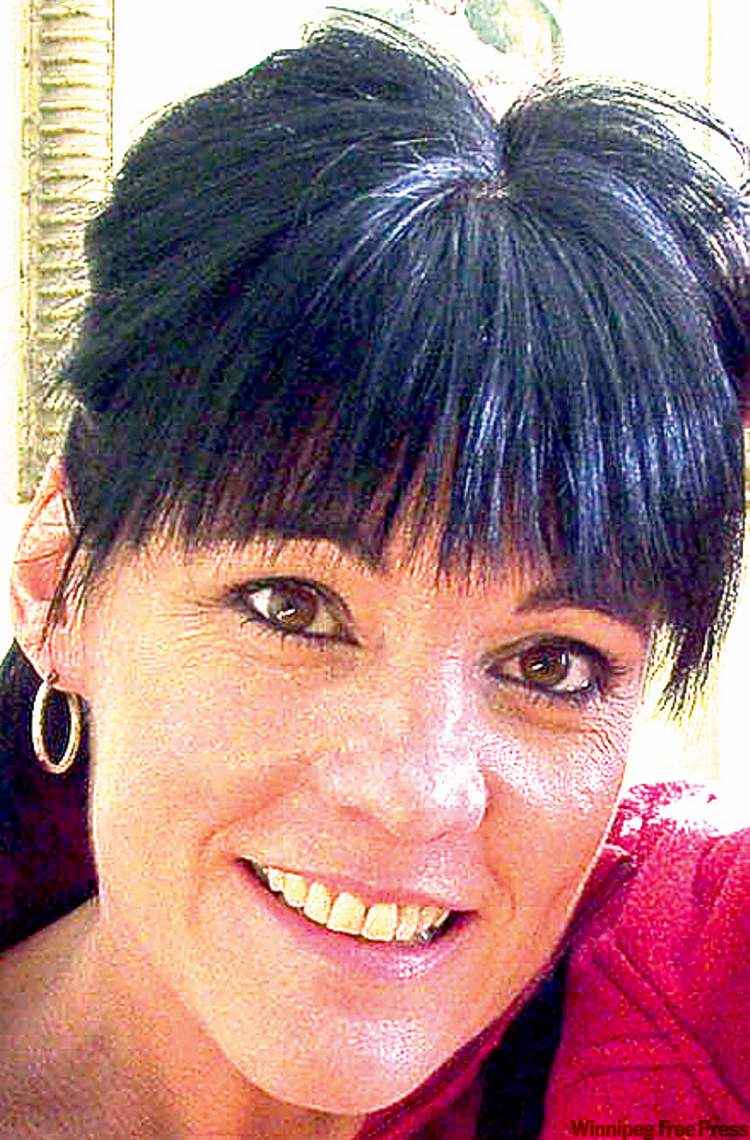
“I’ll become quadriplegic, confined to my bed and I know one day I won’t be able to put up with that anymore,” Leblanc said from her Trois-Rivieres, Que., home.
“I’m scared of this disease and of what’s going to happen to me. I want the right to decide when it will be over.”
Leblanc’s condition has steadily deteriorated — she has lost the use of her legs and is slowly losing strength in her hands — since the first symptoms of the fatal neurodegenerative condition appeared in 2007.
She received the official ALS diagnosis earlier this year and was shocked when she found out more about the disease.
“I cried for days,” said Leblanc, mother of a 20-year-old daughter. “I can’t even describe the pain I felt.”
ALS sufferers slowly lose muscle control and most die of respiratory failure between two and five years after diagnosis.
After the initial trauma passed, Leblanc had another shock: under Canadian law, it’s illegal to counsel or help a person to commit suicide. Anyone convicted of the offence could be imprisoned for up to 14 years.
That’s when she decided to invest the little energy she has left in a legal battle to strike down the assisted suicide law with the help of prominent Quebec lawyer Rene Duval.
Duval is an experienced human rights lawyer and litigator who also represented convicted terrorist Said Namouh.
He said he believes a lot has changed since the Supreme Court ruled against Rodriguez in a controversial 5-4 decision.
“One of the reasons for dismissing her application was that other comparable countries had no such thing as laws allowing assisted suicide,” Duval said.
Switzerland, Belgium and Holland now allow assisted suicide. So do the U.S. states of Washington, Oregon and Montana.
“There has been a change in that regard,” said the 64-year-old retired lawyer who still practises full time.
Duval came forward after he heard about Leblanc’s case and offered to represent her free of charge out of personal interest in the issue.
He stressed that out of the nine judges on the Rodriguez case, only Justice Beverley McLachlin is still on the bench, acting as Chief Justice of Canada. And at the time, he said, McLachlin was in favour of allowing Rodriguez’s application.
“It seems to me now that the winning conditions are here,” Duval said.
The lawyer is working on filing an application on behalf of Leblanc to the Quebec Superior Court to invalidate section 241b of the Criminal Code, which makes assisted suicide illegal.
Duval expects that application to be dismissed, leading to a hearing before the Quebec Court of Appeal and possibly the Supreme Court of Canada.
“I don’t expect any court to issue a decision that would contradict Rodriguez. Only the Supreme Court of Canada can re-examine this issue,” he said.
Duval believes the process could be shortened if all parties agree. He hopes to file an application to the Supreme Court of Canada in the fall of 2012.
Leblanc’s case is similar to that of B.C.’s Gloria Taylor, who also has ALS and is pleading for the right to a doctor-assisted suicide. A B.C. Supreme Court judge recently agreed to fast-track her lawsuit.
If the country’s highest court chooses to address the matter again, it is likely the B.C. and Quebec cases will get rolled into one.
Arthur Schafer, director of the Centre for Professional and Applied Ethics at the University of Manitoba, believes the two cases have “plausible grounds” in arguing it is discrimination against disabled people to refuse them physician-assisted suicide while it is perfectly legal for able-bodied people to commit suicide.
“It could be argued it’s a matter of fundamental human rights,” said Schafer, an advocate of a more liberal law.
He also noted Leblanc and Taylor could argue now that patients have the right to refuse treatment, it would be “morally inconsistent” to prevent them from seeking a physician’s help to end their suffering.
As for Leblanc, she won’t stop until her thirst for justice is quenched.
“This is something that should have been legalized a long time ago,” she said.
— Postmedia News