

Quebec’s secrets emerge
Public demands end to corruption, culture of secrecy
Advertisement
Read this article for free:
or
Already have an account? Log in here »
To continue reading, please subscribe:
Monthly Digital Subscription
$1 per week for 24 weeks*
- Enjoy unlimited reading on winnipegfreepress.com
- Read the E-Edition, our digital replica newspaper
- Access News Break, our award-winning app
- Play interactive puzzles
*Billed as $4.00 plus GST every four weeks. After 24 weeks, price increases to the regular rate of $19.95 plus GST every four weeks. Offer available to new and qualified returning subscribers only. Cancel any time.
Monthly Digital Subscription
$4.99/week*
- Enjoy unlimited reading on winnipegfreepress.com
- Read the E-Edition, our digital replica newspaper
- Access News Break, our award-winning app
- Play interactive puzzles
*Billed as $19.95 plus GST every four weeks. Cancel any time.
To continue reading, please subscribe:
Add Free Press access to your Brandon Sun subscription for only an additional
$1 for the first 4 weeks*
*Your next subscription payment will increase by $1.00 and you will be charged $16.99 plus GST for four weeks. After four weeks, your payment will increase to $23.99 plus GST every four weeks.
Read unlimited articles for free today:
or
Already have an account? Log in here »
Hey there, time traveller!
This article was published 17/12/2011 (5222 days ago), so information in it may no longer be current.
MONTREAL — This is how it is done, how it has always been done.
We don’t want to jeopardize negotiations, the politicians said. We don’t want to frighten people.
These reports are too complicated, ordinary people would not understand.
Enough — 2011 is the year Quebecers said enough.
Montreal’s bridges and highways were falling down, victims of neglect, flawed design and poor workmanship. Mobsters had already seized control of the construction industry, boosting the cost of roadwork by 35 per cent.
Now there was talk of cozy deals for everything from asphalt to those sweet $7 spots in subsidized daycare. Universities dismissed top people with plump severance packages and bland explanations. The cost of mega-hospitals skyrocketed. Defence lawyers were beaten up. The City of Montreal got caught spying on its own auditor-general.
It’s tempting to try to make connections, to figure out how all the elements fit together. But like a 1,000-piece puzzle where a cruel factory fairy left the picture off the box, key information was missing, off limits, shielded by confidentiality laws, nervous cabinet ministers or bullheaded civil servants.
Last February, The Montreal Gazette took aim at Quebec’s secret society, making it their business to demand more openness and accountability from government and public institutions.
Citizens, enraged, disgusted and indignant — at the waste of their hard-earned money, paying for inflated contracts to line the pockets of criminals; at the waste of their time, in endless traffic jams — would begin to question the way things were, to demand explanations.
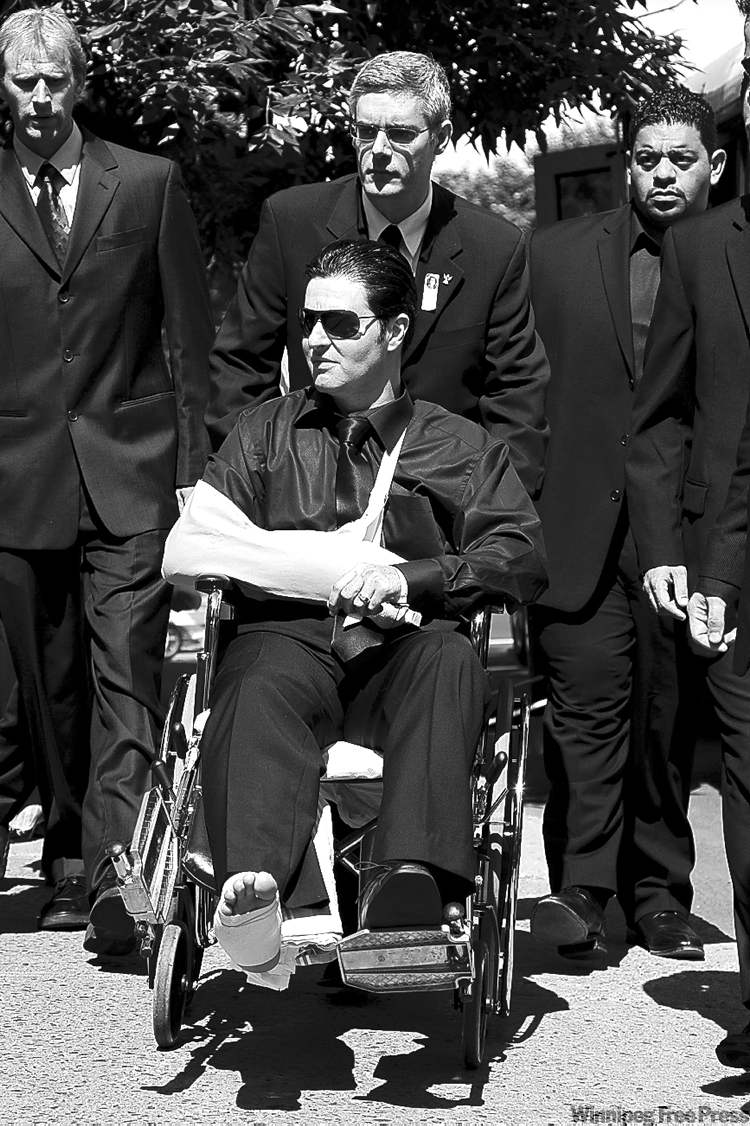
“Things need to change,” said Hani Beitinjaneh, who lost his wife Lea Guilbeault in July 2009 when a concrete slab tumbled 18 storeys off a Montreal office building and landed on the table where they were celebrating her birthday. Since then, he has invested untold hours investigating cases of faulty infrastructure, poor construction and neglect.
“You have to send an access request and then they send you documents, and then you find there are more documents. It’s like a puzzle. No one level of government has it all.”
All the while, the world was changing at the speed of Twitter. With a public inspired by WikiLeaks, by such populist rebellions as the Arab Spring and Occupy Wall Street and enabled by technology, it was increasingly difficult to keep anything secret for very long.
A couple of breakthroughs happened late last winter, the fruit of years of digging and needling by the press and mounting pressure from the political opposition and the public.
First, the Charest government named former Montreal police chief Jacques Duchesneau to head a special anti-collusion unit, one flank of a permanent anti-corruption super squad.
Duchesneau, a one-time mayoral candidate, was known to be fearless. This was a man who once arrested his boss for taking narcotics from an evidence locker.
In April, Quebec enacted a law that requires municipalities to post all contracts of more than $25,000 on an official government website.
The legislation wasn’t perfect. There’s no penalty for cities and towns that fail to comply and no one designated to police it. But it was a start, a place to track the big players and connect the dots.
By September, Duchesneau’s team said it had evidence of widespread corruption in the construction industry, with biker gangs and the Mafia throwing their weight around and playing a role in buying elections, particularly in smaller communities.
“Organized crime is comfortably installed,” said Duchesneau, insisting a full public inquiry was the only way to clear the air and root out the rot.
At first, Premier Jean Charest rejected a public inquiry, arguing it would thwart potential criminal prosecution.
But opinion polls showed four out of five Quebecers — and more than half of all Liberal voters — want a full investigation. When Justice France Charbonneau this fall requested and won subpoena powers for a public inquiry expected to take two years, Justice Minister Jean-Marc Fournier’s explanation was simply that the situation had “evolved.”
Meanwhile, Transport Quebec said it would set up an online registry where it would be possible to track construction firms that have been convicted of wrongdoing.
This was a very bad year for Montreal motorists to live on the other side of a bridge. Any bridge.
In January, federal officials met privately to figure out how to put a good spin on “alarming” inspection reports about the Champlain Bridge. In June, sections of the Mercier Bridge were closed with scant warning after engineering studies signalled dangerous wear to gusset plates.
Officials in Quebec and Ottawa refused to provide inspection reports. Quebec Transport Minister Sam Hamad said people would not understand them. Federal Transport Minister Denis Lebel said he didn’t want to incite panic. There was nothing to fear, Hamad said.
“We never put the lives of users in peril. The state of Quebec bridges, the state of Quebec infrastructure, we’re taking care of it.”
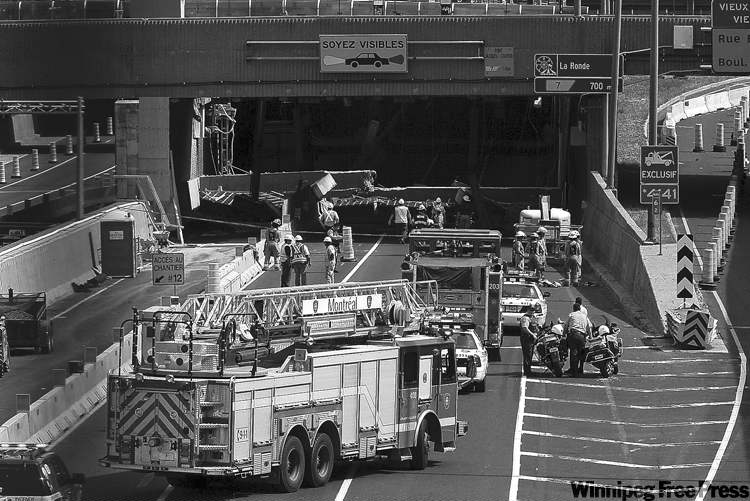
And then, on a Sunday morning at the end of July, a 15-metre-wide concrete beam and overhead grids known as paralumes tumbled off the entrance to the mid-tunnel on the Ville Marie Expressway.
No one was hurt. But the risks were no longer theoretical.
City, provincial and federal authorities were wary about releasing any details about what was wrong and why it had taken them so long to do anything about it. But by now, hundreds of thousands of people had already been inconvenienced by the emergency repairs. With plans for a new Turcot Interchange and rumours brewing of a bridge to replace the Champlain, traffic mayhem was expected to get worse before it got better.
Three days after the Ville Marie collapse, Hamad announced the government would soon release inspection reports on the Mercier Bridge and the Turcot Interchange. A day later, Montreal promised to release inspection reports for nearly 600 structures under its control.
Just after Labour Day, traditionally Montreal’s worst traffic day that doesn’t come with snow, Hamad was shuffled out of the Transport portfolio. His replacement, a sharp, smooth-talking lawyer named Pierre Moreau, immediately shifted the tone from confrontation to conciliation, promising the government would be more forthcoming with updates and inspection reports. Two weeks later, Quebec launched a searchable online database that will house infrastructure inspection reports.
“Quebecers want transparency, toughness and integrity,” Moreau said. “They are going to get it.”
In late November, Moreau’s office released 35 inspection reports on the Turcot Interchange.
Findings were uniformly grim, the only question mark: how urgently work needed to be done to keep the nexus functioning until a replacement is ready in 2018.
There were other indications that the cone of silence had been lifted, that the message was getting through that Quebecers were fed up with being spoon-fed just enough information to keep them complacent.
Earlier this month, nine years after it was first promised, Quebec finally launched a public registry to record accidents, errors and medical mishaps in the province’s hospitals, community clinics and nursing homes.
But there here are still kinks in the centralized database. At least nine hospitals failed to supply any results, blaming “technical difficulties.” And one-third of hospitals and nursing homes neglected to inform patients or their families of medical mistakes, although they have been obliged to do so since 2002.
— Postmedia News