

Oh, the gravity of the situation
The famous mathematician added small sins to his younger years
Advertisement
Read this article for free:
or
Already have an account? Log in here »
To continue reading, please subscribe:
Monthly Digital Subscription
$1 per week for 24 weeks*
- Enjoy unlimited reading on winnipegfreepress.com
- Read the E-Edition, our digital replica newspaper
- Access News Break, our award-winning app
- Play interactive puzzles
*Billed as $4.00 plus GST every four weeks. After 24 weeks, price increases to the regular rate of $19.95 plus GST every four weeks. Offer available to new and qualified returning subscribers only. Cancel any time.
Monthly Digital Subscription
$4.99/week*
- Enjoy unlimited reading on winnipegfreepress.com
- Read the E-Edition, our digital replica newspaper
- Access News Break, our award-winning app
- Play interactive puzzles
*Billed as $19.95 plus GST every four weeks. Cancel any time.
To continue reading, please subscribe:
Add Free Press access to your Brandon Sun subscription for only an additional
$1 for the first 4 weeks*
*Your next subscription payment will increase by $1.00 and you will be charged $16.99 plus GST for four weeks. After four weeks, your payment will increase to $23.99 plus GST every four weeks.
Read unlimited articles for free today:
or
Already have an account? Log in here »
Hey there, time traveller!
This article was published 18/02/2012 (5159 days ago), so information in it may no longer be current.
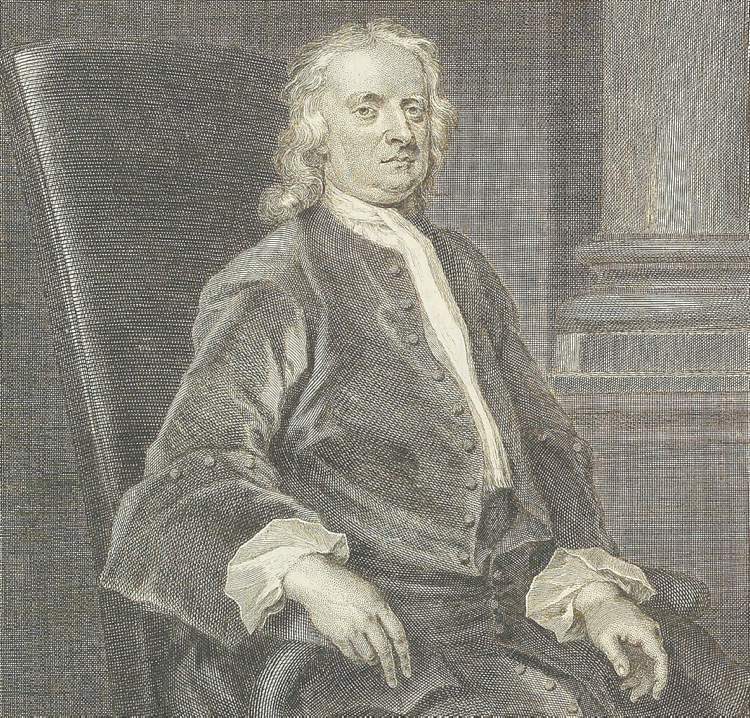
Generations of students who had to memorize tedious lists of great things that Sir Isaac Newton did can take note: He also punched his sister, stole plums and stuck a pin in someone’s hat on Sunday.
The great mathematician did other bad things at age 19: threatened to burn down his parents’ house with them inside, beat up a young man named Arthur Storer and tried to use counterfeit money.
And he had little respect for sedate Sunday behaviour. He baked pies, squirted water at friends and made a mousetrap on the Lord’s Day.
He didn’t pay attention to sermons.
Newton confessed these “sins” in a moment of teenage remorse in 1662.
Research is showing the human side of the man known mainly for larger-than-life scientific achievements.
He broke new ground by describing laws of motion and how light behaves and what forces hold the solar system together.
All this makes the contrast with the ordinary side of his nature more striking. Witness the 45th entry on his list of 48 not-too-serious sins: “Peevishness at Master Clarks for a piece of bread and butter.”
For the record, he was also peevish with his mother (entry 28) and his sister (No. 29).
His notebook, part of a set of Newton papers studied at the University of Sussex and this month’s featured text on The Newton Project website, shows a further side of his private life: financial records in the mid-1660s.
The young math student paid five pounds and change in tuition, went to the tavern, lost a few shillings at cards, lent money to someone named Perkins and bought glass and putty, possibly for drafty windows in student housing.
He gave a shilling to charity, spent five more on Christmas and bought a gift of oranges for his sister.
Finally the notebook shifts into geometry, mainly in English, but sometimes in Latin.
Material such as this improves our understanding of historical figures, and it’s a mistake to dismiss it as trivial or improper, says history professor Brian McKillop of Carleton University in Ottawa.
“You have to draw out their humanity,” he said. “For many years, up until the 1930s, all we knew about Newton were his scientific achievements.”
But after that, huge amounts of his papers were released, and it emerged that he believed in astrology and alchemy — subjects written off by today’s science, but not the 17th century’s.
“He spent probably more time calculating the size of Noah’s Ark than he did in some respects in his great work,” McKillop said.
“So we have a whole new idea of just how complex Newton was, from material that people thought was embarrassing or unimportant prior to this.”

In academics, he said, “we tend to intellectualize things and diminish the human quotient.”
The silly side of Newton’s teenage years shouldn’t reduce our respect for him, McKillop said. “His mathematical and scientific achievements stand for all time… So to find out that he was flawed or that he had a nervous breakdown or that he was sort of paranoid doesn’t make him anything other than more interesting.”
Arthur Storer didn’t suffer lasting harm. He moved to Maryland and became a famous astronomer.
The full notebook is online at The Newton Project.
— Postmedia News