

Beheading lawsuit drops feds, RCMP
Plaintiffs still allege Greyhound, Li responsible
Advertisement
Read this article for free:
or
Already have an account? Log in here »
To continue reading, please subscribe:
Monthly Digital Subscription
$1 per week for 24 weeks*
- Enjoy unlimited reading on winnipegfreepress.com
- Read the E-Edition, our digital replica newspaper
- Access News Break, our award-winning app
- Play interactive puzzles
*Billed as $4.00 plus GST every four weeks. After 24 weeks, price increases to the regular rate of $19.95 plus GST every four weeks. Offer available to new and qualified returning subscribers only. Cancel any time.
Monthly Digital Subscription
$4.99/week*
- Enjoy unlimited reading on winnipegfreepress.com
- Read the E-Edition, our digital replica newspaper
- Access News Break, our award-winning app
- Play interactive puzzles
*Billed as $19.95 plus GST every four weeks. Cancel any time.
To continue reading, please subscribe:
Add Free Press access to your Brandon Sun subscription for only an additional
$1 for the first 4 weeks*
*Your next subscription payment will increase by $1.00 and you will be charged $16.99 plus GST for four weeks. After four weeks, your payment will increase to $23.99 plus GST every four weeks.
Read unlimited articles for free today:
or
Already have an account? Log in here »
Hey there, time traveller!
This article was published 31/12/2013 (4463 days ago), so information in it may no longer be current.
The Canadian government and the RCMP have been dropped from lawsuits filed after the 2008 beheading of a young man aboard a Greyhound bus in Manitoba.
Victim Tim McLean’s father filed a claim against Greyhound, perpetrator Vince Li and Canada soon after his son was killed. The Canadian Press recently discovered the file was amended in April 2012 to drop the federal government as a defendant and to add 22-year-old McLean’s “infant son” as one of 15 people who have “been deprived of Tim McLean Jr.’s guidance, care and companionship.”
Lawsuits filed by two separate bus passengers, Debra Tucker and Kayli Shaw, have also been amended to drop the RCMP.
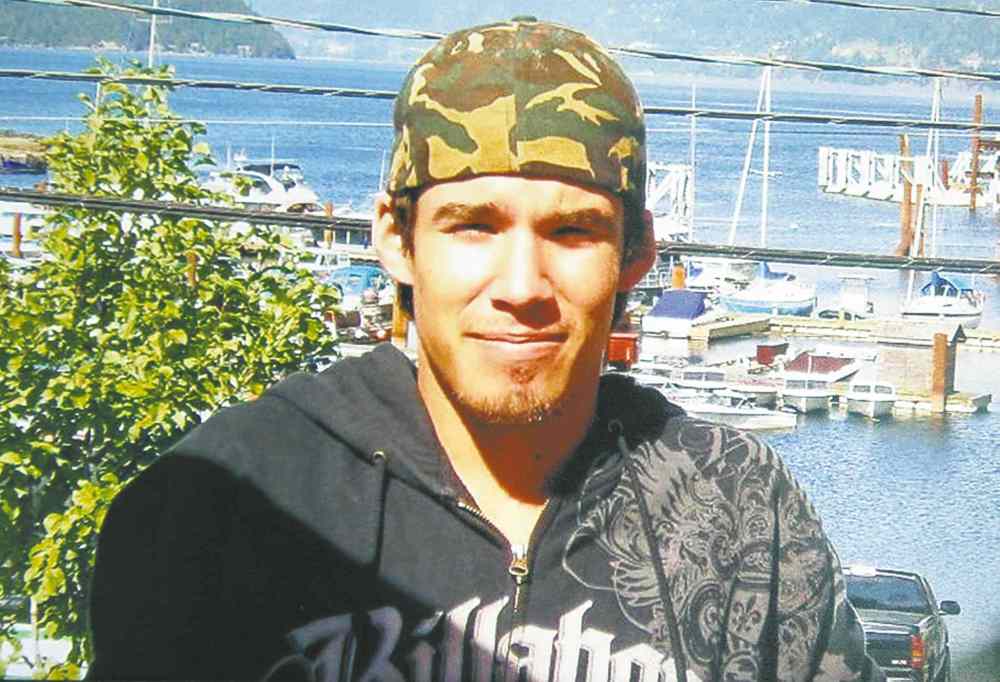
Lawyer Jay Prober, who represents Tim McLean Sr., said the government was dropped from his client’s lawsuit because “we were concerned that it wasn’t a strong enough case.”
The lawsuit against Greyhound and Li is proceeding, but has been delayed because the lawyer representing the bus company has just been appointed a federal judge, Prober said.
Li has been confined to a Selkirk psychiatric institution since he was found not criminally responsible for stabbing, mutilating and beheading McLean on a bus heading to Winnipeg in July 2008. Li, who has schizophrenia, sat next to the 22-year-old McLean after the young man smiled at him and asked how he was doing.
Li said he heard the voice of God telling him to kill the carnival worker or “die immediately.” Li repeatedly stabbed McLean.
The bus pulled over near Portage and Li continued stabbing and mutilating McLean’s body. Passengers fled the bus and stood outside. Li escaped through a window and was arrested.
The original statement of claim filed by McLean’s father alleged the Government of Canada was liable because it is responsible for national transportation security. It also argued the government knew or should have known about previous violence on board Greyhound buses and failed to put safeguards in place.
The lawsuits filed by passengers Tucker and Shaw in 2011 have not only dropped the RCMP, but have crossed out a section that alleged Canada “failed to ensure the safety of passengers on board buses travelling between provinces” and “failed to assure that Canada’s transportation system meets the highest practicable safety and security standards.”
None of the allegations has been proven in court. The federal government never filed a statement of defence.
Denise Reaume, professor of law at the University of Toronto, said it’s not unusual for defendants to be dropped as a lawsuit moves through the courts.
“You sweep with a broad brush to begin with,” she said.
Suing the federal government or the RCMP in a case such as this is particularly difficult, Reaume said, because the plaintiff would have to prove the defendants knew they were being negligent and could have foreseen such a gruesome act would occur as a result.
Judges are also wary of punishing a government for failing to pass the right laws, she added. Imagine the slippery slope where all the residents of Lac-Mégantic — where an oil train derailed and exploded into flames killing 47 people — could sue the federal government for failing to properly regulate railways, Reaume said.
‘We were concerned that it wasn’t a strong enough case’
— Jay Prober, lawyer for Tim McLean Sr.
“Even if you could make an argument that they actually should have been able to foresee this kind of thing, there is a very good chance that a court would say it’s not really our job… to tell Parliament what laws to pass.”
The passengers’ lawsuits allege Tucker and Shaw can’t sleep or work and suffer from anxiety and depression after witnessing the attack on McLean.
Their virtually identical statements of claim still allege Canada “failed to take any measures, through its servants the RCMP, to remove the defendant Mr. Li from the bus in a timely manner, thereby allowing him to decapitate the deceased and mutilate and defile the body… and thus adding to the ongoing horror and emotional distress of the plaintiff.”

All the lawsuits allege Greyhound and Li are responsible for damages. They say Greyhound failed to ensure the safety and security of passengers, knowing they could be “at risk and in imminent danger at any given moment,” and didn’t provide adequate training to its employees.
Greyhound has filed a similar statement of defence in all three suits. It says it “took such care as, in all circumstances of the case, was reasonable to see that its passengers were reasonably safe” and it “complied with all applicable security regulations and laws.”
— The Canadian Press