Military choppers, planes joining wildfire fight with promise of more help
Advertisement
Read this article for free:
or
Already have an account? Log in here »
To continue reading, please subscribe:

Digital Subscription
One year of digital access for only $205*
- Enjoy unlimited reading on winnipegfreepress.com
- Read the E-Edition, our digital replica newspaper
- Access News Break, our award-winning app
- Play interactive puzzles
*First annual payment billed as $205.00 + GST for one year. This annual subscription will automatically renew at $233.00 + GST every 52 weeks (10% off the regular annual price of $259.35). Offer available to new and qualified returning subscribers only. Cancel any time.
To continue reading, please subscribe:
Add Free Press access to your Brandon Sun subscription for only an additional
$1 for the first 4 weeks*
- Enjoy unlimited reading on winnipegfreepress.com
- Read the E-Edition, our digital replica newspaper
- Access News Break, our award-winning app
- Play interactive puzzles
*Your next Brandon Sun subscription payment will increase by $1.00 and you will be charged $17.95 plus GST for four weeks. After four weeks, your payment will increase to $24.95 plus GST every four weeks.
Read unlimited articles for free today:
or
Already have an account? Log in here »
Hey there, time traveller!
This article was published 04/05/2016 (3776 days ago), so information in it may no longer be current.
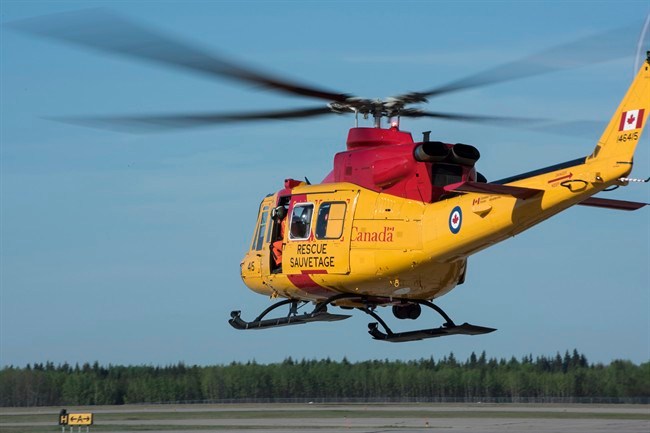
OTTAWA – The Canadian military has deployed helicopters and transport planes in response to the raging wildfire that has incinerated parts of Fort McMurray, Alta. — with more support to come as needed.
Four CH-146 Griffon helicopters are en route to perform evacuations in surrounding communities under threat from the raging blaze. Another two choppers are on standby at 408 Squadron in Edmonton.
Additionally, a C-130J Hercules has been moved to the nearby military airfield in Cold Lake, while a second Hercules and a C-17 Globemaster heavy-lift transport on standby at the country’s largest military airbase in Trenton, Ont., to aid in the movement of firefighters and equipment.
Brig.-Gen. Wayne Eyre, who is in charge of the 3rd Canadian Division and the military commander for Western Canada, called it a “very dynamic” situation, saying planners are looking ahead at what kind of requests could come next.
At one point Tuesday night when it didn’t look like a large-scale evacuation of the city would be possible, the air force was on standby with transport aircraft to go in, Eyre said from Edmonton during a conference call.
That didn’t prove necessary, with the reopening of Highway 63. Eyre said the Alberta government is soon expected to formally ask other provinces and northern U.S. states for help in fighting the fire; the air force could play a role in getting crews to where they are needed.
Eyre said the Hercules is well-suited for landing on remote roads and could be employed getting firefighters into isolated locations.
At the moment, no ground troops — either regular or reserve forces — have been deployed, but Eyre did not rule it out.
The army deployed up to 2,300 troops in to Alberta in June 2013 to battle severe floods in the western portion of the province, where they cleared debris and built berms to keep the water back in Canmore, High River and Red Deer.
Last year, troops were sent in to Saskatchewan to help battle wildfires.
In his latest report, auditor general Michael Ferguson criticized the preparedness of reserve soldiers overall and said they lacked key pieces of equipment during that mission, including command posts and communication equipment.
The auditor also took issue with the decision by the commander to waive the requirement for physical and medical assessments for the troops in the Saskatchewan task force.
Eyre, the officer who signed off on the waiver, said it was the appropriate thing to do.
“In my view it was a very low-risk decision and they did have all of the equipment they needed for that particular operation,” he said. “They provided tremendous service for the province of Saskatchewan.”
A reserve formation in Alberta is on alert and ready to move towards the stricken community should the call come, Eyre added.
“They will receive what we call theatre-specific training as we provide due diligence immediately before they go on the ground into a dangerous situation.”
338178_high.jpg?w=100)