

RCMP raid Montreal-area home tied to ricin-laced envelopes sent to White House, Texas
Advertisement
Read this article for free:
or
Already have an account? Log in here »
To continue reading, please subscribe:

Digital Subscription
One year of digital access for only $205*
- Enjoy unlimited reading on winnipegfreepress.com
- Read the E-Edition, our digital replica newspaper
- Access News Break, our award-winning app
- Play interactive puzzles
*First annual payment billed as $205.00 + GST for one year. This annual subscription will automatically renew at $233.00 + GST every 52 weeks (10% off the regular annual price of $259.35). Offer available to new and qualified returning subscribers only. Cancel any time.
To continue reading, please subscribe:
Add Free Press access to your Brandon Sun subscription for only an additional
$1 for the first 4 weeks*
- Enjoy unlimited reading on winnipegfreepress.com
- Read the E-Edition, our digital replica newspaper
- Access News Break, our award-winning app
- Play interactive puzzles
*Your next Brandon Sun subscription payment will increase by $1.00 and you will be charged $17.95 plus GST for four weeks. After four weeks, your payment will increase to $24.95 plus GST every four weeks.
Read unlimited articles for free today:
or
Already have an account? Log in here »
Hey there, time traveller!
This article was published 21/09/2020 (2211 days ago), so information in it may no longer be current.

ST-HUBERT, Que. – RCMP raided a residence on Montreal’s south shore Monday in connection with envelopes containing the poison ricin that were sent to the White House and to various locations in Texas.
The home is tied to a woman arrested Sunday night at the New York-Canada border who authorities suspect is involved in the case, Cpl. Charles Poirier told reporters at the scene.
“We don’t know if she lived here but there is a clear link between her and this residence,” Poirier said. The home is located in a multi-unit building on Vauquelin Blvd. in St-Hubert, Que., bordering a forest and not far from an airport.
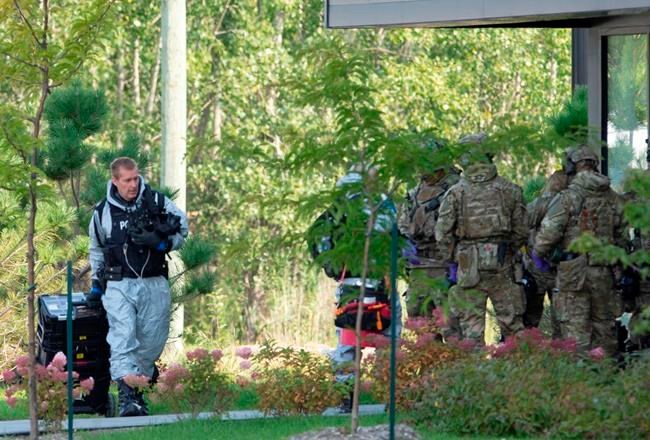
Some of the units in the building were evacuated after police arrived around 10 a.m. Police were still on site as of 5 p.m. The RCMP’s Chemical, Biological, Radiological, Nuclear, Explosives team is leading the operation with support from local police and firefighters.
“We don’t know what we’re going to find, that’s why we’ve deployed multiple resources,” Poirier said. “We also have a specialized unit to make sure that if we find something that is highly toxic inside the residence, we are prepared.”
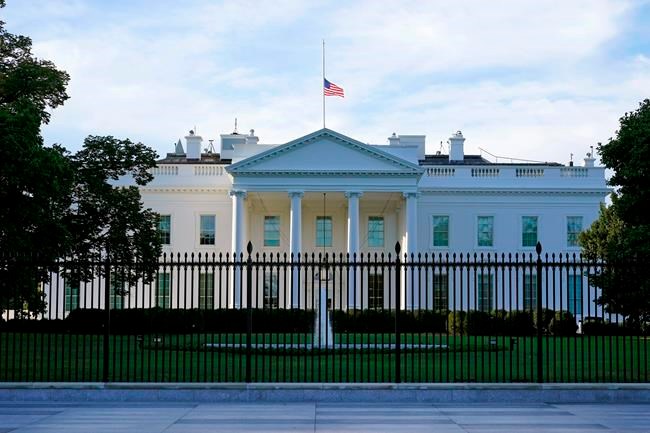
The Associated Press reported Sunday that three U.S. law enforcement officials said a woman suspected of sending a toxic envelope to the White House was arrested at the New York-Canada border. They said the letter had been intercepted last week before it reached the official residence of U.S. President Donald Trump.
Poirier said Monday that envelopes containing ricin — a toxic substance found naturally in castor beans — had also been sent to various locations in Texas.
Contacted by The Canadian Press, the sheriff’s office in Hidalgo County, in southern Texas, referred all questions to the Twitter account of Sheriff Eddie Guerra. He posted late Monday afternoon, “I can confirm that envelopes, containing the deadly toxin ricin, was mailed to me and three of my detention staff.
“At this time due to (an) active federal investigation I cannot make any further comments … No injuries were sustained.”
Canadian law enforcement was called in to help the FBI investigate after American authorities found evidence the suspicious letter to the White House had originated in Canada.
The woman was taken into custody by U.S. Customs and Border Protection officers at the Peace Bridge border crossing in Fort Erie, Ont. She is scheduled to appear in court Tuesday afternoon in Buffalo, according to the U.S. Department of Justice. Her name was not immediately released.
There have been several prior instances in which U.S. officials have been targeted with ricin sent through the mail.
A Navy veteran was arrested in 2018 and confessed to sending envelopes to Trump and members of his administration that contained the substance from which ricin is derived. The letters were intercepted, and no one was hurt.
In 2014, a Mississippi man was sentenced to 25 years in prison after sending letters dusted with ricin to President Barack Obama and other officials.
This report by The Canadian Press was first published Sept. 21, 2020.
— With files from The Associated Press.
Related Articles
Judge orders Pascale Ferrier to remain behind bars


Advertisement Advertise With Us
Advertisement Advertise With Us
History
Updated on Monday, September 21, 2020 11:26 AM CDT: Adds graphic