

Hand signal designed by Canadian advocates and spread on TikTok helped rescue a North Carolina teen
Advertisement
Read this article for free:
or
Already have an account? Log in here »
To continue reading, please subscribe:
Monthly Digital Subscription
$0 for the first 4 weeks*
- Enjoy unlimited reading on winnipegfreepress.com
- Read the E-Edition, our digital replica newspaper
- Access News Break, our award-winning app
- Play interactive puzzles
*No charge for 4 weeks then price increases to the regular rate of $19.95 plus GST every four weeks. Offer available to new and qualified returning subscribers only. Cancel any time.
Monthly Digital Subscription
$4.99/week*
- Enjoy unlimited reading on winnipegfreepress.com
- Read the E-Edition, our digital replica newspaper
- Access News Break, our award-winning app
- Play interactive puzzles
*Billed as $19.95 plus GST every four weeks. Cancel any time.
To continue reading, please subscribe:
Add Free Press access to your Brandon Sun subscription for only an additional
$1 for the first 4 weeks*
*Your next subscription payment will increase by $1.00 and you will be charged $16.99 plus GST for four weeks. After four weeks, your payment will increase to $23.99 plus GST every four weeks.
Read unlimited articles for free today:
or
Already have an account? Log in here »
Hey there, time traveller!
This article was published 08/11/2021 (1521 days ago), so information in it may no longer be current.
A thumb pressed against her palm followed by four fingers folded over it helped a teenage girl escape her captor last week.
The hand signal — a distress sign designed by a Toronto-based women’s advocacy group and popularized on TikTok — was spotted by another driver as the 16-year-old kidnapped girl from North Carolina was travelling down an interstate highway in Kentucky in a car driven by her alleged kidnapper.
Her parents had reported her missing just two days earlier.
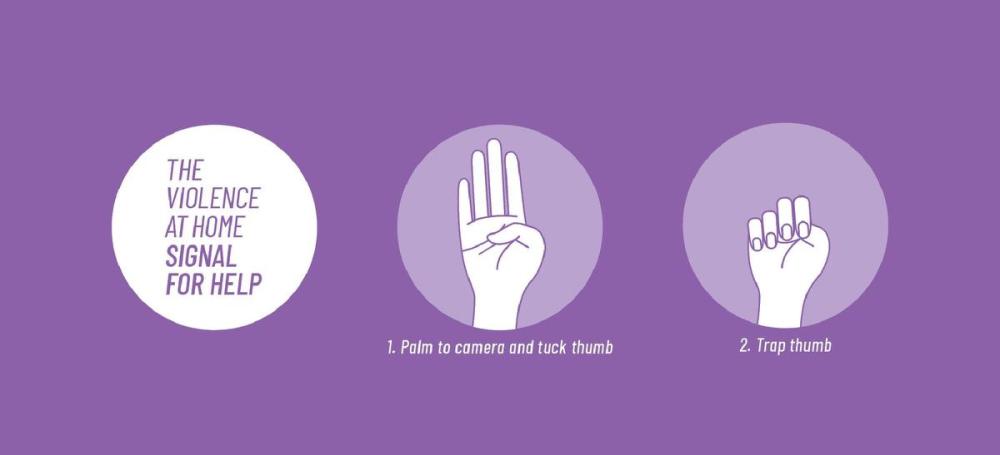
The signal worked. Law enforcement soon arrested 61-year-old James Herbert Brick of Cherokee, N.C. He is now charged with unlawful imprisonment and possession of material showing a sexual performance by a minor, according to Deputy Gilbert Acciardo of the Laurel County Sheriff’s Office in Kentucky.
Andrea Gunraj, vice president of public engagement at the Canadian Women’s Foundation (CWF), was relieved when she heard of the rescue.
“We felt relieved that somebody not only was able to use the signal when they were in a very dangerous situation, but that people knew how to respond,” she said.
The sign, called ‘Signal for Help’, was launched by the foundation in April 2020 to address the increased risk of gender-based violence during the pandemic.
“We knew that times of crisis always tend to lead to a spike in gender-based violence — like intimate partner violence and sexual assault,” Gunraj said. “And we also knew that with the pandemic restrictions that people might be stuck at home with abusers.”
The one-handed signal was originally designed so that individuals could innocuously alert others via video call that they were in distress, she said.
When it was launched, the gesture went viral on social media, particularly TikTok. Videos raising awareness about the signal were viewed by millions of people, and organizations such as the World Bank and San Francisco-based Women’s Funding Network also shared the initiative with a global audience.
More than 40 organizations from across Canada and the U.S. recognize the signal as a tool to tackle domestic violence, according to the World Bank.
But though the signal helped save the teenager from North Carolina, Gunraj noted that for many other women experiencing domestic violence or sexual assault, they’re unable to let others know that they are in distress.
“There’s thousands of more cases that are behind closed doors, where you might not know a word,” she said. “It might be that that person is really silenced and we don’t hear about them.”
Gunraj hopes that society moves to a place where these signals are no longer needed because people proactively check on the well-being of others and individuals experiencing abuse feel comfortable seeking help.
For Gunraj, being proactive could simply mean reaching out to someone who may be experiencing a violent situation and offering them non-judgmental support.
“That is so powerful because so often it’s the silencing, the fear and the stigma that stops people from reaching out and saying, ‘I need help,’ ” she said.
Gunraj added the foundation is developing a guide that will help individuals appropriately assist those experiencing violence. It is set to launch at the end of November, and people can sign up to receive the guide by visiting their website.
With files from the Associated Press
Joshua Chong is a reporter for the Star’s radio room based in Toronto. Reach Joshua via email: jchong@thestar.ca