

‘We may have the suspect’: Portapique inquiry reveals how police responded as gunman slipped away
Advertisement
Read this article for free:
or
Already have an account? Log in here »
To continue reading, please subscribe:

Digital Subscription
One year of digital access for only $205*
- Enjoy unlimited reading on winnipegfreepress.com
- Read the E-Edition, our digital replica newspaper
- Access News Break, our award-winning app
- Play interactive puzzles
*First annual payment billed as $205.00 + GST for one year. This annual subscription will automatically renew at $233.00 + GST every 52 weeks (10% off the regular annual price of $259.35). Offer available to new and qualified returning subscribers only. Cancel any time.
To continue reading, please subscribe:
Add Free Press access to your Brandon Sun subscription for only an additional
$1 for the first 4 weeks*
- Enjoy unlimited reading on winnipegfreepress.com
- Read the E-Edition, our digital replica newspaper
- Access News Break, our award-winning app
- Play interactive puzzles
*Your next Brandon Sun subscription payment will increase by $1.00 and you will be charged $17.95 plus GST for four weeks. After four weeks, your payment will increase to $24.95 plus GST every four weeks.
Read unlimited articles for free today:
or
Already have an account? Log in here »
Hey there, time traveller!
This article was published 01/03/2022 (1679 days ago), so information in it may no longer be current.
RCMP Const. Stuart Beselt raced down a dark rural highway at over 120 kilometres an hour, streaking towards Portapique, N.S. on the night of April 18, 2020.
At the top of the Portapique Beach Road, he stopped, got out of his car, put on body armour and readied his carbine. Then he drove on into Portapique.
Ahead of him, to the south, ten people were already dead, the first victims of Canada’s worst mass killing. Three houses were on fire.
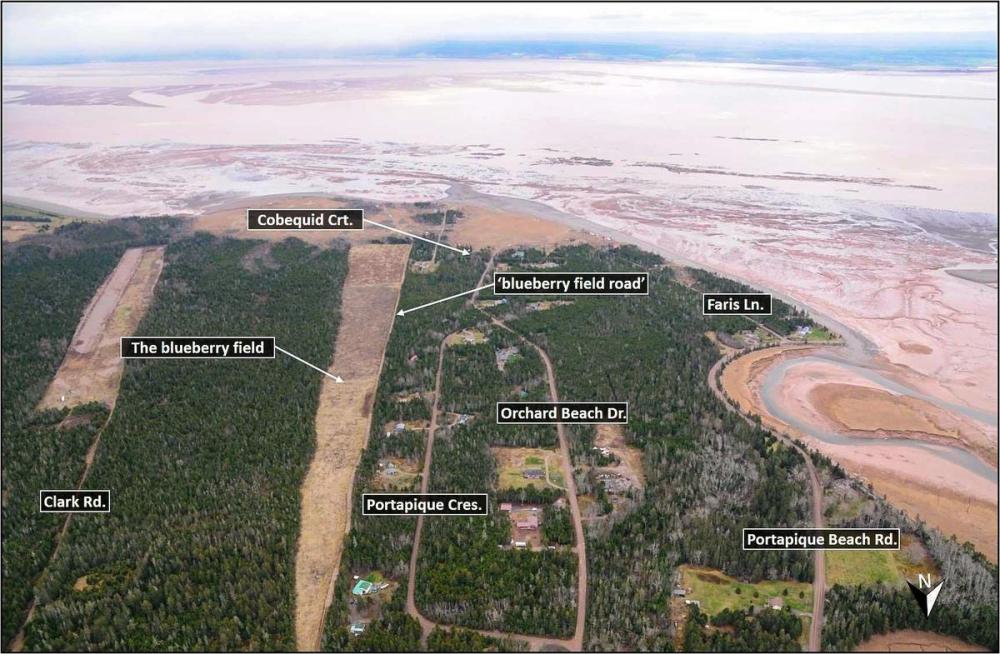
Behind him, three more RCMP officers — the entire on-duty Bible Hill detachment — were also dashing to the scene, responding to a 911 call of a shooting on Orchard Beach Drive.
Beselt was the first to arrive.
As they were driving they’d heard the details of Jamie Blair’s frantic 911 call, telling the operator that her husband Greg had been shot, that the shooter had a huge gun, and that there was an RCMP car in the front yard. And they’d been told of her screaming as the gunman had shot her through the door to the bedroom where she’d been protecting their children.
They’d also heard from the dispatcher about the 911 call made from Lisa McCully’s house by the Blair children after fleeing their house when their parents were killed.
Before the next day was over, 22 people would be dead in Nova Scotia, more houses would be burning and the gunman responsible for it all, Gabriel Wortman, would be shot dead by police at a gas station 100 kilometres away.
On Tuesday, as the Mass Casualty Commission (MCC) inquiry into those killings continued, and the focus turned to the actions of the first responders on the scene. Through 911 transcripts and records of police radio communications as well as other data sources, MCC investigators pieced together what happened in those first few hours after police came to Portapique.
In the dark, in unfamiliar territory, the first officers to arrive hunted for the killer as 911 calls, often confusing and conflicting, came in. As houses burned, they heard explosions, unsure of whether they were gunshots.
And by the time they discovered the first victim — the last person killed in Portapique — the gunman was on way his out, speeding along a little-used dirt road in the darkness toward the highway.
As Beselt drove down Portapique Beach Road, he stopped a car coming towards him. He recognized Andrew MacDonald, in the driver’s seat, from his hockey circles.
MacDonald told him that he’d been shot by his neighbour Gabe and that the shooter was driving a replica police car. As they were talking, two more RCMP constables, Aaron Patton and Adam Merchant, arrived. Beselt, the acting corporal on the shift, took charge.
His conversation with MacDonald had convinced him that this was what Mounties term an Immediate Action Rapid Deployment (IARD) situation.
“It means that you basically have an active shooter situation, where … your main concern is stopping the threat,” Beselt told the MCC later. “Everything else is irrelevant.”
Beselt, Patton and Merchant geared up and, armoured and with carbines drawn, set out on foot into the darkness down Portapique Beach Road, where the gunman’s home was blazing.
Later, Beselt would tell investigators that he’d been thinking about an incident in Moncton, N.B. in 2014, where a gunman shot five RCMP officers, killing three. His concern was that driving a police vehicle into an active shooter zone would be like painting a target on his back.
“Police officers die in their cars,” he said. “You’re wanting to get in there as stealthily as possible.”
At about the same time Beselt was talking to MacDonald, the gunman was heading south down Portapique Beach Road, where he would kill Joanne Thomas and John Zahl, before setting their house ablaze.
Then he’d drive down a trail through the woods, emerging behind his warehouse, already burning.
At the driveway of 136 Orchard Beach Dr., he would encounter Corrie Ellison and shoot him five times, before fleeing south down the road.
As Beselt, Merchant and Patton passed the gunman’s burning house on Portapique Beach Road, they heard gunshots to the east — first three shots, then another two.
They cut through the woods, and soon found themselves in the back of the gunman’s blazing warehouse. The heat was intense, and they heard periodic explosions.
“Things are blowing up or they’re shooting, I’m not sure,” said Beselt over the radio.
It was there, on the road in front of the warehouse, at 10:49 p.m., that the IARD team — Beselt, Patton and Merchant — found Ellison, the last person Wortman killed before fleeing Portapique. By that time the gunman had driven down an old dirt road to access Highway 2 before speeding off eastward toward Great Village.
The IARD team crossed the road to Lisa McCully’s house, where the Blair and McCully children were still on the phone with 911.
The children had reported someone pounding at the door. Beselt told the dispatcher it wasn’t his team.
As Beselt and his team talked to the children, they could hear more explosions — or gunshots — outside. They told the kids to hide in the basement.
Back on the lawn outside of McCully’s house, they spotted a flashlight moving on the road south of them. Thinking it might be the gunman, the three police dropped to their bellies on the lawn, pointing their guns toward the light.
“Is there anybody else in here with us?” Beselt said over the radio, tension rising in his voice, worrying about being shot by another cop.
“If there’s anybody else in here with us, identify yourself right f–kin’ now!” he said again.
“We may have the suspect.”
In reality, the flashlight they spotted belonged to Corrie Ellison’s brother, Clinton, who had just discovered his younger brother’s body on the road outside the flaming warehouse.
Spotting the RCMP flashlights across the road on the McCully lawn, and fearing it was the gunman, he turned his own off and fled into the woods. The officers then discovered the body of Lisa McCully by the fence in the front yard of her house.
The IARD team returned to the children in the house.
“We’re going to set up there and make sure the children are safe. Unless we hear more gunfire, we’re sitting still,” said Beselt over the radio.
They spoke to the children again, told them again to go and hide in the basement.
But shortly after that Beselt and his team thought they heard gunshots up the road.
They set off, heading north. But a call soon came from the dispatcher asking if they were still in the house with the children.
“Anybody in there? ‘Cause the kids now hear someone walking around in that house.”
No, said Beselt.
“The kids hear a thump-thump-thump now, sounding from inside the house.”
“We’re going back,” said Patton.
They went back to the house, told the children to return to the basement, lock the door, and not to let anyone in unless they heard the code word: “Pineapple.”
The IARD team headed out again, moving south down Portapique Beach Rd., knocking on doors and telling residents to evacuate.
At the foot of the road, the IARD team saw that fire had completely engulfed the house of Thomas and Zahl, who, it was later determined, had been shot shortly after RCMP first reached Portapique. Police had not seen these flames the first time they’d come down this road.
Merchant radioed dispatch.
“With all these fires getting lit, I think maybe we should send in a couple of members to go sit with those kids so their house doesn’t get lit on fire while they’re hiding in the basement,” said Merchant.
A decision was made to evacuate the children.
Constables Chris Grund and Bill Neil arrived and were given the code word. As Grund walked the children out to the car, one of the McCully children spoke up:
“Is that my Mom over there?”
“I said, ‘I just need you guys to remain calm and we’ll get you somewhere safe,’” recalled Grund in a witness statement later.
While Grund drove the four children to a hospital, Neil remained at the McCully house.
At 12:45 a.m. Beselt, Merchant and Patton, made their way to the house as well, and all four men sheltered in place until evacuated by the RCMP’s Emergency Response Team at 2:38 a.m.
The MCC inquiry continues Wednesday.
Steve McKinley is a Halifax-based reporter for the Star. Follow him on Twitter: @smckinley1
Related Articles
First Mounties at mass shooting willing to testify
Advertisement Advertise With Us
Advertisement Advertise With Us