

This arm has brains: Here’s what Canadarm3 — the latest version of the robot space arm — will be able to do
Advertisement
Read this article for free:
or
Already have an account? Log in here »
To continue reading, please subscribe:

Digital Subscription
One year of digital access for only $205*
- Enjoy unlimited reading on winnipegfreepress.com
- Read the E-Edition, our digital replica newspaper
- Access News Break, our award-winning app
- Play interactive puzzles
*First annual payment billed as $205.00 + GST for one year. This annual subscription will automatically renew at $233.00 + GST every 52 weeks (10% off the regular annual price of $259.35). Offer available to new and qualified returning subscribers only. Cancel any time.
To continue reading, please subscribe:
Add Free Press access to your Brandon Sun subscription for only an additional
$1 for the first 4 weeks*
- Enjoy unlimited reading on winnipegfreepress.com
- Read the E-Edition, our digital replica newspaper
- Access News Break, our award-winning app
- Play interactive puzzles
*Your next Brandon Sun subscription payment will increase by $1.00 and you will be charged $17.95 plus GST for four weeks. After four weeks, your payment will increase to $24.95 plus GST every four weeks.
Read unlimited articles for free today:
or
Already have an account? Log in here »
Hey there, time traveller!
This article was published 10/03/2022 (1628 days ago), so information in it may no longer be current.
The third generation of Canada’s famed robotic space arm is in the works — and this one’s headed for the moon.
The Canadian Space Agency on Thursday announced that $269 million earmarked for Canadarm3 would be going to Brampton-based company MDA (formerly MacDonald, Dettwiler and Associates Ltd.) to design and construct the latest version of the arm that revolutionized space robotics aboard NASA’s space shuttles and the International Space Station.
The newest iteration of the Canadarm promises to be better — in particular, smarter — than its predecessors. That’s important, because the new arm is being designed to work on NASA’s Lunar Gateway, the space station that is planned to orbit the moon, 400,000 kilometres from Earth, to facilitate future moon landings and, later, deep-space exploration.
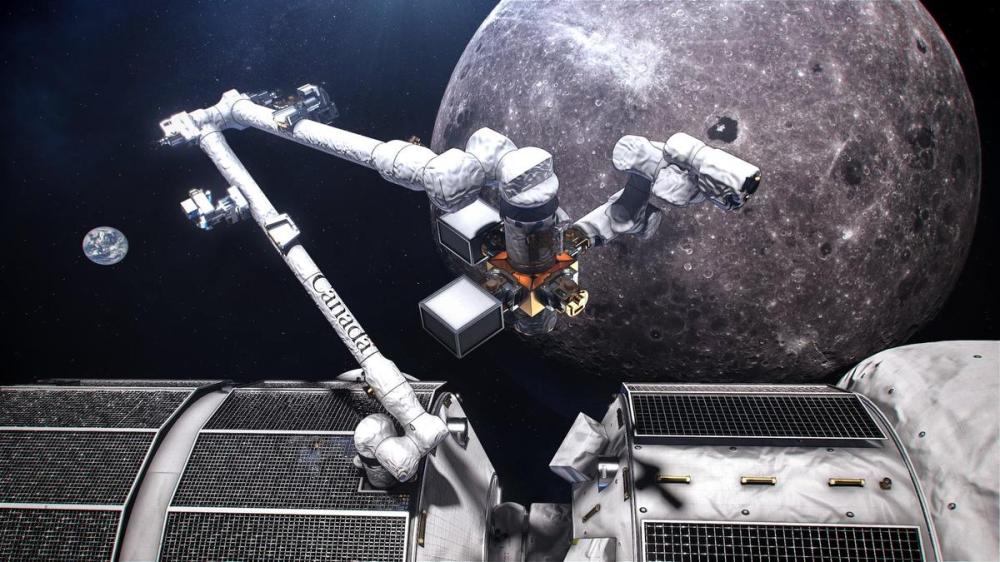
“What we’re contributing is what we call an ‘AI-based, end-to-end robotic system,’” says Stephane Desjardins, Canadarm3 project portfolio manager for the Canadian Space agency.
“AI for artificial intelligence; ‘end-to-end’ — that’s all the tools, the interface. And it will also be operated from Canada. There’s going to be an operations centre in Canada.”
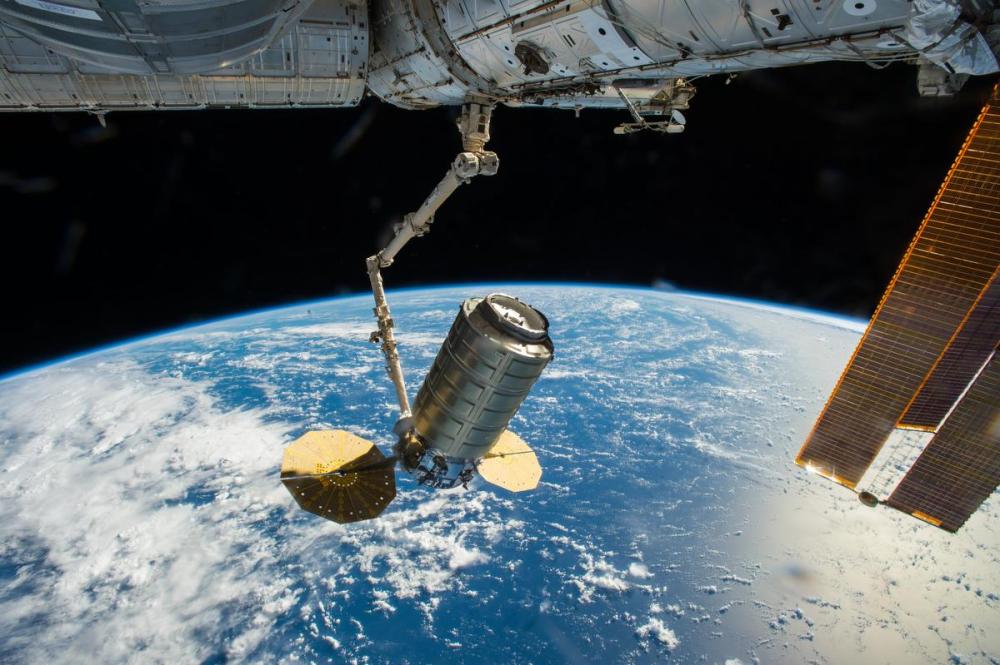
Like its predecessor, the Canadarm3 will be tasked with keeping Lunar Gateway shipshape as well as helping relocate its various modules as needed. It’ll also help astronauts during spacewalks and capture visiting vehicles.
What’s more, it will help scientists conduct research, both in lunar orbit and, eventually, on the surface of the moon. However, unlike on the ISS, where the Canadarm2 has been in residence for 20 years now, the Gateway station will be unoccupied for several months at a time, and that means that the Canadarm3 will have to do its maintenance, repair and inspection duties on the station without human input.
That’s where the artificial intelligence comes in. The Canadarm3 is designed to work primarily autonomously. The operations team on Earth will only talk to it every few days, so for the most part, the arm — 1,000 times further away than Canadarm2 — will have to go about its work independently.
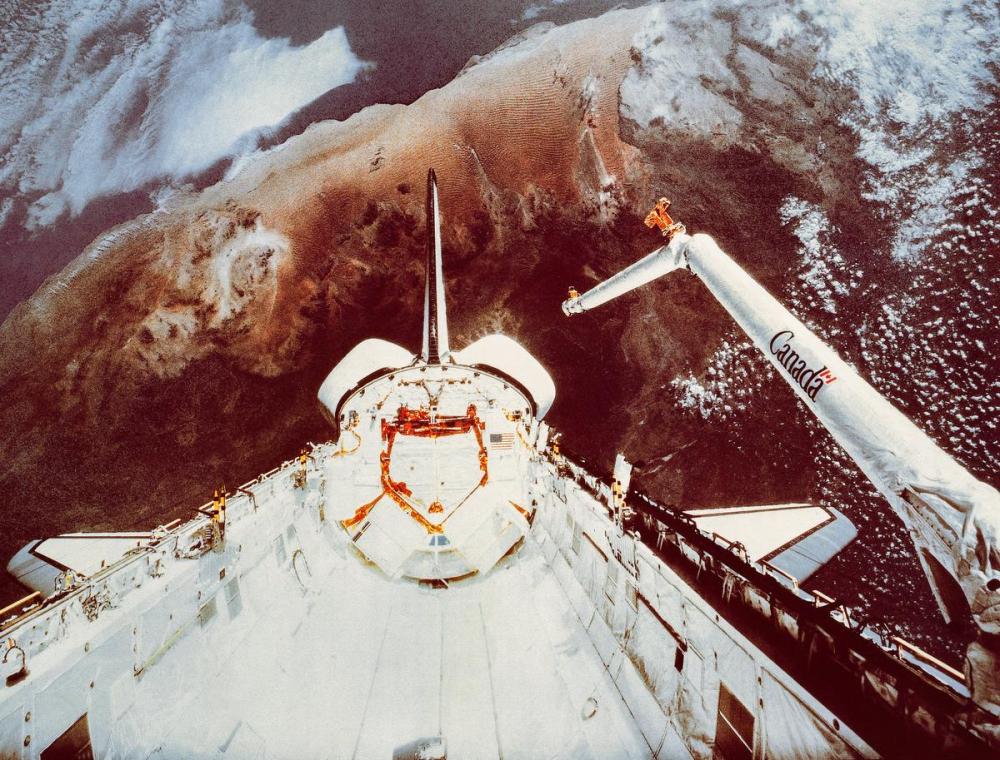
It will differ in other ways. Where the original Canadarm had one end fixed to the Space Shuttle on which it was mounted, the Canadarm3, like the Canadarm2 at the ISS, will have no fixed end.
Either end of the arm will be able to release from the station and reattach somewhere else, allowing it “crawl” along the outside of the station, like a caterpillar on a branch.
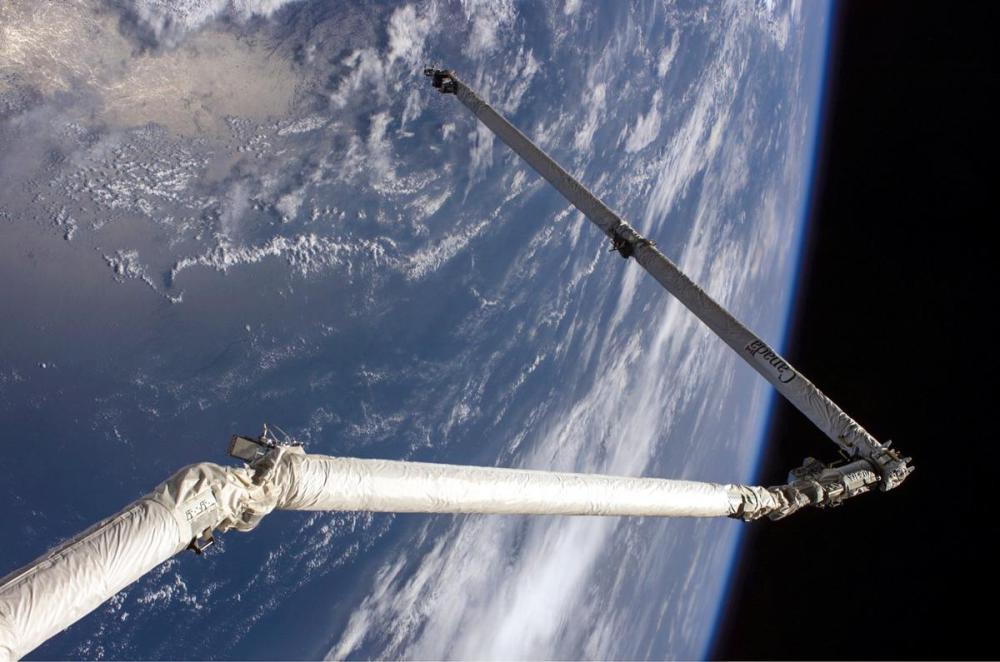
The Canadarm3, while being smaller than its predecessor — just over half the length of Canadarm2 and just under half its mass — will have better vision, with six colour 4K cameras compared to Canadarm2’s four.
It’ll also be more flexible — each of its joints will be able to rotate almost 360 degrees.
“It’s definitely the next step, the next evolution from the current arm,” said Desjardins. “It might look similar, perform similar tasks, but it’s in a completely different environment.”
The new Canadarm3, said Desjardins, cements Canada’s place as the world leader in space robotics, and its contribution to the Lunar Gateway station means that in return, Canadian scientists will be allowed to conduct research from the station, and Canadian astronauts will be among its residents.
Right now, the development of Canadarm3 is in what the CSA calls Phase B. Phase A was the process of sorting out what the mission requirements are for Canadarm3. That’s been going on since Canada announced its participation in the Lunar Gateway project in 2019.
Those requirements have now been handed over to MDA — which will subcontract portions of it to Canadian companies — for designing and fabrication, with an expected launch date of 2027.
“We have very proven control systems for highly dextrous space robotics,” said Mike Greenley, CEO of MDA. “We’ve always excelled at that, but we have to advance those solutions for the various tasks that this robotic system will have to do.
“We have to incorporate artificial intelligence so that it can think and work on its own when we’re not engaging with it every day. It’s a two-arm system, so there’s a large robotics arm on Canadarm3 and a small robotic arm that work together in combination to be able to perform the task, so that’s a new a new trick as well.”

Almost as interesting as the developing of technology for the arm itself are the ramifications of designing the Canadarm3 domestically.
“We’re going to be developing this system in a manner that allows us to commercialize it,” said Greenley. “We’ll be able to spin off and prioritize commercial space robotic systems that we can sell to commercial customers for their space activities.
“That’s a new challenge that we’ve given ourselves to make sure that the investments that we make in robotics for space are turning into commercial lines of robotic systems that can be sold to many more customers in the future.”
MDA — which built the original Canadarm and the Canadarm2 — has already broken ground on a new 200,000-square-foot robotics centre facility in Brampton, which will also house mission control for Canadarm3.
There will also be capacity for mission control for future space robotic projects. And with private companies now entering the space race, the CSA estimates that the global space market will triple in size over the next 20 years to $1.1 trillion.
According to the CSA, the expected economic benefits from the Canadarm3 are estimated to be more than $70 million annually to the country’s GDP, and 630 jobs over a 12-year period.
Steve McKinley is a Halifax-based reporter for the Star. Follow him on Twitter: @smckinley1