

Ex-TRC director Kimberly Murray named special interlocutor for residential schools
Advertisement
Read this article for free:
or
Already have an account? Log in here »
To continue reading, please subscribe:

Digital Subscription
One year of digital access for only $205*
- Enjoy unlimited reading on winnipegfreepress.com
- Read the E-Edition, our digital replica newspaper
- Access News Break, our award-winning app
- Play interactive puzzles
*First annual payment billed as $205.00 + GST for one year. This annual subscription will automatically renew at $233.00 + GST every 52 weeks (10% off the regular annual price of $259.35). Offer available to new and qualified returning subscribers only. Cancel any time.
To continue reading, please subscribe:
Add Free Press access to your Brandon Sun subscription for only an additional
$1 for the first 4 weeks*
- Enjoy unlimited reading on winnipegfreepress.com
- Read the E-Edition, our digital replica newspaper
- Access News Break, our award-winning app
- Play interactive puzzles
*Your next Brandon Sun subscription payment will increase by $1.00 and you will be charged $17.95 plus GST for four weeks. After four weeks, your payment will increase to $24.95 plus GST every four weeks.
Read unlimited articles for free today:
or
Already have an account? Log in here »
Hey there, time traveller!
This article was published 08/06/2022 (1565 days ago), so information in it may no longer be current.
OTTAWA – Canada’s newly appointed interlocutor for unmarked burial sites at residential schools expects that prosecuting crimes against Indigenous children will be the “No. 1 conversation” with survivors and First Nations.
Justice Minister David Lametti announced on Wednesday that Kimberly Murray has been appointed as an independent special interlocutor, who will work to connect Indigenous communities searching for, and finding, unmarked graves with the federal government.
“I expect when I go to communities and meet with survivors and leadership that I will hear about these conversations, about how they’ve struggled with what to do, how to have prosecution,” said Murray, a former executive director of the Truth and Reconciliation Commission.
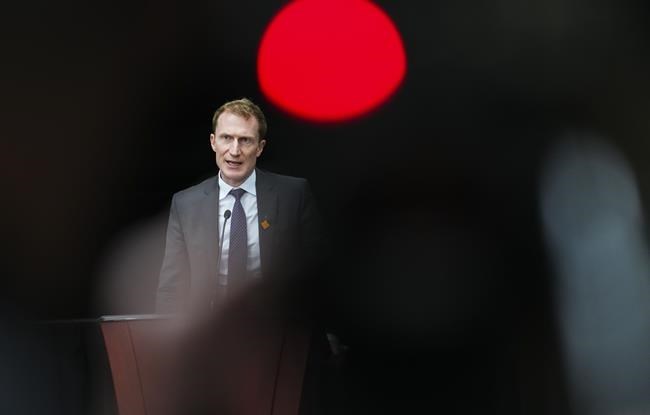
The federal government promised to create the interlocutor position last year, after ground-penetrating radar detected hundreds of unmarked graves believed to contain the remains of children on the grounds of former residential schools in British Columbia and Saskatchewan.
The 2022 budget committed $10 million over two years to fund the role.
It also included nearly $210 million over five years to help communities with their efforts to find, document and preserve burial sites, as well as a new building for the National Centre for Truth and Reconciliation, which is home to many residential school-related records.
Murray, a member of the Kahnesatake Mohawk Nation in Quebec, will work with Indigenous Peoples to recommend ways to strengthen federal laws and practices to protect and preserve such burial sites.
She was previously leading a group at the Six Nations of the Grand River overseeing efforts to investigate deaths and unmarked burial sites at the Mohawk Institute, a former residential school near Brantford, Ont.
Chief Cadmus Delorme of Cowessess First Nation said communities have struggled with whether to call the police over their findings.
The First Nation in southern Saskatchewan announced in June 2021 that it had used ground-penetrating radar to locate as many as 751 graves at the site of the former Marieval Indian Residential School. It later announced it had put names to about 300 of those graves.
“We can’t go to the local RCMP because what are we actually going to show them?” Delorme said, adding that Saskatchewan law prohibits gravesites from being disturbed.
Murray said her role will be to help communities navigate the “conflicting jurisdictional quagmire mess that exists right now,” when it comes to the various federal, provincial and territorial laws that govern unmarked graves on First Nations and near former residential schools.
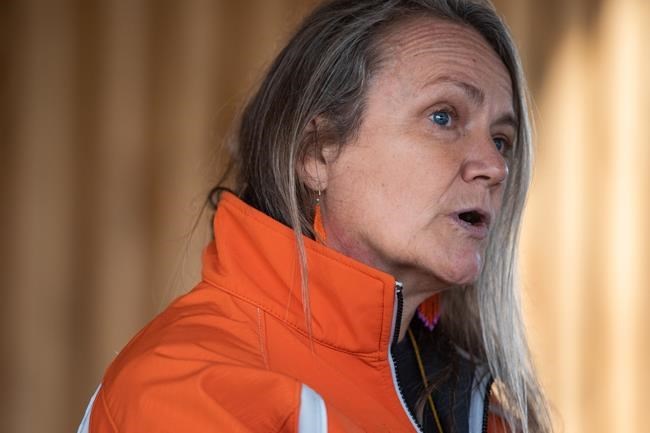
“Everyone is going to have their own path forward and I’m not here to tell them what that path is, just to clear the way for them,” she said.
The interlocutor may also help guide communities and technical teams on how to gather evidence so that justice can be sought once the truth is discovered, said Kúkpi7 Rosanne Casimir of the Tk’emlúps te Secwépemc.
The B.C. First Nation announced in May 2021 that ground-penetrating radar had detected what are believed to be the remains of some 200 children on the grounds of the former Kamloops Indian Residential School.
“It’s also about preserving the evidence to ensure rigour in our investigation — to ensure that if we find that crimes were committed, the evidence is there to pursue those criminal prosecutions,” Casimir said.
Crown-Indigenous Relations Minister Marc Miller said the government shouldn’t investigate itself, but the appointment of the interlocutor is “the next step in the process of accountability.”
“There have been people in the past that have been prosecuted. There are people still free today that have committed horrific crimes,” Miller said.
This week as many as 196 potential burial sites were detected in Manitoba on Pine Creek and Sagkeeng First Nations.
Miller said they are expected to be just the “tip of the iceberg.”
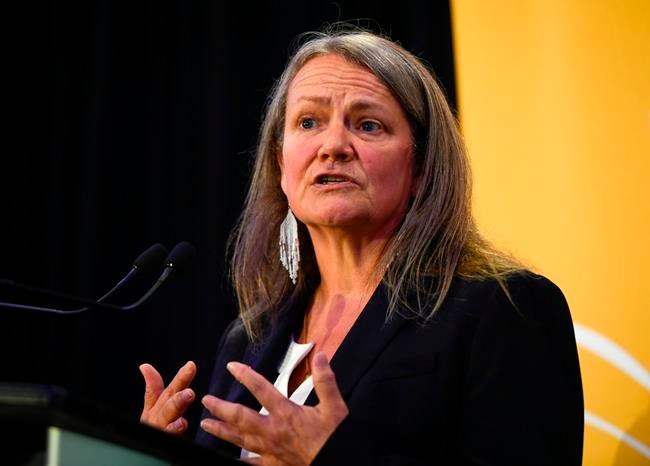
Murray, who spent more than six years as Ontario’s first assistant deputy attorney general for Indigenous justice, said it was not an easy decision for her to take on the role.
She said she is ready to hear about challenges communities have faced in their tireless efforts to recover, protect and commemorate those buried at former schools.
That includes how to dismantle colonial laws that are obstructing them.
“Let us discuss how we might dismantle them together,” she told Indigenous leaders at Wednesday’s announcement.
This report by The Canadian Press was first published June 8, 2022.