

Student newspaper drops ‘McGill’ from name over university founder’s slavery ties
Advertisement
Read this article for free:
or
Already have an account? Log in here »
To continue reading, please subscribe:

Digital Subscription
One year of digital access for only $205*
- Enjoy unlimited reading on winnipegfreepress.com
- Read the E-Edition, our digital replica newspaper
- Access News Break, our award-winning app
- Play interactive puzzles
*First annual payment billed as $205.00 + GST for one year. This annual subscription will automatically renew at $233.00 + GST every 52 weeks (10% off the regular annual price of $259.35). Offer available to new and qualified returning subscribers only. Cancel any time.
To continue reading, please subscribe:
Add Free Press access to your Brandon Sun subscription for only an additional
$1 for the first 4 weeks*
- Enjoy unlimited reading on winnipegfreepress.com
- Read the E-Edition, our digital replica newspaper
- Access News Break, our award-winning app
- Play interactive puzzles
*Your next Brandon Sun subscription payment will increase by $1.00 and you will be charged $17.95 plus GST for four weeks. After four weeks, your payment will increase to $24.95 plus GST every four weeks.
Read unlimited articles for free today:
or
Already have an account? Log in here »
Hey there, time traveller!
This article was published 14/04/2023 (1258 days ago), so information in it may no longer be current.
MONTREAL – A student newspaper at McGill University has dropped “McGill” from its name and is calling on the university to stop using the name because the school’s founder enslaved people.
Madison Edward-Wright, a managing editor at The Tribune, said the paper’s editorial board made the decision because it didn’t want to continue honouring someone who enslaved Black and Indigenous people.
“We don’t feel that the legacy of James McGill is something that we can continue to have appear on our paper, on our masthead,” she said in an interview Friday. “It’s not something that we think aligns with our values as journalists and as an institution that works to voice the concerns of students.”
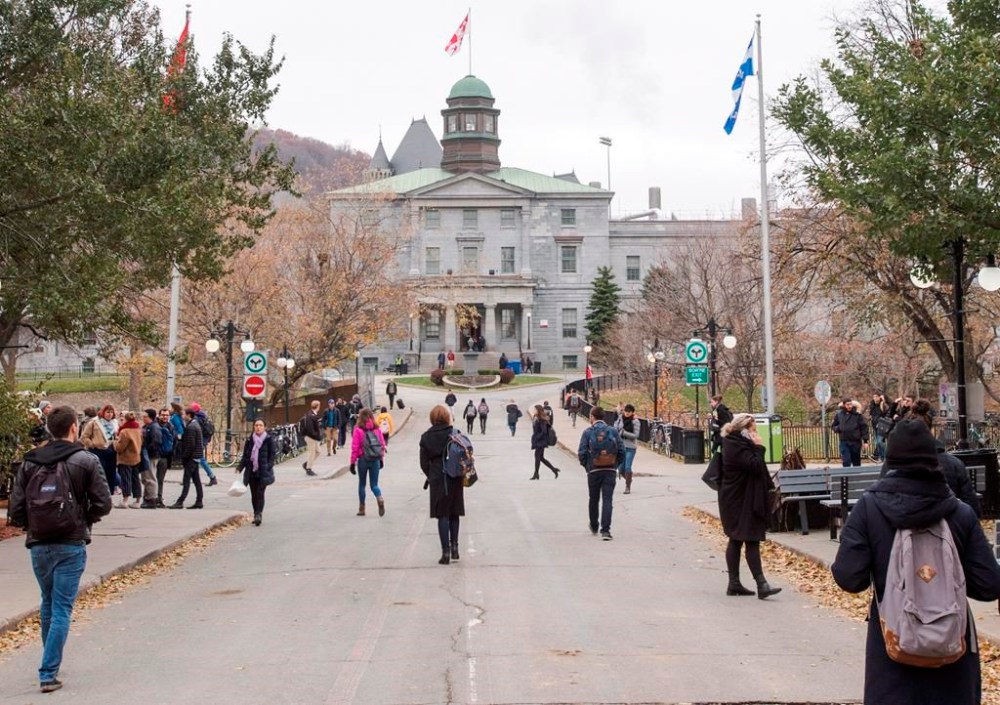
Removing “McGill” from the paper’s name will also help create a welcoming atmosphere for Black, Indigenous and other racialized students at the publication, Edward-Wright said.
“It’s not about pushing ourselves away from McGill,” Edward-Wright said of the newspaper’s move. “It really is trying to encourage the university to change.”
Calls on campus to change the university’s name have gained little traction, but Edward-Wright said Ryerson University’s recent transformation to Toronto Metropolitan University over its namesake’s ties to the residential school system shows that change is possible.
She said the paper wants to encourage the Montreal university to think about the message it sends by continuing to use McGill’s name, adding that a name change would demonstrate the school’s commitment to fighting racism.
McGill University acknowledges on its website that its founder — a wealthy merchant from Scotland — owned at least five Black and Indigenous people, including two children who both died around the age of 10. He also traded in goods produced by enslaved people.
When he died in 1813, McGill left money and 46 acres of land for the creation of a college bearing his name, which became McGill’s main campus in what is now downtown Montreal.
The university, which did not immediately respond to a request for comment, removed a statue of James McGill from its campus in 2021 after it was vandalized. The statue had previously been the target of a petition and protests calling for its removal.
Edward-Wright said she doesn’t think a name change would affect McGill’s strong international reputation for research and higher education.
“We don’t have anything against the university itself, we’re very proud of the researchers and everybody who makes up the community, because that’s really what it is. It’s a community,” she said. That community would remain if the name were changed, she said.
“It might be under a different label, but the work, the work ethic, the dedication, all of that stays the same, because we’re still talking about the same people,” she said.
The Tribune is legally independent of McGill University and is funded through a fee that must be approved by students through a referendum every five years. The most recent referendum took place this year, Edward-Wright said, adding that the paper receives no funding from the university.
This report by The Canadian Press was first published April 14, 2023.