

Ministerial mandate letter fight about accountable government, CBC lawyer tells court
Advertisement
Read this article for free:
or
Already have an account? Log in here »
To continue reading, please subscribe:

Digital Subscription
One year of digital access for only $205*
- Enjoy unlimited reading on winnipegfreepress.com
- Read the E-Edition, our digital replica newspaper
- Access News Break, our award-winning app
- Play interactive puzzles
*First annual payment billed as $205.00 + GST for one year. This annual subscription will automatically renew at $233.00 + GST every 52 weeks (10% off the regular annual price of $259.35). Offer available to new and qualified returning subscribers only. Cancel any time.
To continue reading, please subscribe:
Add Free Press access to your Brandon Sun subscription for only an additional
$1 for the first 4 weeks*
- Enjoy unlimited reading on winnipegfreepress.com
- Read the E-Edition, our digital replica newspaper
- Access News Break, our award-winning app
- Play interactive puzzles
*Your next Brandon Sun subscription payment will increase by $1.00 and you will be charged $17.95 plus GST for four weeks. After four weeks, your payment will increase to $24.95 plus GST every four weeks.
Read unlimited articles for free today:
or
Already have an account? Log in here »
Hey there, time traveller!
This article was published 18/04/2023 (1271 days ago), so information in it may no longer be current.
OTTAWA – The CBC’s fight to see mandate letters for Ontario cabinet ministers goes to “the very core” of what freedom-of-information regimes are designed to foster, a lawyer for the public broadcaster told the country’s top court Tuesday.
These elements are an informed public, accountable government and, ultimately, the democratic process, Justin Safayeni argued in the Supreme Court of Canada.
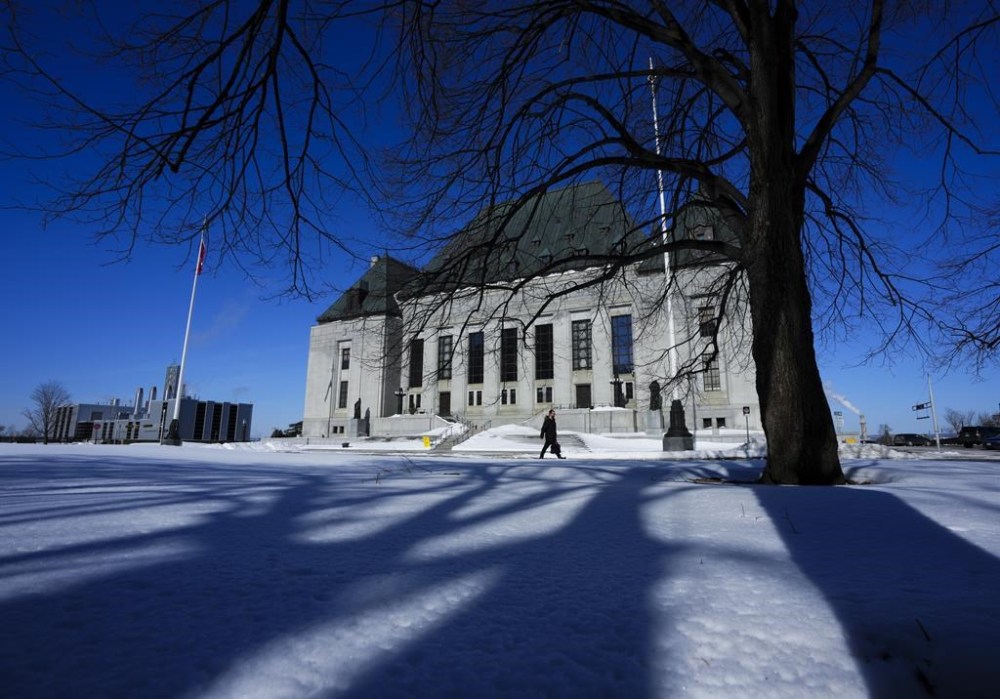
The court heard oral arguments concerning Ontario’s attempt to block the release of 23 letters Premier Doug Ford wrote to cabinet ministers shortly after his Progressive Conservative government took office five years ago.
The Ontario government contends the disclosure of mandate letters would reveal the substance of deliberations of the premier and his cabinet, breaching a key tenet of Westminster-style government.
A seven-member panel of the Supreme Court reserved judgment in the case until a later date after hearing from the parties and several interveners.
The dispute began when Ontario’s cabinet office refused the CBC’s freedom-of-information request for the letters, citing a cabinet privilege exemption in the Freedom of Information and Protection of Privacy Act.
The CBC appealed to the Ontario information and privacy commissioner, who ordered release of the letters to the public broadcaster.
A divisional court dismissed the attorney general’s application for judicial review, and the Ontario Court of Appeal upheld the decision.
That prompted Ontario to take its case to the Supreme Court.
The information and privacy commissioner had found no evidence the records in question were tabled at a cabinet meeting, weighed the reasons for a particular course of action or spelled out the views or ideas of cabinet members.
As a result, the commissioner found the cabinet office had not shown the letters would reveal the substance of cabinet deliberations.
In a written brief filed with the court, the Ontario attorney general says cabinet confidentiality, candour and solidarity are fundamental to a system where responsible ministers collectively decide government policy.
The attorney general argues the commissioner’s narrow and restrictive interpretation of “substance of deliberations” is an “unwarranted incursion” into the functioning of cabinet.
Although the commissioner characterizes the policy priorities in the letters as outcomes of the premier’s deliberations, “clearly the letters contained more than that,” effectively kick-starting the entire cabinet policy development process, said Judie Im, a lawyer for the attorney general.
Justice Sheilah Martin suggested to Safayeni that the mandate letters could be seen as the start of a conversation about what the premier wants a minister to do, not the end of deliberations.
Safayeni said the mandate letters fall in the middle — between the premier’s deliberative process about marching orders for his ministers and the plans or proposed policies a minister might put before cabinet at a later date.
In its own brief, the commissioner asks the top court to consider whether the decision to order disclosure bears the “hallmarks of reasonableness in terms of justification, transparency and intelligibility, particularly in light of the history of the proceedings, the evidence and submissions presented and the established case law that went unchallenged.”
This report by The Canadian Press was first published April 18, 2023.