

‘I won’t apologize’: Quebec premier defends decision to break promise on ‘third link’
Advertisement
Read this article for free:
or
Already have an account? Log in here »
To continue reading, please subscribe:

Digital Subscription
One year of digital access for only $205*
- Enjoy unlimited reading on winnipegfreepress.com
- Read the E-Edition, our digital replica newspaper
- Access News Break, our award-winning app
- Play interactive puzzles
*First annual payment billed as $205.00 + GST for one year. This annual subscription will automatically renew at $233.00 + GST every 52 weeks (10% off the regular annual price of $259.35). Offer available to new and qualified returning subscribers only. Cancel any time.
To continue reading, please subscribe:
Add Free Press access to your Brandon Sun subscription for only an additional
$1 for the first 4 weeks*
- Enjoy unlimited reading on winnipegfreepress.com
- Read the E-Edition, our digital replica newspaper
- Access News Break, our award-winning app
- Play interactive puzzles
*Your next Brandon Sun subscription payment will increase by $1.00 and you will be charged $17.95 plus GST for four weeks. After four weeks, your payment will increase to $24.95 plus GST every four weeks.
Read unlimited articles for free today:
or
Already have an account? Log in here »
Hey there, time traveller!
This article was published 25/04/2023 (1223 days ago), so information in it may no longer be current.
Quebec Premier François Legault on Tuesday defended his decision to break a major election promise toward voters in the Quebec City region, a subject that has dominated politics in the province for nearly a week.
Earlier in the day he held a special meeting to hear from caucus members expressing the fury of their constituents over the government’s announcement that cars would not be allowed in a proposed tunnel linking Quebec City with its south shore.
“I was the one who made the decision, and I stand by it,” Legault told reporters.
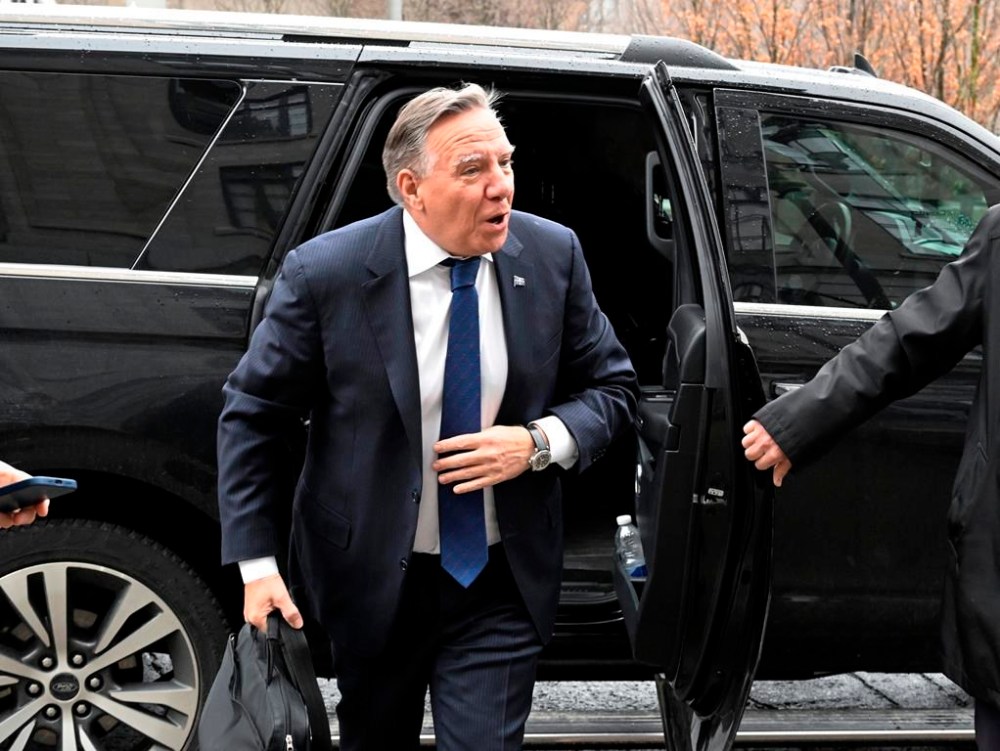
“I won’t apologize for making the best decision for Quebecers, even if it’s a difficult decision,” he added.
The so-called “third link” across the St. Lawrence River — adding to two existing bridges — was a key promise from Legault during the 2018 and 2022 election campaigns to woo voters in the capital region. But on Thursday, Transport Minister Geneviève Guilbault said new studies show a drop in rush-hour traffic since the COVID-19 pandemic, meaning a $10-billion tunnel with space for cars and public transit could no longer be justified.
In its place, the government would build a smaller tunnel reserved for public transit, she said, noting that the transit-only tunnel would be eligible to be funded up to 40 per cent by the federal government. But Guilbault couldn’t say what kind of transit would use the proposed tunnel or how much the project would cost.
That announcement set the region’s political sphere aflame, with the mayor of Lévis, Que., on Quebec City’s south shore, saying Legault’s Coalition Avenir Québec government “has lost all credibility.”
Backbencher Jean-François Simard said Tuesday ahead of the caucus meeting with the premier that he wanted to convey “the anger that is brewing inside me.” CAQ member Stéphanie Lachance said that in her riding, “some are angry, some are disappointed, and some are downright furious.”
Opposition parties have seized on the issue, accusing the Coalition Avenir Québec of deceiving voters in the October election to win support in the capital region.
Parti Québécois Leader Paul St-Pierre Plamondon said Legault treated voters as “political merchandise,” adding that he would table a bill to allow for the recall of politicians who break election promises.
Conservative Party Leader Éric Duhaime has launched a petition calling for the resignation of cabinet minister Éric Caire, whose riding is in the region and who previously vowed he would resign if the tunnel project wasn’t built.
Federal Conservative Leader Pierre Poilievre also waded into the debate, writing on Twitter Monday that a Conservative government would only provide federal funding for the tunnel if it included a lane for cars.
This report by The Canadian Press was first published April 25, 2023.