

Joly to announce Canada’s bid for a seat on the UN Human Rights Council
Advertisement
Read this article for free:
or
Already have an account? Log in here »
To continue reading, please subscribe:

Digital Subscription
One year of digital access for only $205*
- Enjoy unlimited reading on winnipegfreepress.com
- Read the E-Edition, our digital replica newspaper
- Access News Break, our award-winning app
- Play interactive puzzles
*First annual payment billed as $205.00 + GST for one year. This annual subscription will automatically renew at $233.00 + GST every 52 weeks (10% off the regular annual price of $259.35). Offer available to new and qualified returning subscribers only. Cancel any time.
To continue reading, please subscribe:
Add Free Press access to your Brandon Sun subscription for only an additional
$1 for the first 4 weeks*
- Enjoy unlimited reading on winnipegfreepress.com
- Read the E-Edition, our digital replica newspaper
- Access News Break, our award-winning app
- Play interactive puzzles
*Your next Brandon Sun subscription payment will increase by $1.00 and you will be charged $17.95 plus GST for four weeks. After four weeks, your payment will increase to $24.95 plus GST every four weeks.
Read unlimited articles for free today:
or
Already have an account? Log in here »
Hey there, time traveller!
This article was published 09/05/2023 (1225 days ago), so information in it may no longer be current.
OTTAWA – Canada is throwing its hat in the ring for a seat on the United Nations Human Rights Council, pledging to advance issues from online speech to access to abortion.
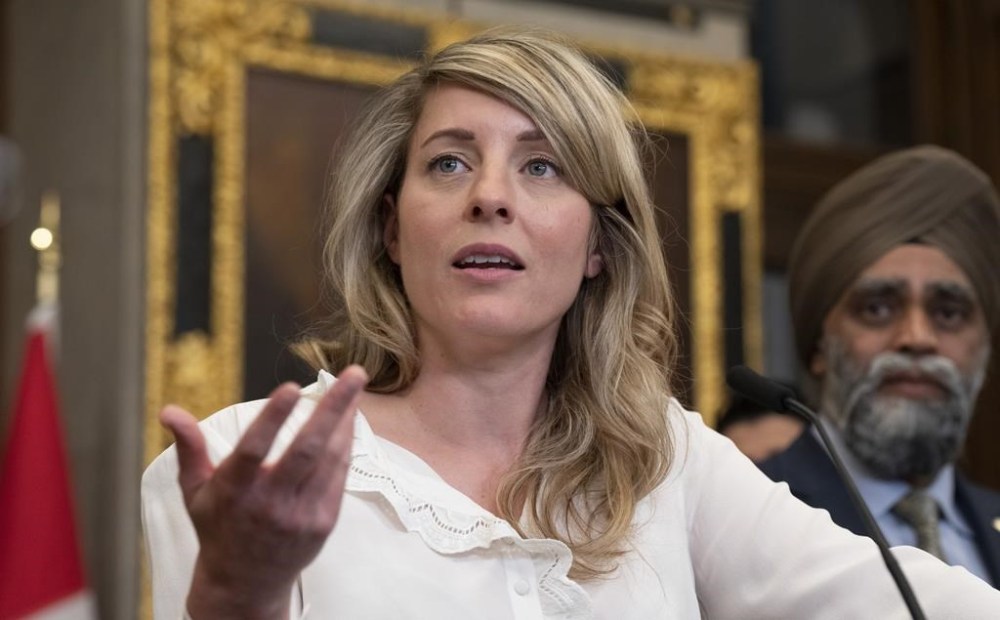
Foreign Affairs Minister Mélanie Joly will announce this afternoon Canada’s candidacy to sit on the council for 2028 to 2030, through an election that will likely take place in 2026.
Two government sources familiar with the matter, who were not authorized to speak publicly before the official announcement, say Canada is running on a bid that will highlight six main priorities, including holding states accountable for locking up human-rights activists.
Advancing gender equality, LGBTQ rights, sexual health and reproductive rights will be another focus of Canada’s candidacy.
Canada plans to echo the Harper government’s focus on freedom of religious beliefs, while tying it to anti-racism programs and advancing reconciliation with Indigenous Peoples worldwide.
So far, Greece has announced a run for one of the three spots that will be available to countries that sit in a grouping of 28 that includes Canada, Western Europe, Australia and New Zealand.
The Council investigates alleged human-rights breaches in UN states, committed by governments or societal actors.
It also issues reports on human-rights issues in general, such as Iran’s ongoing crackdown on women’s rights.
Joly will push for a focus on human rights online, building on the Freedom Online Coalition, a group that pushes for people to express themselves online and have their privacy protected.
Ottawa will likely also push to regulate platforms that have been used to instigate violence. For example, anti-Rohingya riots in Myanmar have been linked to inflammatory falsehoods circling on Facebook.
Another part of the bid will be about responding to climate change in a way that includes protecting people who face the brunt of shifting weather patterns and continuing work to reform global financing for smaller countries who face frequent natural disasters.
Joly plans to strike a note of being humble while pushing the world to do better, acknowledging Canada is not living up to its own human-rights obligations, such as fixing disparities in the criminal justice system and providing equitable services to Indigenous Peoples.
An official familiar with Canada’s coming bid says Ottawa is making a deliberate choice to engage in a flawed agency as a means to bring about change through multilateral institutions.
Groups like Human Rights Watch have been critical of the council for “electing serious rights abusers like Cameroon, Eritrea and the United Arab Emirates” to its ranks.
Russia left the Geneva-based body after UN members voted to end its membership shortly after Moscow’s full-scale invasion of Ukraine in 2022.
In 2020, the Trudeau government lost its bid for the UN Security Council after a years-long push top rejoin that body.
This report by The Canadian Press was first published May 9, 2023.