

Ministers’ embrace of Rwanda’s Kagame undermines democratic values: governance prof
Advertisement
Read this article for free:
or
Already have an account? Log in here »
To continue reading, please subscribe:

Digital Subscription
One year of digital access for only $205*
- Enjoy unlimited reading on winnipegfreepress.com
- Read the E-Edition, our digital replica newspaper
- Access News Break, our award-winning app
- Play interactive puzzles
*First annual payment billed as $205.00 + GST for one year. This annual subscription will automatically renew at $233.00 + GST every 52 weeks (10% off the regular annual price of $259.35). Offer available to new and qualified returning subscribers only. Cancel any time.
To continue reading, please subscribe:
Add Free Press access to your Brandon Sun subscription for only an additional
$1 for the first 4 weeks*
- Enjoy unlimited reading on winnipegfreepress.com
- Read the E-Edition, our digital replica newspaper
- Access News Break, our award-winning app
- Play interactive puzzles
*Your next Brandon Sun subscription payment will increase by $1.00 and you will be charged $17.95 plus GST for four weeks. After four weeks, your payment will increase to $24.95 plus GST every four weeks.
Read unlimited articles for free today:
or
Already have an account? Log in here »
Hey there, time traveller!
This article was published 21/07/2023 (1116 days ago), so information in it may no longer be current.
OTTAWA – Canada missed the mark in making a warm embrace of Rwandan President Paul Kagame on the sidelines of a women’s development conference in Kigali this week, says an expert who studies how countries relate with authoritarian states.
“Rwanda is definitely an authoritarian state. Most people would say that it has become increasingly authoritarian over the last decade,” said University of Ottawa professor Marie-Eve Desrosiers.
“Every wrong choice we make, every handshake, should come with the question of what else lies behind that handshake. Because it comes at a cost.”
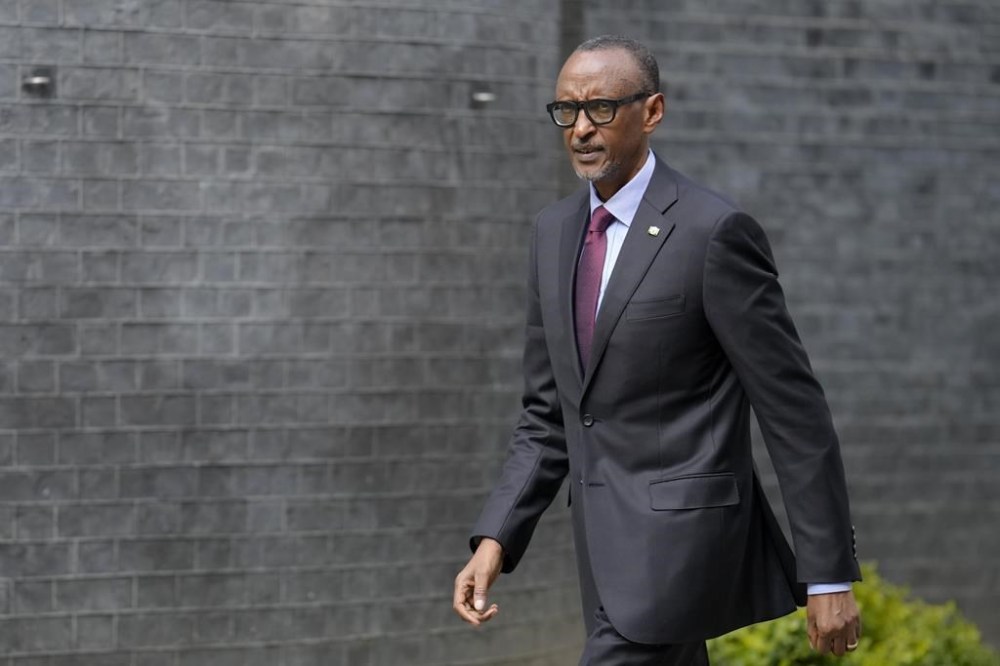
This week, a senior Canadian delegation met with Kagame as part of their visit to the Women Deliver conference in Kigali, and reported that they spoke about ways their two countries could co-operate more.
In photos posted online, International Development Minister Harjit Sajjan, Gender Equality Minister Marci Ien and Liberal MP Arielle Kayabaga smile as they shake Kagame’s hand. A news release from Global Affairs Canada touted: “Canada strengthens bilateral relationship with Rwandan President.”
Freedom House says Kagame is an autocrat responsible for “surveillance, intimidation, torture and renditions or suspected assassinations of exiled dissidents,” while Human Rights Watch says Kagame’s regime arrests and threatens political opponents.
Kagame has been the de factor ruler of Rwanda since 1994, when his Rwandan Patriotic Front overthrew a genocidal regime and created a functional country that claims to be a democracy. Yet the country has limited the role of media and political organizing, especially in the past decade.
The country has also backed the M23 rebels who have raped, killed and committed war crimes in the Democratic Republic of Congo, according to Human Rights Watch.
Desrosiers co-authored a report for the Westminster Foundation for Democracy called How (Not) to Engage with Authoritarian States, which looks at length at how Rwanda has painted itself as a trusted recipient of Western aid that espouses values aligned with those of donor countries.
“As opposed to having this image of dictators as these terrifying, repressive individuals … Rwanda has really nurtured this image of an innovative leader on the African continent,” she said.
For example, Rwanda often touts having some of the world’s highest rates of female participation in elected office and roles such as policing, but those women cannot exercise free speech.
“It’s like giving women access to positions that are just theatrical, as opposed to meaningful and substantive,” she said.
“You can be a champion with regards to women, but if you’re in a country where human rights and … especially political rights mean absolutely nothing, what does it mean?”
Desrosiers argued that putting leaders such as Kagame on a platform only emboldens them to continue repressing their populations, which undercuts democracy worldwide.
The visit comes a year after Prime Minister Justin Trudeau announced Canada would be opening a high commission in Kigali, instead of having a few diplomats on the ground who report to Canada’s full diplomatic mission in Kenya. The move is intended in part to counteract growing Russian influence on the continent, and Trudeau has said he also wants to help advance human rights in Rwanda.
Canada had closer ties with Rwanda in the 1960s, in part due to French having a more prominent role in Rwanda before the genocide, and with Canada contributing to the development of the country’s education sector.
But Ottawa’s involvement has waned, including with the downgrading of its diplomatic presence under Stephen Harper’s Conservative government.
“Because we left, we didn’t really necessarily have ears and eyes on the ground to the extent that we had in the past,” Desrosiers said.
“Our understanding of Rwanda tends to be a little flat. As a result, that pushes us to get excited about shiny things like conferences praising women,” she said, arguing the same issue surrounds Canada’s approach to countries like Zimbabwe.
Desrosiers argued that Canada can try to better understand the country through an expanded diplomatic presence.
She said having demonstrable clout in Rwanda would help undercut what she said is the country’s usual response when Kagame is criticized — to accuse Western countries of being patronizing and colonial.
Ottawa has grown “increasingly more timid at condemning problematic practices,” she said. “And Canada certainly doesn’t have the presence in Africa to be the one to start tut-tutting what some of these regimes are doing.”
She added: “It’s important that Canadians push their governments to engage on these issues.”
In the past year, Canada downgraded a long-delayed plan for its policy toward Africa from a strategy to a framework, amid criticism that the Liberals are not taking the region seriously.
For at least a year, the Liberals have said they are assessing Canada’s diplomatic presence across the continent, what groups it should participate in and what goals it should present to African leaders.
The idea is to build on existing trade and aid programs and have a co-ordinated approach to the fast-growing continent.
This report by The Canadian Press was first published July 21, 2023.