

New tentative deal is reached in B.C. port workers dispute
Advertisement
Read this article for free:
or
Already have an account? Log in here »
To continue reading, please subscribe:

Digital Subscription
One year of digital access for only $205*
- Enjoy unlimited reading on winnipegfreepress.com
- Read the E-Edition, our digital replica newspaper
- Access News Break, our award-winning app
- Play interactive puzzles
*First annual payment billed as $205.00 + GST for one year. This annual subscription will automatically renew at $233.00 + GST every 52 weeks (10% off the regular annual price of $259.35). Offer available to new and qualified returning subscribers only. Cancel any time.
To continue reading, please subscribe:
Add Free Press access to your Brandon Sun subscription for only an additional
$1 for the first 4 weeks*
- Enjoy unlimited reading on winnipegfreepress.com
- Read the E-Edition, our digital replica newspaper
- Access News Break, our award-winning app
- Play interactive puzzles
*Your next Brandon Sun subscription payment will increase by $1.00 and you will be charged $17.95 plus GST for four weeks. After four weeks, your payment will increase to $24.95 plus GST every four weeks.
Read unlimited articles for free today:
or
Already have an account? Log in here »
Hey there, time traveller!
This article was published 30/07/2023 (1158 days ago), so information in it may no longer be current.
VANCOUVER – The two sides involved in a labour dispute affecting about 7,400 port workers in British Columbia say they’ve reached a new tentative deal.
The International Longshore and Warehouse Union Canada and BC Maritime Employers Association issued a joint statement late Sunday saying a deal had been reached with help from the Canada Industrial Relations Board, which was tasked with ending the dispute that had dragged on since the beginning of the month.
A joint statement from the union and the employers association offered no details on the new deal but said both sides “are recommending ratification of the collective agreement to the union’s membership and member employers respectively.”
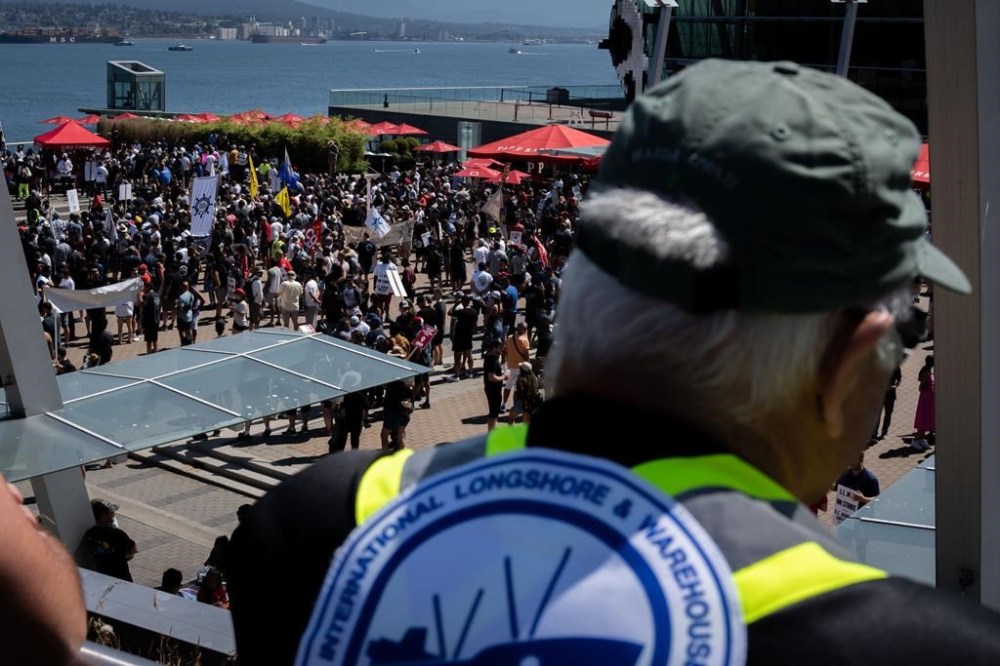
The breakthrough in the dispute came after union members voted Friday to reject a previous deal, prompting federal Labour Minister Seamus O’Regan to intervene Saturday and direct the board to determine if a negotiated agreement was still possible.
O’Regan said that otherwise the board was to “impose final binding arbitration.”
The dispute over a new collective agreement saw workers strike from July 1 to 13, stalling billions of dollars worth of cargo from moving in or out of 30 port terminals and other sites, including some of the country’s busiest ports.
The previous tentative deal halted that strike, but since then the fate of any agreement has see-sawed wildly, with union leaders rejecting the deal on July 19 and briefly sending workers back to pickets, before that move was deemed illegal by the industrial relations board.
The union issued a new 72-hour strike notice only to rescind it hours later, then announced it would recommend the deal to members in a full vote. But members rejected it last week.
Before the new agreement was reached, union president Rob Ashton said in a letter Sunday that workers looked “forward to resuming discussions and finding common ground for the betterment of the Canadian supply chain and the livelihoods of its workforce.”
Ashton said that while the deal voted down Friday included “progress … in addressing certain workforce-related matters,” it did not provide protection for port workers as more maintenance work gets contracted out to third-parties.
Neither side offered a glimpse of the new deal.
But the employers association said the previously rejected contract included a compounded wage increase of 19.2 per cent and a signing bonus amounting to about $3,000 per full-time worker. It added the result would have “potentially” boosted union longshore worker’s median annual wage from $136,000 to $162,000, not including pension and benefits.
Pressure had been mounting for federal intervention if a deal failed to eventuate.
Parties including Alberta Premier Danielle Smith, the Business Council of Canada and the Canadian Federation of Independent Business all urged the federal government to legislate an end to the dispute if it continued.
O’Regan had said in his statement Saturday that Prime Minister Justin Trudeau’s July 19 decision to meet with the incident response group — a move typically reserved for moments of national crisis — showed “the Government is prepared for all options and eventualities.”
“The state of uncertainty cannot continue,” O’Regan had said. “While our B.C. ports are operating right now, we need long-term stability for the many workers and businesses that depend on them.”
This report by The Canadian Press was first published July 30, 2023.
Related Articles
A timeline related to B.C.'s port dispute

Advertisement Advertise With Us
Advertisement Advertise With Us